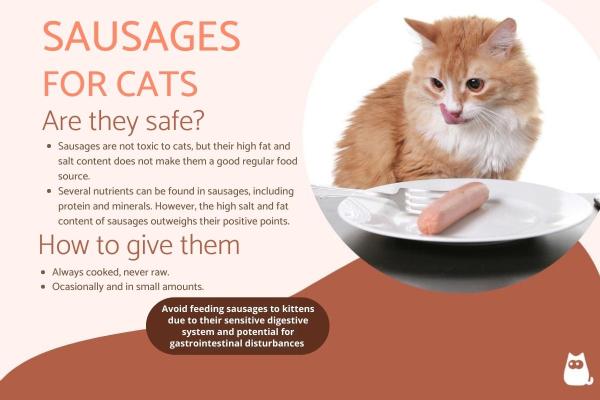
As a cat owner, you want to make sure that your furry friend is getting all the nutrients they need to stay healthy and happy. While cats have a reputation for being picky eaters, there are some human foods that they may be tempted to try, such as sausages. But can cats safely consume sausages, or are there risks associated with this popular food?
The following AnimalWised article seeks to provide insights into whether it is safe to give sausages to cats, discussing the potential advantages and disadvantages. Additionally, we will offer some recommendations on how to offer sausages as a rare treat to your feline friend.
Are sausages good for cats?
To determine if sausages are suitable for cats, it is important to differentiate between the different types of sausages available on the market.
- Fresh sausages: are typically made from minced beef or pork, combined with fat, salt, and various seasonings or spices.
- Frankfurt-style sausages: are cooked meat derivatives made from minced pork, chicken, or turkey, mixed with bacon, water, salt, and spices. They often also include other ingredients such as powdered milk, soy protein, antioxidants, and preservatives.
While both fresh and Frankfurt-style sausages do provide certain nutritional benefits and are not toxic to cats, they are not recommended as a regular food source for these animals.
This is because they contain high levels of fat and salt, which can be detrimental to the cat's health over time. When assessing the risks and benefits of including sausages in a cat's diet, the drawbacks tend to outweigh the benefits, especially if offered on a recurring basis or in large quantities. It is therefore preferable to avoid giving sausages to pets altogether.
It should be noted that even though sausages are not toxic, the spices and preservatives used in them might cause allergic reactions in some cats, leading to skin irritations or more severe health issues.
Can you feed sausages to kittens?
This is especially important for kittens, who are more susceptible to gastrointestinal disturbances caused by processed foods. As such, it is not recommended to feed sausage to baby cats. Instead, it is best to stick to a nutritionally balanced diet that meets their unique dietary needs. Providing them with specialized kitten food ensures they receive the essential nutrients required for growth and development.
Benefits of sausages for cats
Sausages have a high fat content, ranging between 20-30%, and a high salt content, which makes them unsuitable for cats as a regular part of their diet. However, it is true that sausages provide some nutritional benefits, including:
- High-quality animal protein: fresh sausages contain high-quality animal protein that is easily digestible by cats. Frankfurt-style sausages, on the other hand, have lower-quality protein.
- Minerals: sausages contain important minerals like iron, magnesium, phosphorus, selenium, and zinc. These minerals play crucial roles in maintaining a cat's overall health, supporting functions such as oxygen transport and enzyme activation.
- B vitamins: sausages are also a source of B vitamins like thiamine (B1), riboflavin (B2), niacin (B3), pyridoxine (B6), and cyanocobalamin (B12). These vitamins are essential for energy metabolism and maintaining a healthy nervous system.
Despite these nutritional benefits, the high fat and salt content of sausages outweighs their positive aspects, making them unsuitable for cats as a regular part of their diet. Therefore, it is best to avoid feeding sausages to cats and instead provide them with a nutritionally balanced diet that meets their specific dietary needs.
For those looking for alternative treats, there are many commercial cat treats available that are specially formulated to provide nutritional value without the drawbacks associated with high-fat foods.
If you're interested in treating your cat to a homemade and nutritious snack, you might want to check out our article with a recipe for a delicious cat-friendly meat cake. Keep reading to find out how to make it.
Dosage of sausages for cats
Although cats can eat sausages cooked in small amounts as an occasional treat, it is generally not recommended to include them in their regular diet. Sausages are high in fat and salt, which can lead to health problems such as obesity, high blood pressure, and heart disease in cats if consumed in excess.
If you do decide to give your cat sausages as a treat, it is recommended to offer only a small amount, about a centimeter or two, and only on rare occasions. Overindulgence can lead to weight gain and related health issues.
When giving treats to your cat, it is important to adhere to the 10% rule, which means that treats should only make up 10% of their overall diet. The other 90% should come from their complete and balanced cat food. This ensures that your cat receives all the necessary nutrients without the risk of nutritional imbalances.
In addition, always monitor your cat's reaction to new foods and consult a veterinarian if you notice any adverse effects. This is particularly important if your cat has pre-existing health conditions that might be exacerbated by fatty foods.

How to give sausages to my cat?
It is important to note that cats should never be fed raw sausages as they can contain harmful bacteria and parasites. If you choose to offer sausages to your cat, it is critical to cook them thoroughly before feeding them.
When selecting sausages for your cat, it is recommended to pick those made from chicken or turkey, as they tend to have a lower fat content than those made from other meats. This can help minimize the risks associated with high-fat foods and ensure that your cat is getting a balanced and nutritious diet.
Cut the sausages into small, bite-sized pieces and remove the casing before offering them to your cat. The casing can be stringy and difficult to chew and swallow, which may cause choking.
Furthermore, it is essential to ensure that the sausages do not contain any onions, garlic, or other toxic substances for cats, as these can lead to severe health complications.
Check out this other article to learn more about the best diet for cats to ensure your feline friend receives optimal nutrition.

Side effects of sausages in cats
Feeding sausages to cats, especially in large quantities or on a regular basis, can have some negative effects on their health. Some possible side effects of eating sausages in cats are:
- Digestive problems: sausages are high in fat and salt, which can cause digestive issues such as vomiting, diarrhea, and stomach pain in cats. Additionally, sausages may contain spices or seasonings that can irritate the digestive system of cats.
- Obesity: the high-fat content of sausages can contribute to obesity in cats, which can lead to other health problems such as diabetes, heart disease, and joint issues.
- Pancreatitis: consuming fatty foods like sausages can also increase the risk of pancreatitis in cats. Pancreatitis is an inflammation of the pancreas that can cause abdominal pain, vomiting, and diarrhea. This condition can be life-threatening if not addressed promptly.
- Nutritional imbalances: while sausages may contain some beneficial nutrients, they are not nutritionally complete for cats and should not be relied upon as a primary source of nutrition. Over time, feeding sausages to cats can lead to nutritional imbalances and deficiencies.
In summary, while sausages may be offered as an occasional treat to cats, it is important to do so in moderation and with caution to minimize any potential negative effects on their health.
Being aware of these side effects can help in making informed decisions about your cat's diet, ensuring their well-being and longevity.
Contraindications of sausages for cats
To summarize, sausages can be fed to cats occasionally and in small amounts, but it is important to consider the individual cat's health and dietary needs. Sausages are not recommended for:
- Overweight cats or cats on a low-fat diet
- Neutered cats, as they often have reduced energy needs and are prone to weight gain
- Cats with hypertension, as the high salt content can exacerbate the condition
- Cats with heart and/or kidney disease, where diet plays a crucial role in management
- Older cats, who may have different nutritional requirements and are more susceptible to dietary imbalances
- Cats with allergies or food intolerances, especially those related to meats and spices
- Cats with a sensitive digestive system, as sausages can trigger digestive upset
Feeding sausages to cats with these conditions can exacerbate their health issues, leading to weight gain, digestive problems, and other complications. Therefore, it is essential to consult with a veterinarian before feeding sausages or any other human food to cats with underlying health issues.
When considering dietary changes, always prioritize the health and safety of your pet by consulting with veterinary professionals.
If you're interested in learning more, we have another article that discusses the advantages and disadvantages of feeding cats a raw food diet, also known as the BARF diet.
If you want to read similar articles to Can Cats Eat Sausage?, we recommend you visit our Homemade diets category.
- Ministry of Agriculture, Fisheries and Food (MAPA). Sausage frankfurt. Available at: https://www.mapa.gob.es/es/ministerio/servicios/informacion/salchichas%20frankf_tcm30-103035.pdf
- Ministry of Agriculture, Fisheries and Food (MAPA). fresh sausages. Available at: cimavet.aemps.es/cimavet/publico/lista.html