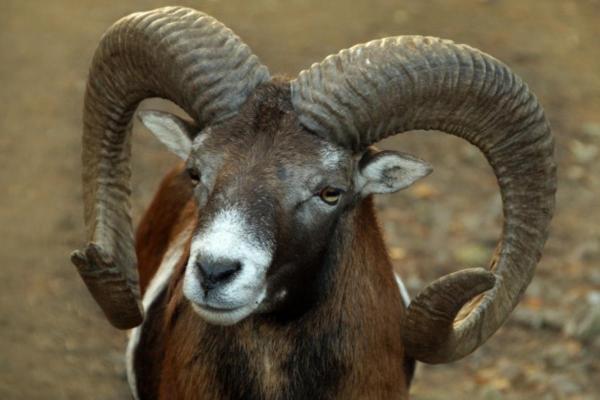
Sheep are one of the first animals to be domesticated by humans. This is thanks to their usefulness in providing milk, meat, and textiles to various ancient civilizations, as well as their relatively docile nature. Sheep are also known as ovine animals belonging to the genus Ovis. The sheep with which the majority of us are most familiar are domestic sheep (Ovis aries). Despite there being some controversy over the classification of sheep species, it is generally accepted there are seven different species. These animals will have different features, including varying coat colors, size, and the presence of horns.
If you have seen a greater amount of morphological difference, it is perhaps because there are many different breeds of domestic sheep within the one species. At AnimalWised, we ask do all sheep breeds have horns? In answering the question, we also look at different sheep breeds with horns so you can distinguish them for yourself.
Do all wild sheep have horns?
Sheep are animals that vary in weight and size depending on the species. Some can weigh as much as 440 lb (200 kg) and others are less than 44 lb (20 kg) at their adult weight. Sheep are types of ruminant animals, meaning they have four stomachs which they use to digest the often fibrous food of their diet. They are herbivorous animals that forage for hay, legumes, and other plant-based foods.
Sheep have been domesticated for the purpose of selling their meat, fur, and milk. Their fur is known as wool, a textile which is used for various purposes including clothing, upholstery, and even carpeting. Some are kept in poor conditions, while others are allowed to roam free on the pasture. Although the domestic sheep has the greatest diversity in terms of habitat range, breed, and other factors, there are also types of wild sheep. They include:
- Argall (Ovis ammon): also known as the mountain sheep, they are the largest of all wild sheep species. They are found in Central Asia and are known for their impressive horns.
- Bighorn sheep (Ovis canadensis): a relatively populous wild sheep native to North America, so-called due to the presence of large horns on their head. These horns can weigh up to 30 lbs (14 kg).
- Dall sheep (Ovis dalli): also native to North America. Although this species is also known as the thinhorn sheep, their horns are quite large on rams. They are well adapted to cold environments.
- Mouflon (Ovis gmelini): native to Eastern Europe, there are various subspecies of the mouflon. They are considered to be the ancestor of all modern domestic sheep.
- Snow sheep (Ovis nivicola): also known as the Siberian bighorn sheep, this sheep species lives in isolated cold areas. They have adapted to mountainous and rugged terrains.
- Urial (Ovis vignei): also known as the arkas or shapo, this wild sheep is of Asian origin and is currently considered a vulnerable species. They are characterized by their reddish-brown coat and large curved horns.
All wild sheep have horns, both male and female. They are generally sexually dimorphic in this regard as male wild sheep tend to have larger horns than females. Male sheep, called rams, often have large horns which grow continuously throughout their lives. The rings on the horns can be used to determine the age of the animal.
Female wild sheep, called ewes, generally have smaller and thinner horns. This will depend on the individual species. The size of a male's horns often correlates to their rank, with larger horns making them more dominant in a social group. They use their horns to fight for the right to mate with females. In this regard, the horns play a crucial role in the social structure and mating success of wild sheep herds.
Learn more about these incredible animals by looking at what do sheep eat?
Do all domestic sheep have horns?
The horns of all sheep start with projections of bone which are attached to their skull. However, the actual part which is made of bone is usually only a small part of the horn we see. The rest is created from a keratinized covering, a common protein which serves to act as protection of the bone underneath. Since they are made of bone, sheep horns do not shed, unlike antlers in deer and other species.
Although all wild sheep have horns, this is not the same for domestic breeds. Not all domestic sheep have horns, something which will depend on the breed. Since sheep are one of the oldest domesticated animals, there has been great opportunity to diversify this species. There are over 200 recognized domestic sheep breeds, although there are more which are not officially recognized.
Sheep and other animals in the subfamily Caprinae are considered one of the most sexually dimorphic types of animal[1]. Domestic sheep are particularly sexually dimorphic. Many females of a certain breed do not have horns when the males do. However, there are also many breeds where neither ram nor ewe will have horns.
Except in cases of genetic mutation, wild sheep do not tend to have double horns. However, there are certain breeds of domestic sheep which commonly have this trait. A common example is the Jacob sheep, a breed of British domestic sheep. In these sheep there are two larger horns which grow above two smaller ones. This unique characteristic makes the Jacob sheep quite distinctive and valued for ornamental purposes.
Sheep which do not have horns are known as being ‘polled’. The reason why some sheep breeds have horns and others do not is due to selective breeding over the years. Genes which influence horn development have been encouraged in some breeds and discouraged in others, resulting in the variance of domestic sheep breeds. Selective breeding has allowed farmers to develop sheep with traits that best suit their needs, such as hornless sheep for easier handling.
Learn more about animals in the subfamily Caprinae by looking at our article on the difference between sheep and goats.

Sheep breeds with horns
There are many breeds of sheep, but let's get to know some of these breeds of horned sheep below, and how they are characterized. Remember that when talking about animal breeds, they are those obtained by humans from selective crosses:
- Arapawa: is a feral sheep breed native to New Zealand, likely descended from Merino sheep which came from Europe. Both females and males have horns, but the ram's horns are larger and more curved, forming almost a complete spiral. They are known for their hardiness and ability to thrive in harsh environments.
- Awassi: native to Asia with varying different names depending on their locality. In this breed, the males have large, spiral-shaped and wrinkled horns. Some females have horns, but not all. They are shorter than rams, if they do. Awassi sheep are particularly noted for their high milk production.
- Boreray: also known as the Boreray Blackface or Hebridean Blackface. It is native to Scotland and both males and females have horns. Males can be spiraled and thicker, but those of ewes are thinner and less curved. They are considered one of the rarest breeds of sheep in the world.
- Argentine Merino: there are several types of Merino sheep, one typical of Argentina. In this, only the males tend to have spiral-shaped horns with ewes being polled. Merino sheep are prized for their fine wool.
- Valais blacknose or walliser schwarznasenschaf: it is native to Switzerland and both males and females have horns, although they are not very large. This breed is known for its distinctive black face and legs, alongside their friendly nature.
- Racka: originally from Hungary. This breed of sheep has a very particular horn shape as they are spiraled in shape, but straight in line. They can reach out up to 25" (60 cm) and both rams and ewes have horns. The Racka is known for its hardiness and adaptability to tough climates.
- Castlemilk Moorit: also native to Scotland. Both sexes have horns, which are thick and curve forward. They are part of a group known as 'primitive breeds' which retain many of the characteristics of early domesticated sheep.
- Dalesbred: native to England, with both sexes also having thick, curved horns. This breed is well adapted to upland conditions, and is commonly found in the Yorkshire Dales.
- Norfolk Horn: another British breed, in which males have larger and thicker horns than females. Historically, they were used for cross-breeding to improve the hardiness of other breeds.
Learn more about other types of animals with horns by looking at our list of incredible horned animals.
If you want to read similar articles to Do All Sheep Have Horns?, we recommend you visit our Facts about the animal kingdom category.
1. Polák, J., & Frynta, D. (2009). Sexual size dimorphism in domestic goats, sheep, and their wild relatives. Biological Journal of the Linnean Society, 98(4), 872–883.
https://doi.org/10.1111/j.1095-8312.2009.01294.x
- Department of Animal Science - Oklahoma State University. Breeds of cattle and breeds of sheep. Retrieved from: https://breeds.okstate.edu/sheep/index.html?Forwarded=afs.okstate.edu/breeds/sheep/
- Myers, P., Espinosa, R., Parr, C. S., Jones, T., Hammond, G. S., & Dewey, D. A. (2023). The Animal Diversity Web. Retrieved from: https://animaldiversity.org/search/?q=ovis&feature=INFORMATION
- IUCN. (2023). The IUCN Red List of Threatened Species. Version 2022-2. Retrieved from: https://www.iucnredlist.org/search?query=Ovis&searchType=species