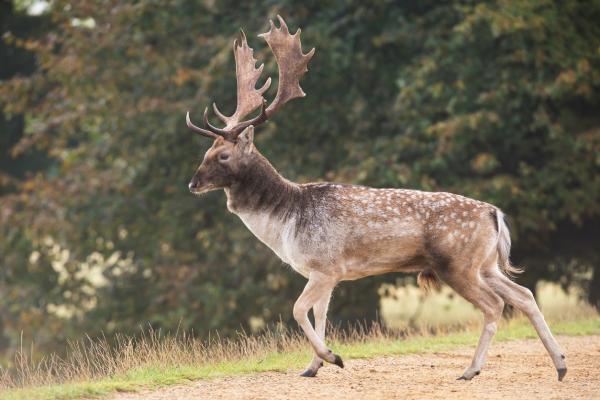
Considered an ornamental species for thousands of years, the fallow deer, known as Cervidae dama dama; is known for its varying coat colors ranging from black to red, brown and even pure white. A black line runs along backward to the tail. The deer have white spotted backs in summer. The coat is thicker and darker in winter. But this is not the only score on which fallow deer are distinctive. This AnimalWised article will center around whether fallow deer shed their antlers, the processes and factors involved, and what makes these species different from the rest of deer around the world.
Antlers that grow from spikes
Fallow deer have antlers that differ considerably from the white-tail or red deer. They are palmated and flattened like the human palm or a shovel. These deer have antlers similar to moose antlers. Male fawns show indications of antlers growth nine months following birth, and the first set of antlers are shortened spikes. Each April or May, during the summer months, bucks lose cast and grow fresh antlers. New velvet growth commences within 5 days from antler loss. The velvet is torn to yield thick, hard antlers in the middle or towards the close of late August. This cycle is critical for the deer as it prepares for the mating season, showcasing its antlers to attract potential mates.
Till when do Fallow Deer antlers fall off?
The Fallow deer's antlers shed every year. Based on genetics, environmental stress, and nutrition; the size of the buck's antlers increase in size till the 11th year is reached and the deer passes beyond its prime. It is then that the antler size begins to diminish. The pedicles from which the antlers emerge are not found in bucks until after the first winter. It's intriguing to note that the environment plays a significant role in the quality of antler growth; factors such as food availability and habitat conditions can greatly influence the robustness of the antlers.

What About the Female of the Species?
Female fallow deer do not have antlers. It is only the male buck which lives anywhere from 10-16 years that has and sheds antlers each year. Called beasts of the forest, the fallow deer are wildlife in its most untamed, natural form. Their unique process of shedding antlers makes them distinctive among the deer family. In the absence of antlers, females rely on other means such as vocalizations and body language for communication and establishing social hierarchies within their groups.
Know More About the Fallow Deer's Antlers
The antlers of a fallow deer, when fully developed, are palmated. They are fringed with a series of spellers or small points, the first of which is known as the brow and the second as the trey. There is no bey tine or point as seen in Red Deers. Above the trey tine is the palmation. Based on where the antlers grow, the pedicle forms part of the skull. Small bead type nodules called pearling may be seen on the coronet. The coronet is where the skull and the antlers join.
Yearling fallow deer bucks are known as prickets. As the buck grows older, the palmation of the antlers becomes more apparent. Once the buck is past the prime, antlers size and weight decreases through a process known as “going back.” This process signifies the buck's transition into the later stages of its life, affecting its dominance and reproductive capabilities.
A fallow deer's first antlers are spikes measuring somewhere between 1 to 20 cm in length. In the year that follows, the antlers have two spikes and the palmated area may be seen. In wild fallow deer, however, the palmation is only seen when the buck is 4 years old. Fallow deer, therefore, start shed their antlers in April and May. New antlers develop during spring and summer once the velvet covering is fully formed. This natural cycle is integral to maintaining the health and vitality of the deer population.

The Role of Antlers in Deer Behavior
Antlers play a crucial role in the behavior and social structure of fallow deer. They are primarily used during the rutting season, where bucks compete for the attention of does. The size and condition of antlers can significantly impact a buck's ability to assert dominance and secure breeding rights. Additionally, antlers serve as a visual cue for age and health, both vital factors in mating selection. During confrontations, bucks will engage in sparring matches, using their antlers to push and shove opponents.
Conservation and Habitat of Fallow Deer
Fallow deer are adaptable animals that thrive in various habitats, including woodlands, grasslands, and parklands. Conservation efforts are crucial to maintaining their populations, as habitat destruction and human encroachment pose ongoing threats. Protected areas and managed reserves play a vital role in ensuring these deer's survival. Responsible wildlife management practices are essential to balance ecological health and biodiversity, allowing fallow deer to continue to flourish in their natural environments.
If you want to read similar articles to Do Fallow Deer Shed their Antlers?, we recommend you visit our Facts about the animal kingdom category.