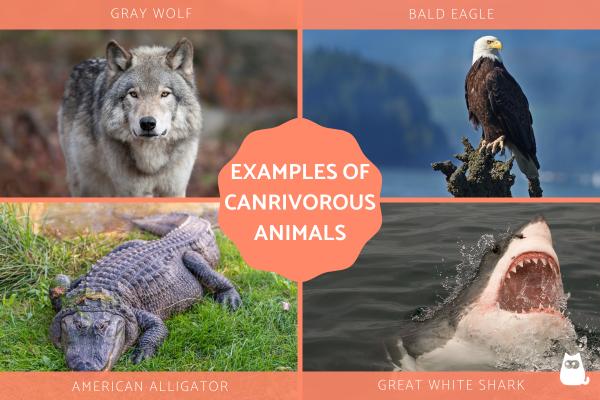
While we can define a carnivore as an animal that eats the meat of other animals, this is a very general description. Carnivores have great variety within the animal kingdom. Although they are defined by their diet, they can be many different types of animals, from mammals on the land, birds in the air and fish in the sea. Carnivorous animals do share certain physical characteristics which make them able to eat other animals in their diet. These are related to both external and internal characteristics such as their musculature and their digestive tract. Not all carnivores kill their prey, since some are mainly scavengers or combine this with predation.
At AnimalWised, you will see the similarities and differences by looking at examples of carnivores in ecosystems. In addition to these carnivorous animal examples, we provide fun facts and photos to better understand the nature of the carnivore diet in animals.
What is a carnivorous animal?
A carnivorous animal consumes animal tissue, usually in the form of flesh and organs, but this can also include other tissues such as eggshells and even bones. They require these animal tissues for their organism to function. Some animals eat meat that are not true carnivores. This is the case with omnivores that may supplement their diet with some animal tissue, but which can survive by eating other types of food.
Although all the carnivore examples we will share here eat animals, carnivorous animals can be grouped according to the type of animals they eat. Some of the main types of carnivores are the following:
- Avivores: consume birds
- Insectivores: consume insects
- Hemovore: consume blood
- Ovivores: consume eggs
- Piscivores: consume fish
- Vermivore: consume worms
Not all carnivores feed the same way. Carnivores are also classified into two types according to how they obtain or find their food:
- Predators: a predatory animal hunts the prey it is going to consume. Most carnivorous animals kill their prey, but some carnivores are grazers. An example of the latter is the mosquito. While it seems logical that predators are usually bigger than their prey, some carnivores are social predators that team up to bring down larger animals. These include animals such as lions, wolves, piranhas and even some ants. In some species, this social cooperation extends to complex hunting strategies, showcasing the intelligence and adaptability of these predators.
- Scavengers: scavenger carnivores consume dead animal tissue. Finding carrion requires time and effort. Only vultures are exclusively scavenger carnivores. Most scavengers combine scavenging with hunting, becoming opportunistic feeders. This means they hunt if they have to, but they will take advantage if they find prey killed by another animal. Some of these carnivores include coyotes, lions, lizards, bears and crows. Scavengers play a crucial role in the ecosystem by helping to clean up decomposing organic matter and recycling nutrients back into the environment.
The examples of carnivorous animals do not only exist in wild ecosystems. Learn more about a domestic animal eater with our article asking whether cats are carnivores or omnivores.
What types of carnivores are there?
Carnivores are usually presented as the opposite of herbivorous animals, animals that eat a diet based exclusively on plant matter. Carnivorous animals do not necessarily eat only meat, although it needs to be a predominantly animal-based diet. They often complement their diets with fungi, fruits, vegetables, nectar or other substances. This is not the case of obligate carnivores, so-called true carnivores whose reliance on animal tissue is almost total.
Obligate carnivores adapt to an exclusively carnivorous diet when their ecosystem. This is often because its climate and geography forces them to do so. For instance, unlike other bears, polar bears are obligate carnivores because there is no vegetation in their habitat. They rely heavily on seals and other marine mammals to sustain their dietary needs.
Depending on the composition of their diet, carnivorous animals can be classified like this:
- Hypercarnivores: diet consists of more than 70% meat. Examples include felines, eagles, salmon, sharks and owls. These animals have adapted to an almost exclusive meat diet, which is evident in their highly specialized hunting techniques and physiological traits.
- Mesocarnivores: diet consists of 50-70% meat. They have evolved different kinds of teeth to consume different types of organic matter. Examples include badgers, dogs, ferrets, foxes and weasels. Mesocarnivores often show greater dietary flexibility, which can be advantageous in changing environments.
- Hypocarnivores: diet consists of less than 30% meat, the rest being anything from fruits and fungi to nectar. Since their teeth fulfill different functions, including chewing hard vegetables, their molar teeth are wider and flatter. Most hypocarnivorous animals are considered types of omnivore. Examples of such omnivorous animals include black bears and us humans. Hypocarnivores often inhabit ecosystems where plant material is more abundant, allowing them to diversify their food sources.

The importance of carnivores in ecosystems
Depending on their place in the food chain, carnivores can be apex predators. This is the name given to the predators at the highest trophic level, i.e. those who prey on others but aren't preyed upon themselves. Apex predators also feed on other carnivores, the so-called mesopredators that rank in the middle of the food web. For instance, bears feed on carnivorous fish like salmon.
Especially apex predators, most carnivores play a very important role in maintaining the balance in their ecosystem. They keep the population of other animals in check by reducing the risk of overpopulation and allowing other species of both plants and animals to flourish. This helps preserve biodiversity in the ecosystem. A classic example of an ecologically important apex predator is the gray wolf. The wolf is a carnivore that hunts large herbivores such as elk or moose, thus preventing overgrazing and creating a wider habitat for other animals. This kind of ecological regulation can have cascading effects on the entire ecosystem, influencing everything from plant growth to the diversity of other animal species.
Other examples of apex predators include the Bengal tiger and the saltwater crocodile. Some less obvious apex carnivores include the honey badger or the lion's mane jellyfish are also apex predators. Keep in mind that if you take an apex predator out of its natural ecosystem and place it in another, it may lose its place at the top of the food chain. Such displacements can lead to significant ecological imbalances, highlighting the importance of understanding and preserving natural habitats.
Discover more about the diet of an apex predator with our article explaining the gray wolf's diet and hunting habits.

Common characteristics of carnivores
In order to be able to chase, hunt and eat other animals, carnivores have evolved particular physical and behavioral traits. While certain physical characteristics are not absolute, it is generally true that carnivorous mammals have certain characteristics such as the following:
- Sharp teeth: they have evolved specialized teeth such as canines and carnassial teeth. These allow them to both kill their prey and tear their flesh for consumption. The efficiency of these adaptations is evident in the swift and often lethal nature of their attacks.
- Claws and talons: many examples of carnivores also have sharp claws for killing and feeding. Similarly, diurnal birds of prey have evolved sharp talons and beaks to fulfill a similar function. These powerful appendages assist in capturing and immobilizing prey, ensuring a successful hunt.
- Eyes: carnivorous predators also tend to have front-facing eyes and binocular vision for better depth perception during a chase. This vision allows them to accurately judge distances and velocities, crucial for striking at the perfect moment.
- Digestive system: as they don't have to digest cellulose, carnivores have shorter digestive systems than herbivores. An example of the latter is the different types of ruminant animals that digest over a long period. The efficiency of the carnivorous digestive system enables rapid processing of high-protein meals, maximizing energy extraction.
- Special adaptations: some carnivores have evolved special traits that allow them to hunt better. Some of them inject venom or secrete poison, while others have learned to hide in their environment (camouflage) or pass as other animals (mimicry). The main prey of these highly specialized animals have often also evolved similar characteristics, complicating this high-stakes hide and seek game. Such evolutionary arms races demonstrate the intricate balance of predator-prey relationships in nature.
Although many types of carnivores are adept hunters, this does not mean that carnivorous animals are always on the prowl for food. When properly satiated, even the fiercest predators will let prey animals pass by without bothering them. This behavior underscores the energy-efficient nature of predation, as successful hunters conserve energy for future hunts.
Examples of carnivorous mammals
The type of ecosystem has a great bearing on how a carnivore can survive. As we have said, many carnivorous mammals are known for their claws and the sharp cutting teeth known as carnassials on either side of their jaw. Differences in the size and shape of these and other teeth indicate the different prey and foods consumed by each carnivorous mammal species. They are also known to have an excellent sense of smell, and keen vision and hearing.
These adaptations are very useful for hunting prey on land. Claws not only tear flesh, but they can use them to gain traction and run faster along the ground. Jaguars have spots which allow them to camouflage in their environment and stalk prey. This adaptation is particularly useful in dense forest habitats where light and shadow interplay to create complex visual patterns.
As you can see, there is huge variation in sizes and habitats among different mammal carnivores. If you are looking for examples of carnivorous mammals with photos, here are some of the most well known:
- Anteater
- Bear
- Cat
- Cheetah
- Dog
- Dolphin
- Fish-eating bat
- Fox
- Hyena
- Little brown bat
- Lion
- Narwhal
- Orca
- Pangolin
- Polar bear
- Seal
- Serval
- Tasmanian devil
- Tiger
- Walrus
- Wolf
If you want to learn more about how different carnivores hunt, check out our comparison between a cheetah vs. leopard vs jaguar.

Examples of carnivorous birds
Carnivorous birds are called birds of prey or raptors. They primarily use their talons for killing prey, with their sharp beaks used for tearing and eating. Much like with teeth in mammalian carnivores, the shape and size of raptor's talons indicate the techniques they use for immobilizing prey and therefore provide clues as to the animals that make up their diet[1]. Raptors are known for their keen eyesight, allowing them to spot prey from great distances. Here are some examples of carnivorous birds or birds of prey with photos:
- Baikal teal
- Bald eagle
- Buzzard
- Peregrine falcon
- Golden eagle
- Hawk
- Kingfisher
- Kite
- Merganser
- Osprey
- Owl
- Penguin
- Road runner
- Stork
- Vulture
Most raptors are diurnal, but you can take a look at the types of nocturnal birds of prey to learn more.

Examples of carnivorous reptiles
Reptiles can live in many different types of ecosystems, both terrestrial and aquatic. Most reptiles are carnivorous. Some types of sea turtles, such as the green turtle, are carnivorous during their youth and early development, but eventually develop an omnivorous diet. Carnivorous reptiles usually eat small mammals, birds, insects and other reptiles. These reptiles have adapted their hunting techniques to suit their specific environments, with some relying on ambush tactics while others actively pursue their prey. Here are examples with photos of some common carnivorous reptiles:
- Alligator
- Bearded dragon
- Caiman
- Chameleon
- Crocodile
- Colubrid
- Komodo dragon
- Leopard gecko
- Snake
Learn about the different types of aquatic reptiles in our related article.

Examples of carnivorous fish
Carnivorous or predatory fish eat other fish or meat, doing so exclusively in aquatic ecosystems. These carnivores are known for their rows of sharp teeth, designed to puncture their prey. As with other carnivores, the intestines of carnivorous fish have developed to process their high-protein, low-carbohydrate diet[2]. Some fish are also omnivores, consuming plant matter to supplement their carnivore diets. These adaptations allow them to exploit a wide range of food sources in the competitive aquatic environment. If you are looking for examples of meat-eating fish, here are some examples of fish carnivores with photos:
- Cookiecutter shark
- Great white shark
- Muskellunge
- Perch
- Pike
- Piranha
- Salmon
- Tuna
- Walleye
- Whale shark
Discover more about what this last fish eats with our article on the dietary habits of the whale shark.

Other examples of carnivores
As for other types of animals, such as amphibians, you should know that almost all adult frogs are carnivorous. Frogs primarily feed on insects, aiding in controlling pest populations. Some insects, like ants and yellowjackets, also consume animal tissue. Scorpions and spiders are other examples of carnivorous invertebrates. These invertebrates have evolved various hunting strategies, including the use of venom and intricate webs to capture prey.
Now that you know exactly what carnivorous animals are, some fun facts about carnivores and examples of carnivorous animals, why not tell us which ones are your favorites by leaving a comment below.
If you want to read similar articles to Examples of Carnivores in Ecosystems, we recommend you visit our Facts about the animal kingdom category.
1. Fowler, D. W., Freedman, E. A., and Scennella, J. B. (2009). Predatory functional morphology in raptors: interdigital variation in talon size related to prey restraint and immobilisation technique. PLoS One, 4(11).
https://www.ncbi.nlm.nih.gov/pmc/articles/PMC2776979/
2. Buddington, R.K. et al. (1997). The intestines of carnivorous fish: structure and functions and the relations with diet. Acta Physiol Scand Suppl, 161(638), 67-80.
https://www.ncbi.nlm.nih.gov/pubmed/9421581
- Felice, R. N., et al. (2019). Dietary niche and the evolution of cranial morphology in birds. Proc. R Soc. Biological Sciences, 286(1897).
https://royalsocietypublishing.org/doi/10.1098/rspb.2018.2677 - Van Valkenburgh, B., and Wayne, R. K. (2010). Carnivores. Current Biology, 20(21), 915-919.
https://www.sciencedirect.com/science/article/pii/S0960982210010948