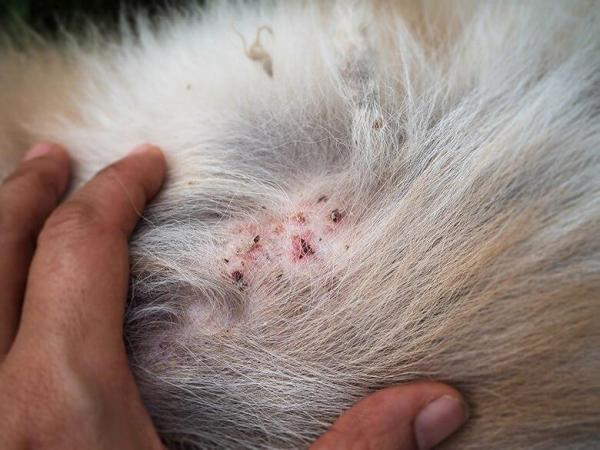
Canine folliculitis is an infection of the hair follicles that usually occurs as a consequence of another skin disease. This dermatological disease directly affects a dog’s hair follicle health. Folliculitis in dogs is an infection that can appear in animals of all ages, but is more common in puppies and immunosupressed dogs. This pathology can occur as either a mild or severe infection. Folliculitis in dogs treatment will depend on the severity of the infection and should only be administered by a veterinarian.
Keep reading here at AnimalWised for more about folliculitis in dogs symptoms, diagnosis and treatment. In addition, we’ll be listing some folliculitis in dogs home remedies which you can implement to complement veterinary treatment.
Superficial bacterial folliculitis in dogs: what is it?
Folliculitis in dogs is an infection which begins in the superficial part of the hair follicles which may or may not cause itching. Superficial bacterial folliculitis in dogs is usually caused by staphylococcus (gram-positive bacteria) and is more common on the lower part of the body, specifically in the armpits, abdomen and groin.
Canine folliculitis can appear as a primary or secondary disorder to other diseases such as scabies, seborrhea or pyoderma in dogs. This is because, in general, a healthy animal with a strong immune system will have a skin barrier that defends it from pathogens. When an dog is immunosupressed, this skin barrier protection fails, opening a path for the onset of disorders such as folliculitis. When folliculitis occurs in puppies, it is often due to the fact that they carry an immature immune system[1].
In addition to these factors, environmental conditions can also play a significant role. For instance, humid or unsanitary environments may increase the likelihood of developing folliculitis, as they provide a breeding ground for bacteria and fungi. Moreover, frequent swimming or exposure to water can sometimes exacerbate the condition, as moisture can weaken the skin's natural defenses.
For more, we recommend reading our article where we uncover the most common skin diseases in dogs.

Folliculitis in dogs: causes
Common causes of folliculitis in dogs includes:
- Vigorous brushing which damages the hair follicles and triggers the disease.
- Poor hygiene.
- Seborrhea in dogs.
- Parasitism by fleas or mites.
- A poor diet.
- Stress in dogs, which impairs the immune system functioning.
- Hormonal problems in dogs such as Cushing's syndrome or hypothyroidism.
- Irritations and allergies are also predisposing causes of folliculitis.
For example, dogs living in areas with high pollen counts may be more prone to developing allergic reactions, which can lead to skin issues including folliculitis. Similarly, chemicals found in common household products such as detergents and cleaners can irritate a dog's skin, making it more vulnerable to infections.
For more about the above mentioned superficial bacterial folliculitis dog causes, we recommend reading our following articles:
- Cushing’s syndrome in dogs.
- Hypothyroidism in dogs.
Folliculitis in dogs: symptoms
Folliculitis in dogs may appear mild or severe. Mild bacterial folliculitis in dogs symptoms appear as multiple small-sized, pimple-shaped bumps, which are known as pustules and are more common in short-haired dogs. Hairs in the affected area end up falling out, leaving a lesion referred to as an epidermal collar. This is a typical picture of superficial folliculitis in dogs, a very common dog skin infection.
When the folliculitis is deeper, large boils are formed that eventually open, releasing pus, after which a crust is formed. In the most severe cases of folliculitis in dogs, drainage fistulas develop. If the folliculitis is chronic, you may observe symptoms of alopecia, hyperpigmentation (skin darkening) and lichenification (skin thickening).
Folliculitis can also appear in the nasal region, the chin or the lips. Additionally, you might notice your dog exhibiting signs of discomfort, such as excessive scratching, licking, or even biting at the affected areas. Such behaviors can further exacerbate the condition, leading to additional skin trauma and potential secondary infections.
For more we recommend reading our article, my dog has pimples - is it canine acne?
Folliculitis in dogs: treatment
If the folliculitis is secondary to other diseases, it is essential to diagnose and treat the cause. Milder cases of folliculitis can be treated with veterinary prescribed soap baths, whereby treatment usually lasts between 15-20 days. If topical treatment is not sufficient, a professional may prescribe antibiotics.
Deep folliculitis in dogs however requires the use of both topical and systemic products. In addition, if your dog is long-haired, a veterinarian may recommended shaving hair off of the affected area. In long-haired dog breeds, due to hair covering, you may not observe initial symptoms. In this case, look our for excessive scratching and peeling or matted hair.
Furthermore, implementing a regular grooming routine can help in preventing recurrences of the infection. Using medicated shampoos recommended by the veterinarian can promote healing and improve skin health. It should be noted that while using these products, following the instructions for application and allowing the shampoo to sit for the recommended time can enhance effectiveness.
In these more severe cases, frequent baths are recommended until improvement is observed, at which time we can follow the guidelines we have discussed for cases of mild folliculitis.
Folliculitis in dogs treatment must continue until full recovery. In addition, if your veterinarian prescribes antibiotics, make sure to finish the entire treatment so that the infection doesn’t return.

Folliculitis in dogs: home remedies
Remember that before using any natural remedies for folliculitis in dogs, a correct diagnosis needs to be made.
When it comes to natural treatment for folliculitis in dogs, maintaining skin hygiene is key! In addition, consider adding foods rich in omega-3 into your dogs diet as they hold beneficial properties for the skin. Take note that poor hygiene or improper nutrition can cause the appearance canine folliculitis, therefore, giving attention to these are of the utmost importance. We suggest offering your dog a homemade diet rich in vitamins and nutrients. For more, we recommend reading our article where we discuss the benefits of homemade dog food.
Chamomile is another great folliculitis in dogs home remedy, in addition to any other natural painkiller such as tea or oatmeal. You can apply these to damaged skin, always consulting your veterinarian beforehand. These natural options do not replace prescribed pharmacological treatment. For more, read about the dosage and uses of chamomile for dogs.
Moreover, regular application of aloe vera gel on the affected areas can provide a soothing effect and promote healing. Aloe vera is known for its anti-inflammatory and antimicrobial properties, making it an ideal choice for managing skin irritations. However, it is important to ensure that the product used is safe for pets and free from harmful additives.

Is folliculitis in dogs contagious?
Folliculitis in dogs is not contagious, but its origin or primary cause may be. For instance, if the underlying cause is a parasitic infection, it may be transferable to other pets or even humans in some cases. It is crucial to address these root causes to prevent further spread. For more about diseases dogs can transfer to humans, read our article where we list 9 diseases dogs can transmit to humans.
This article is purely informative. AnimalWised does not have the authority to prescribe any veterinary treatment or create a diagnosis. We invite you to take your pet to the veterinarian if they are suffering from any condition or pain.
If you want to read similar articles to Folliculitis in Dogs - Causes, Symptoms and Treatment, we recommend you visit our Skin problems category.
1 https://www.sciencedirect.com/science/article/pii/S1090023313005704