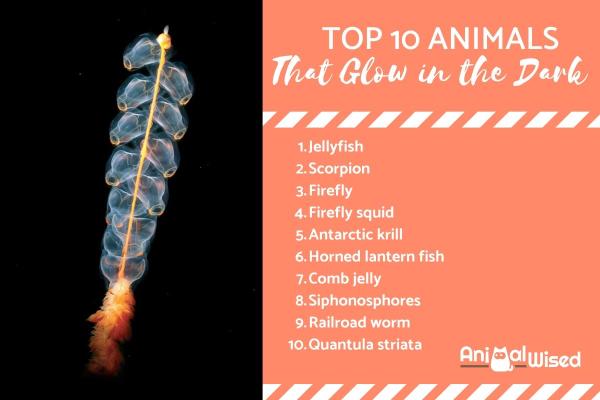
Have you ever heard of bioluminescence? It is the phenomenon whereby a living organism can produce light from its own body. This means there are animals which can glow in the dark. It is something most commonly seen in the world's oceans, as the vast majority of glow-in-the-dark animals live in the depths of the sea. There are bioluminescent animals that live on land also, but regardless of where they reside, the ability to glow in the dark makes them a phenomenon of nature.
If you are interested in knowing more, AnimalWised brings you our list of the top 10 glow in the dark animals. We also show you some surprising pictures so you can see this incredible natural phenomenon for yourself.
Why do some animals glow in the dark?
The reason why some bioluminescent animals glow in the dark is due to chemical reactions that occur in the body. This type of chemical reaction is known as chemiluminescence. Generally, a light-emitting molecule reacts with a certain enzyme, and the reaction causes light to emanate from the part of the body where it takes place. However, the type of molecules differ between organisms, and they may need other factors to support the reaction. For instance, some underwater creatures rely on symbiotic relationships with bacteria to produce light.
Our top 10 animals that glow in the dark are:
- Jellyfish
- Scorpion
- Firefly
- Firefly squid
- Antarctic krill
- Horned lantern fish
- Comb jelly
- Siphonosphores
- Railroad worm
- Quantula striata
Now that we know what animals glow in the dark, the question remains as to what purpose it serves. The reasons are believed to be varied and include:
- Warning: certain animals, such as poisonous frogs and toads, are brightly colored to tell potential predators eating them is not a good idea. Bioluminescence can work in a similar way, notifying something not to attack; otherwise, there could be trouble. Some animals may be bioluminescent to give them the look of a predator themselves, even if they are actually prey animals.
- Mimicry: some predators may do the opposite of giving a warning. By mimicking the look of a prey animal with light, they can attract smaller predators and attack when they are vulnerable. They may also camouflage themselves so they can surprise prey or evade predators themselves.
- Defense: some bioluminescent animals can also give off bioluminescent material. This creates a shroud that allows them to escape a potential threat. Such displays can be quite mesmerizing and serve as a distraction.
- Communication: although it is very difficult to know what they are saying, there are some bioluminescent animals that use their light to communicate. Glow-in-the-dark bacteria might use it to attract predators to their host and allow them to move on.
Since so many of the animals that glow in the dark live in the depths of the ocean, our knowledge about them is very limited. What we do know is that they can be incredibly beautiful, as our list of glow in the dark creatures shows.
1. Jellyfish
The first on our list is not really a single animal, but a large group of different animals that have some of the most incredible adaptations in nature. Some of them have the property of being able to glow in the dark. The reason for this is due to the green fluorescent protein or aequorin proteins, which allow them to glow. This phenomenon has been widely studied for its potential applications in scientific research.
Jellyfish likely use their light emission to attract prey. At night, agitation can cause the bioluminescent proteins to react and attract prey. They can then use their tentacles to envelop and/or sting their prey. Some glow-in-the-dark jellyfish include Aequorea victoria and the atolla jellyfish.

2. Scorpion
Scorpions do not glow in the dark, as such. Instead, they glow fluorescent blue or green when placed under UV light or certain wavelengths of light. In fact, if the moon is particularly intense on a clear night, the moonlight can be sufficient for them to glow in the dark.
Although experts have studied this phenomenon in scorpions for years, the reason for this reaction is still unknown. However, it is believed that they likely use this mechanism to measure light levels at night. In turn, this allows them to determine if it is appropriate to go hunting. It may also be used to recognize each other. Some researchers suggest it could be a vestigial trait from an evolutionary ancestor.
While scorpions don't look bright in normal light, there are some blue animals in nature which do.

3. Firefly
We move on to the minority of glow-in-the-dark animals that live on land, or at least some of the time. Fireflies are the little insects that light up gardens and forests. They live in temperate and tropical environments, and more than 2000 species of them have been discovered.
Fireflies glow due to chemical processes that occur in their body caused by oxygen consumption. This process releases a lot of energy and transforms it into a glowing cold light. This light is emitted by the organs below their abdomen and can emit in various colors such as yellow, green, and red. They are quite magical, especially when flying in a swarm. These displays are not only beautiful but also essential for their mating rituals, with different species having distinct flashing patterns to attract mates.

4. Firefly squid
We go back to marine animals which can glow in the dark by investigating the firefly squid. They are an animal that causes one of the most dramatic and glorious displays in the animal kingdom. Every year, off the coast of the Japanese Toyama Bay area, firefly squid provide this display.
During the mating season in the months of March to May, the firefly squid descend on the bay and search for partners. These squid are monogamous, although this may be due to shorter lifespans rather than love. Their whole body lights up and causes the bay to become incredibly beautiful. The light comes from bioluminescent reactions in their outer membranes. This is not just a spectacle for humans but plays a crucial role in their reproductive cycle, ensuring species survival.

5. Antarctic krill
This marine creature is a crustacean whose length varies between 8 and 70 mm. They are among the most important animals in the Antarctic food chain. This is because they are a major food source for many other predatory animals such as seals, penguins, and birds.
Krill have numerous organs that can give off a yellow-green light for 3 seconds at a time. This crustacean is said to light up to avoid predators from the deep, blending into the reflective water and ice surfaces they inhabit. This can also provide a beautiful display, even if the predators don't know what's going on. Additionally, this bioluminescence might play a role in their social interactions, helping them to school together more effectively.
Glowing isn't the same as changing color. This is a different process, and we explain it in this article on animals that can change color.

6. Horned lantern fish
This animal was the inspiration for one of the evil characters in the famous Disney animated movie Finding Nemo. And it is not surprising when you consider their large jaws and teeth can frighten anyone. This poor fish is listed as one of the ugliest animals in the world, but at AnimalWised, we simply consider it very interesting.
However, they do deserve their reputation as being frightening if you are another sea animal. The lantern fish carry on their heads a kind of flashlight with which they shine on the dark ocean floor and attract both their prey and their sexual partners. This bioluminescence is a critical adaptation for survival in the deep sea, where sunlight does not penetrate.

7. Comb jelly
Although little known, this type of ctenophore is a close cousin of the jellyfish. They are very abundant in oceans across the world and feed on a large portion of its plankton biomass. They are very strange. Although some have a jellyfish shape, most appear like flattened worms. Unlike jellyfish, they do not sting and produce bioluminescence as a defense mechanism. Many comb jellies have a single pair of tentacles that leave behind a kind of light trail. The species Bathocyroe fosteri is one example of glow-in-the-dark jelly combs. Their bioluminescent displays are not only captivating but also serve to startle and confuse predators, providing an escape mechanism.

8. Siphonosphores
Siphonosphores are not technically an animal that glows. There are animals that glow. Although they appear to be only one organism, they are actually made up of something known as zooids, multicellular organisms which group together to form a colonial animal. Some of them exhibit bioluminescence to attract prey. While the other animals on our list glow blue, green, or yellow, this is only the second one to have been found to glow red. This unique coloration is thought to be an adaptation for deep-sea living, where red light is absorbed and less visible to predators.

9. Railroad worm
Leaving the ocean again for a moment, we look at an animal which starts off as bioluminescent in their larvae form. They are known as railroad worms. Their bioluminescence comes from eleven pairs of glowing organs which line their body and then two more which appear on their head. They eventually turn into beetles, but they look like this during their larval stage. The railroad worm's name comes from the fact their glowing parts make them look like a strip of railroad. This fascinating display is used as a warning to potential predators, indicating that they might be toxic or otherwise unpalatable.

10. Quantula striata
A type of land snail, this does not glow as much as some of the other creatures on our list. Their eggs glow a lot, but once they develop into snails, their bioluminescence is minimal. It does appear in flashes of green, but it can be difficult to see in certain lights. They can be found in different parts of Asia and measure between 1.5 to 3 cm in the shell and up to 6 cm long in their body. Why these snails glow is not well known. It is speculated that this bioluminescence may serve a role in deterring predators or may simply be a byproduct of other biological processes.
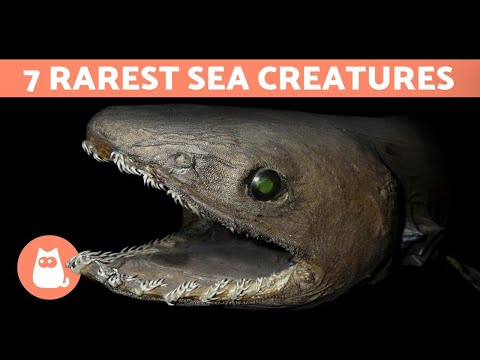
While you can find various glowing animals in the ocean, they may not be the weirdest you can find. Some of the rarest animals in the sea are also some of the most peculiar (and fascinating) to us:
If you want to read similar articles to Glow in the Dark Animals, we recommend you visit our Facts about the animal kingdom category.