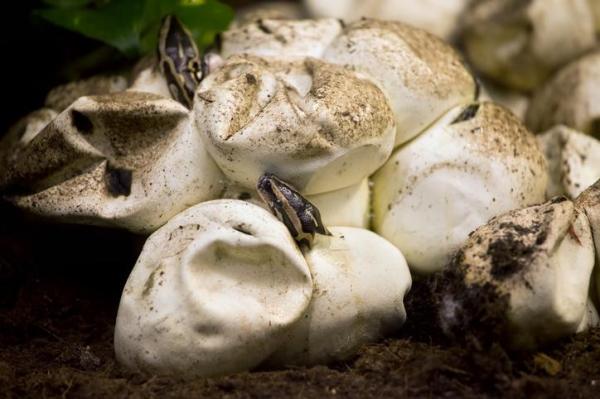
Snakes have different ways of reproducing, depending on the species to which they belong. Some snakes are oviparous, while others are viviparous. Would you like to expand your knowledge about snakes? If so, you’ve come to the right place!
For more about snake reproduction and fun snake facts, keep reading here at AnimalWised. In addition to answering your questions about how snakes give birth or whether or not snakes lay eggs, we’ll also be discussing snake diet and environment. Educate yourself about all things snake-related here!
Snake characteristics
There are several species of snakes in the world, each with its own characteristics that distinguish it from the others. However, all snakes share the following snake characteristics:
- They are reptiles
- They have no legs
- They have an elongated body
- They have a forked tongue
- They have scales
- They can move their skin
- They are carnivorous
So, you may be wondering, ‘‘What snakes give live birth?’’ Well, it depends on the species of snake we are referring to. Some snake species are oviparous, while others are viviparous, and some may even be ovoviviparous. Keep reading below to find out more about how snakes give birth.
Although these traits are shared, snakes vary widely in size, habitat, and behavior. Their reproductive method is one of the important differences between species.
Snake reproduction
As we’ve already mentioned, a snake’s characteristics vary depending on the species, as do its ways of reproduction. However, all snakes are reptiles that reproduce sexually. Snakes copulate after courtship, during which males attract the attention of females. If two males compete for the same female, they may fight. The winner will be the one to copulate with the female snake.
During snake intercourse, the male introduces one of his hemipenes, located at the end of his tail, into the female’s cloaca. Here, he deposits sperm, which fertilizes her eggs. During mating, snakes curl together, adopting an interesting form. Once intercourse is over, the snakes separate and go their separate ways.
In some species, a female can store sperm after mating, so fertilization may occur later. This is one reason reproduction does not always happen immediately after courtship.

Do snakes give live birth?
Although all snakes reproduce sexually, not all are born in the same way. Therefore, snake birth varies. Here are the different ways snakes give birth:
- Directly from the egg: oviparous snakes lay eggs. The young have to break the shell to enter the outside world. For this, they usually have a tooth or protuberance that allows them to break the eggshell. This tooth is also known as the "egg tooth".
- From the mother's womb: in viviparous snakes, the young develop inside the mother and are born live, rather than being laid in external eggs. Their nourishment can come from yolk and, in some species, through a placenta-like connection.
- Both at the same time: in ovoviviparous snakes, the young develop inside eggs that remain in the mother's body. They hatch inside the mother or shortly before birth, and then leave her body. As with oviparous snakes, ovoviviparous offspring usually have a tooth that helps them break the eggshell.
These categories describe where the eggs develop and how the young enter the world. The exact process can differ from one snake species to another.

How do snakes lay eggs?
Oviparous snakes can either take care of the eggs until they hatch, as is the case with pythons, or simply deposit and abandon them. Some snakes lay their eggs in self-made nests, while others lay eggs in places they consider quiet enough.
In general, and in contrast to what mammalian mothers do, reptiles do not take care of their offspring. This is why the mortality rate of newborn and young specimens is especially high. Now, how do snakes lay eggs?
Oviparous snake birth
Before depositing her eggs, the mother has to find the right place to create her nest. This nest requires a suitable temperature so that the eggs can develop properly. Depending on the species of snake, the mother will either abandon her eggs or take care of them until they hatch.
Snake eggs, once deposited, require an incubation period of between two and five months, depending on the species. After this time, the snakelets prepare to break their shells with the help of their egg teeth. These teeth fall off over time, once they have served their purpose.
After the eggs hatch, the snakelets will find themselves alone. Even pythons abandon their young after the eggs have hatched.
Temperature and moisture in the nest can affect how eggs develop. The young may hatch at different times, even when they are in the same nest.
For more, discover everything you need to know about oviparous animals here.
Want to see how snakes lay eggs? Watch this video below from Canal Serpiente.
How many eggs do snakes lay?
The number of eggs laid by a snake depends on the species. Some snakes, such as rattlesnakes, give birth to between 4 and 25 young, while other snake species can lay up to 100 eggs.
The number of eggs a snake lays also depends on its environment. Colder climates can negatively affect snake reproduction and may result in fewer eggs.
Additionally, it should be noted that not all snake eggs look the same. Some snake eggs are white, while others are yellowish. Snake egg shapes can also range from round to elongated or oval. Many have soft, leathery shells rather than the hard shells seen in bird eggs.
For more, we recommend reading our article where we discuss some examples of mammals that lay eggs.
Snakes that give live birth
As we’ve already mentioned, one common form of snake birth involves the development of embryos inside the mother. Viviparous snakes carry their young inside them, in a process similar to that of mammals. The snakelets receive nourishment from the yolk and, in some species, through a placenta-like connection. There is no external egg formation. Some examples of viviparous snakes include green anacondas and boa constrictors.
The gestation period of viviparous snakes varies depending on the species. In some species, it can be roughly two months. After this period, the mother goes into labor and delivery begins. Several young can be born in a single litter.
The number of young and the length of pregnancy can vary between species. Unlike egg-laying snakes, these mothers give birth to young that are already outside their eggs.
Snake giving birth
If you want to know more about how snakes give live birth, we recommend watching the following BoaWorld video.

Ovoviviparous snake birth
Ovoviviparous snakes develop inside eggs that are retained in the mother’s body. The rattlesnake is a well-known example. Rattlesnake embryos develop in eggs inside the mother and hatch shortly before or during birth. This whole process takes place over approximately 90 days.
Rattlesnake pups are about 25 centimeters long and have a button at the end of their tails. Young rattlesnakes are venomous from birth, just like adult specimens.
These little snakes are completely independent from the moment they leave the egg and the mother's womb. It’s important to note, however, that not all ovoviviparous snakes are born outside the shell. Some break the shell as soon as they are expelled by the mother.
Viper snake birth
Many vipers are also ovoviviparous animals. Their eggs develop inside the mother until the young hatch, after which they leave her body.
When a snake is pregnant, she will try her best to lie in the sun or remain close to heat sources. This is important for the correct development of her embryos, which require warmer temperatures to grow. Snakes rely on their surroundings for warmth, so a suitable resting place can help support the development of the young.
How are marine snakes born?
Sea snakes are almost entirely ovoviviparous. The young develop in eggs housed by their mother until they hatch. This occurs except in species belonging to the genus Laticauda, which includes species such as Laticauda colubrina and Laticauda saintgironsi.
Although they spend most of their lives in the water, sea snakes must come to the surface to breathe air. Sea kraits in the genus Laticauda also come onto land to lay their eggs.

How snakes are born: easy explanation for children
In order for baby snakes to be born, their father and mother have to first meet. Snakes can be born from an egg, like baby chicks, or be born straight from the mother, like human babies. Once they are born, small snakes already have teeth and can eat like adults.
Normally, snake mothers are not very attentive to their young, and in many cases babies have to fend for themselves. However, some snakes, such as pythons, take care of their little ones until they are old enough to feed and live alone.
Whether they hatch from an egg or are born live, baby snakes are usually able to move and find food soon after birth.
For more fun snake facts, we recommend reading about the most dangerous snakes in India.
What do snakes eat?
Now that you know how snakes are born, let’s discuss a snake’s diet and environment.
Snakes feed exclusively on other animals and are completely carnivorous from birth. A snake's diet is based on two factors: its size and its predatory abilities.
In general, snakes are very good at attacking and hunting their prey. In many cases, the prey does not realize that the snake is there until it’s too late. Snakes have two different hunting mechanisms:
- Constriction: the ability to surround their prey and squeeze until it suffocates.
- Venom: snakes bite their prey and inject venom into its body.
In general, a snake's diet can range from insects to other vertebrates, such as rodents or fish in the case of aquatic snakes. Snakes usually swallow their prey whole, then digest it gradually.
For more snake facts, we recommend reading our article where we list the 10 largest snakes in the world.

Where do snakes live?
Snakes inhabit virtually every corner of the planet. However, they are more common in warmer environments, such as the Amazon rainforest or Australia, where many venomous snakes live, including some highly venomous species.
Aquatic snakes, both freshwater and saltwater species, have evolved and adapted to their specific conditions. Sea snakes can be found in both the Pacific and Indian Oceans, where they inhabit shallow waters near the coast and can enter freshwater flows if necessary. Snakes may also live in forests, grasslands, deserts, and wetlands, using places such as rocks or burrows for shelter.
If you want to read similar articles to How do Snakes Give Birth?, we recommend you visit our Gestation category.
- The geography of snake reproductive mode: a global analysis of the evolution of snake viviparity (Global Ecology and Biogeography)
- Reptilian viviparity: past research, future directions, and appropriate models (PubMed)
- Lane, A., Guinea, M., Gatus, J. & Lobo, A. 2010. Laticauda colubrina. The IUCN Red List of Threatened Species 2010: e.T176750A7296975.
- McDiarmid RW, Campbell JA, Touré T. 1999. Snake Species of the World: A Taxonomic and Geographic Reference, vol. 1. Herpetologists' League. 511 pp. ISBN 1-893777-01-4