For dogs, loose stools mean there is a problem. As with humans, the quality of a dog's feces reveals something about their overall health. Smell, consistency, and color of dog stool can point us in the right direction if we suspect they have a health problem. A healthy dog should have firm stool, not hard. It should be evacuated smoothly and be of a milk chocolate color. When the dog's poop is soft and, especially, if it becomes runny, it indicates a gastrointestinal problem. Even small changes in a dog's diet or routine can cause this to happen, but so too can more serious medical issues.
At AnimalWised, we find out how to harden your dog's stool. We show you that the way to firm up your dog's poop is to find out why it might be soft in the first place and counteract it.
Causes of loose stools in dogs
Healthy dog stools should be neither too hard nor too soft. When a dog produces softer stools than normal, it can indicate various issues with the dog's health or behavior. These can be systemic diseases, changes in routine, problems with diet, or other various underlying causes. In general, the causes of loose stools in dogs are as follows:
- Stress and anxiety: we might think that a dog's digestive health is only reliant on their physiological well-being, but psychological stress and anxiety can cause their bowels to function improperly.
- Sudden changes in diet: when you want or need to change the dog's feed, it should be done gradually. If not, the upset can cause sudden digestive changes that result in soft stools.
- Eating spoiled food: bacteria in spoiled food can cause stomach and digestive problems.
- Poisonings: many plants or chemicals can cause poisoning or intoxication in the dog. This results in intestinal inflammation, preventing fecal matter from forming properly and resulting in loose stools.
- Internal parasites: these may include Ancylostoma, Uncinaria, Toxocara, Giardia, Toxascaris, Dipylidium, Echinococcus, Trichuris.
- Inflammatory bowel disease (IBD): again, the inflammation causes stool to form improperly.
- Adverse reaction to food: food allergies in dogs can result in various symptoms, but diarrhea is one of the most common.
- Pancreatitis: inflammation of the pancreas.
- Intestinal volvulus: when a loop of the intestine loops around itself and causes partial or total blockage. Can develop into an intestinal or inguinal hernia.
- Intestinal tumor: whether malign or benign, tumors in dogs can lead to gastrointestinal issues.
- Parvovirus: as well as other intestinal viruses.
- Canine distemper
- Bacterial enteritis: commonly caused by Escherichia coli, Campylobacter, Salmonella, Yersinia and others.
- Kidney disease: improper functioning of the kidneys means waste is not processed correctly.
- Liver disease: similar impact as kidney disease.
- Addison's disease: otherwise known as hypoadrenocorticism.
How to collect loose stools from my dog
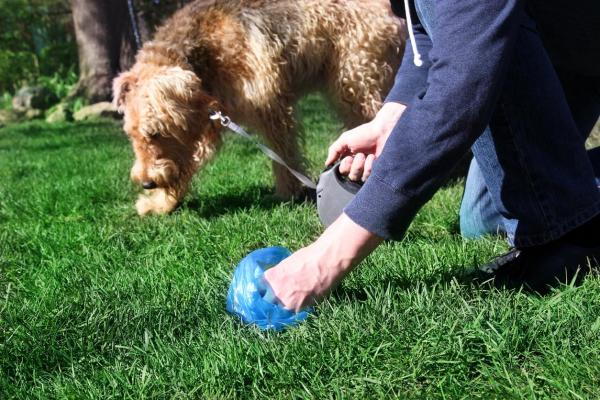
When a dog begins to produce loose stools, the softer they are, the more difficult they will be to collect. It is difficult to pick up the entire amount of feces with only a plastic bag. It is necessary to use something absorbent, such as kitchen paper, to finish picking up the remains that remain on the ground and not leave anything on public roads. That a dog has loose stools is no excuse to leave the excrement in the street.
How to harden my dog's stool
To harden the dog's feces, a series of measures must be taken so that they return to a normal and healthy consistency. We have already seen that loose stools can be explained by various processes in addition to infectious, endocrine, and systemic diseases. With these diseases which cause diarrhea in dogs, treatment will not always be pharmacological in order to control these processes.
The way we can firm up a dog's stool doesn't always require pharmacological treatment, but many do. For this reason, it is vital we go to a veterinarian to diagnose the reason for a dog's diarrhea. Many are very serious and can persist without showing other obvious symptoms. When a veterinarian has diagnosed the problem, they will likely recommend one of the following ways to harden a dog's stool:
Use a suitable feed
Use a suitable feed
Since an improper diet can lead to a dog having diarrhea, we need to analyze what they are eating. Often, the issue is that the quality of the food is not up to standard. Too much commercial feed has poor nutritional value as they do not need to be made to the same standards as human food. Check the label of your dog's feed to see its quality or check reviews for the brand online.
Quality dog food needs to have protein as its main ingredient. If the ingredient list has high levels of grains or other starchy food, it is not good for your dog. A complete and balanced feed meets all of their nutritional needs and shouldn't be supplemented with low quality meat or poor nutritional ingredients.
It may not be that the dog's feed is bad, but we may be giving it to them in a way that results in loose stools. As stated above, if we change their diet abruptly, we can cause gastrointestinal upset. Many of us want to change their diet to homemade food, but we should introduce this new diet gradually and see how the dog reacts.
Since there are physiological reasons why certain dogs get diarrhea, your veterinarian will need to be consulted to make a dietary change. They may suggest giving less food, providing them with a different brand, or even introducing a soft food diet for dogs.
Additionally, some dogs may have sensitivities or allergies to specific ingredients, which can lead to digestive issues. Identifying and eliminating these ingredients from their diet can help improve stool consistency. Finally, don't give your dog improper treats. Many foods suitable for humans are not suitable for dogs. For example, although puppies require milk to develop, they should not drink it as adults. Take a look at our video below to know more about the nutritional needs of dogs:
Use probiotics
When a dog has soft stools, on many occasions there has been an imbalance in the flora of the intestine. These are necessary for proper digestion and metabolism, resulting in the formation of firm stools. Since an imbalance in gut flora can result in poor digestion, we may be able to bring them back into balance with the use of probiotics.
There is still a lot to be understood about probiotics and gut flora in humans, even less in dogs. For this reason, we need to speak to our veterinarian who will determine if probiotics should be recommended. They can determine what probiotic might be helpful and assist in recording the results.
In addition to probiotics, prebiotics may also be beneficial. Prebiotics are non-digestible fibers that promote the growth of beneficial bacteria in the gut. Including prebiotic-rich foods like bananas, chicory root, and asparagus in your dog's diet can support a healthy intestinal flora and improve stool consistency. Always consult your vet before making any significant changes to your dog's diet.
Reduce stress
A dog can become stressed for a variety of reasons. They are particularly susceptible to changes in their routine. Even mild changes can cause anxiety, but we need to be especially careful when we make big changes such as introducing a new family member or moving home. This nervousness can be reflected in their intestinal function, resulting in loose stools and other symptoms of stress in dogs.
In this case, to firm up a dog's poop, we will need to understand the underlying cause of their stress. If necessary, we may need to go to a dog trainer or canine ethologist who will be able to analyze their situation and provide practical advice on how to relieve the stress symptoms, including hardening their stool.
Stress can impact the dog in various ways, including making your dog poop a lot more than usual.
Furthermore, creating a calm and stable environment with regular routines for feeding, walking, and playtime can help reduce stress in dogs. Consistency in their daily schedule can provide them with a sense of security and predictability, ultimately leading to improved digestive health and firmer stools.
Deworm your dog
An important cause of loose stools in dogs is internal parasitization by various species of parasites. These can be in the form of protozoa, flatworms, roundworms, and other parasites which cause enteritis or damage to the mucosa of the intestinal lining.
In a hookworm infection, it is common to see blood in the dog's stool. This is due to the damage the parasites cause to the lining of the intestine. Most internal parasites which cause diarrhea can be found in the small intestine. However, other parasites such as Trichuris vulpis affect the large intestine causing colitis. Diarrhea of the large intestine results.
For all of these reasons and more, deworming our dog is essential. This is something which needs to be started when they are a puppy. The veterinarian will determine the right type of deworming and begin a deworming schedule so they do not have this problem in the future.
Moreover, regular fecal examinations are recommended to detect and treat any parasitic infections early. This preventive measure ensures that any potential issues are addressed before they lead to more severe health problems and helps maintain firm stool consistency.
Treat the underlying disease
Numerous diseases can cause loose stools in dogs. If the reason your dog has soft poops is due to an infection, systemic disease, or any type of pathology, you will need to seek veterinary medical attention. They will carry out various tests, including imaging and blood tests, to analyze why the dog has diarrhea. Once these have been determined, they will prescribe the correct course of treatment.
With bacterial infections, the dog will need antibiotics to kill the bacteria. Some issues cannot be treated directly, so management of the symptoms will be required until the pathology passes. In cases of hernias, tumors, and other serious internal diseases, surgical intervention may be required.
In cases of disease, the hardening of the dog's stool will be a secondary effect of treating the primary cause.
In addition, supportive care may include fluid therapy to prevent dehydration, especially if diarrhea has been severe or prolonged. Maintaining hydration is crucial for recovery and overall health. Follow-up appointments with the vet may be necessary to monitor progress and adjust treatment plans as needed.

Foods to harden my dog's stool
When the reason your dog has diarrhea is not serious, they may simply need a dietary change to harden their stool. There are various foods which can help their feces to firm up, usually those high in fiber. Pumpkin is one of the most helpful foods in a soft food diet for dogs with diarrhea. You can try adding no more than two spoons to their regular feed and assess its effects. Cooked rice and sweet potato are also often very helpful.
Speak to your veterinarian about what feed will be best for dogs with diarrhea. If you have been giving them a BARF or similar homemade diet, they may recommend going back to a suitable commercial feed to ensure their nutritional needs are met.
Additionally, incorporating foods like boiled chicken without seasoning, which is gentle on the stomach, can assist in firming up stools while still providing necessary nutrients. Always ensure that any dietary changes are gradual and monitored to observe how your dog responds.
This article is purely informative. AnimalWised does not have the authority to prescribe any veterinary treatment or create a diagnosis. We invite you to take your pet to the veterinarian if they are suffering from any condition or pain.
If you want to read similar articles to How to Harden My Dog's Stool, we recommend you visit our Intestinal problems category.