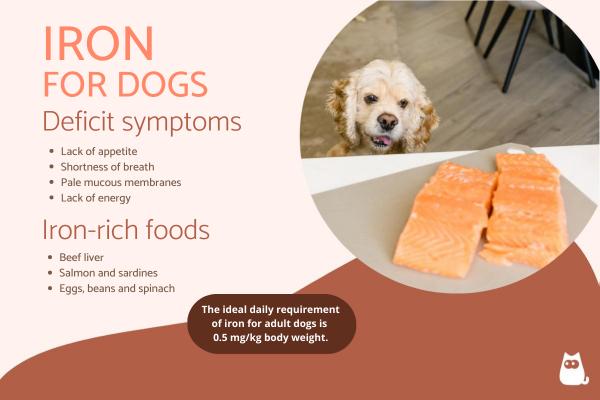
Iron is a mineral that your dog's body needs to perform important functions, such as transporting oxygen in the hemoglobin of red blood cells throughout the body. Unbalanced home-cooked food or even the cheapest food can lead to insufficient absorption of this mineral, causing the dog to suffer from anemia. Dogs with iron deficiency may be tired, listless, and reluctant to play, or show more severe symptoms such as shortness of breath and purple mucus. Caregivers should watch for signs of anemia and take the dog to the veterinarian as soon as they notice a change in behavior. Early treatment offers a better chance of a good prognosis.
The following AnimalWised article discusses the importance of iron, as well as the best iron-rich foods for dogs.
Why is iron important for dogs?
Iron is a vital mineral for the proper functioning of cells. It is essential for oxygen transport, synthesis of genetic material, and energy metabolism. Most of the iron in animals is found in erythrocytes (red blood cells) as hemoglobin.
In muscles, iron is contained in myoglobins, proteins that are responsible for oxygen transport, serve as a reservoir for this nutrient, and remove carbon dioxide from muscle tissue. This process is crucial for maintaining optimal muscle function and overall vitality.
Iron consumed by the body is obtained from two main sources, food, and recycling of aged red blood cells. The recycling process is efficient in maintaining iron levels, but dietary intake is still necessary to meet the body's demands.
Iron deficiency in dogs has consequences for the entire organism of the animal, with anemia being the most important manifestation. Anemia can severely impact a dog's quality of life, leading to decreased energy levels and compromised immune function.
Causes and symptoms of iron deficiency in dogs
We have already said that anemia develops in dogs suffering from iron deficiency. The term anemia refers to a pathological process characterized by a decrease in red blood cells and/or hemoglobin.
Anemia is rarely a primary condition and is often the result of systemic disease. Therefore, it is important to know the cause of the dog's iron deficiency in order to initiate treatment that targets the primary culprit. Anemia may result from blood loss, which may be severe and rapid or slow and chronic, and both may have different causes.
Causes of iron Deficiency in Dogs
Starting from acute bleeding, the causes may be the following:
- Trauma
- Gastrointestinal ulcers
- Coagulation disorders
The following causes may be responsible for chronic bleeding:
- Parasites (ticks, fleas, intestinal parasites)
- Gastrointestinal ulcers with slow bleeding
- Blood loss through the urine
- Bleeding tumors
In addition to blood loss, anemia may occur due to accelerated destruction of red blood cells and decreased production of these cells by the bone marrow, as in tick-borne disease. In this case, the causative agent of the disease, the bacterium Erliquia canis, transmitted by the tick Rhipicephalus sanguineus, causes the death of mature and immature cells in the bone marrow, resulting in low production of blood cells.
Anemia can also be caused by a nutrient deficiency called iron deficiency. It can occur in lactating animals because milk is an iron-deficient food. In these cases, young animals try to make up for the nutrient deficiency by eating dirt. However, in adult animals, the most common cause of iron deficiency anemia is chronic blood loss, usually through the gastrointestinal tract, in conjunction with iron malabsorption due to diseases such as gastritis, ulcers, and parasites.
Additional factors such as poor nutrition and inadequate diet can exacerbate the situation, making it essential for pet owners to provide a balanced diet rich in essential nutrients.
Symptoms of a lack of iron in dogs
The most common symptoms of iron deficiency in dogs include:
- Pale mucous membranes
- Cyanosis
- Fatigue
- Respiratory problems
- Tachycardia
- Apathy
- Loss of appetite
If you notice any of these symptoms, be sure to talk to your trusted veterinarian about them. In most cases, the veterinarian will ask for a blood test to determine the dog's hematocrit level. The parameter is as follows:
- Mild anemia: between 37% and 26%
- Moderate anemia: between 25% and 13%
- Severe anemia: below 13%
In all these cases, iron should be supplemented and in the most severe cases, blood transfusion may be required. Early intervention is crucial for reversing the condition and preventing further complications.
For more information, see this other article, where we talk about nutrition and care for dogs with anemia. It is important to remember that addressing the root cause of iron deficiency is just as important as treating the symptoms.
How to treat iron deficiency in dogs?
Iron can be supplied to dogs in two ways: by diet or intravenously.
In the first case, diet plays an important role, as the puppy or adult dog must consume foods with a high content of this mineral. In addition, iron can be supplied through dietary supplements such as tablets or oral solutions, which are readily available in pet stores.
Intravenous administration of iron is indicated in the most severe cases of iron deficiency and should be prescribed by a veterinarian. This method ensures rapid absorption and can be life-saving in critical conditions.
Ideal iron dosage in dogs
If your dog needs to take an iron supplement, the dosage will depend entirely on the degree of deficiency as well as the supplement used. Therefore, the veterinarian should determine the appropriate dose, as excess iron in dogs can also be harmful.
However, as a rule of thumb, the recommended daily requirement of iron for adult dogs is 0.5 mg/kg body weight. This requirement is somewhat higher for growing and nursing puppies due to their rapid growth rate. Regular monitoring by a veterinarian can help adjust dosages as needed to ensure effective treatment.
Iron-rich foods for dogs
Like people with iron deficiency anemia, dogs can also benefit from an iron-rich diet. Healthy dogs usually get all the iron they need from their dog food, but other food sources contain plenty of iron, these include:
- Salmon and Sardines: both are iron-rich fish that can be offered to dogs with their food or as a snack. They can be boiled, steamed or grilled, always without bones. These fish also provide omega-3 fatty acids, which are beneficial for skin and coat health.
- Beef: red meat can be given to dogs mixed with a carbohydrate source (rice or mashed potatoes) and a fiber source (carrots, oats, or brown rice). Always remember to offer cooked or grilled meat to avoid disease transmission. Red meat is also a good source of protein, which supports muscle maintenance.
- Beans or spinach: they are rich in iron and a perfect complement to other foods of animal origin. They should also be boiled or steamed. Spinach is also high in antioxidants, which can help reduce inflammation.
- Eggs: not only are they high in protein, but they are also a natural source of vitamin B12. They must be well cooked to avoid the transmission of diseases such as salmonellosis. Another iron-rich food that is very popular with dogs is egg yolk, which can be cooked and added to the normal diet. Eggs contribute to a shiny coat and healthy skin.
- Fruit is an excellent source of vitamin C, which aids in the absorption of iron. If your dog likes mango, tomato or strawberry, you can offer them these fruits in the form of snacks or in combination with the aforementioned ingredients. Fruits also provide essential vitamins and minerals that support overall health.
You may also be interested in this other article, where we talk about iron-rich foods for cats to increase red blood cells. It's important to introduce new foods gradually to ensure they suit your dog's digestive system.

Is it good to give dogs liver to raise iron levels?
Beef liver is a classic in the diet of dogs with anemia, which means that it is one of the most recommended foods for them. This is because this organ is rich in iron, vitamin B12 and folic acid, nutrients that the bone marrow needs to form red blood cells.
The liver can be offered to the dog raw, cooked or dehydrated (lyophilized). In the first case, you must take special care to use a well-preserved, fresh and parasite-free piece that you freeze and thaw beforehand. When cooked, it can be offered to the animal as a meal or as a snack. In dried form, you can find liver in the form of fillets at specialty pet supply stores. Remember that liver should always be offered in small quantities due to its high fat content. Liver is also a source of vitamin A, which supports vision and immune health.
Prohibited foods for a dog with a lack of iron
You have already seen which foods for dogs are rich in iron. However, it is important to know that there are some foods that you should avoid if your dog is iron deficient. These are:
- Onion: contains an element called n-propyldisulfite, which is toxic to dogs. This substance causes the conversion of hemoglobin to methemoglobin, which impairs oxygen transport to tissues. Symptoms include listlessness, fatigue, tachycardia, shortness of breath and cyanosis. Even small amounts can be harmful.
- Milk: should be avoided immediately after meals because it contains high levels of calcium, which competes with iron for absorption by the body. The occurrence of anemia is possible in puppies that are only suckling. Additionally, lactose in milk can cause digestive upset in some dogs.
- Beans: are rich in zinc, a nutrient that competes with iron in the absorption phase. Therefore, it is not recommended to combine beans with other iron-rich foods for dogs, such as red meat and liver. Consider using beans moderately and not as a primary iron source.
You may also be interested in this other article where we talk about forbidden food for dogs. Always consult with a veterinarian before making significant changes to your dog's diet.
This article is purely informative. AnimalWised does not have the authority to prescribe any veterinary treatment or create a diagnosis. We invite you to take your pet to the veterinarian if they are suffering from any condition or pain.
If you want to read similar articles to Importance of Iron in Dogs, we recommend you visit our Home Remedies category.
- Grotto, HZW Iron metabolism: a review of the main mechanisms involved in its homeostasis . Rev. Bras. hematol. Hemoter, 2008. Available at https://www.scielo.br/j/rbhh/a/HLcTcgqkgV7VmpRWyWTTVXw/?lang=pt.
- Lopes, FB et al . Allium cepaem poisoning in small animals – Literature review. XVII Inter-institutional Seminar on Teaching, Research and Extension. Unicross. Available at https://home.unicruz.edu.br/seminario/downloads/anais/ccs/intoxicacao%20por%20allium%20cepaem%20pequenos%20animais%20%E2%80%93%20revisao%20bibliografica.pdf.
- Drumond, MRS (2013). Occurrence, classification, and risk factors of anemia in dogs . Federal University of Viçosa. Available at https://www.locus.ufv.br/bitstream/123456789/5160/1/texto%20completo.pdf.
- Alencar, NX et al . (2022). Iron metabolism in domestic animals: review . Continuing Education Magazine. Available at file:///C:/Users/alvar/Downloads/3274-Texto%20do%20article-2753-1-10-20130826.pdf.