
What a cat will look like physically is, for the most part, dictated by their genetics. The genes carried by their parents will determine what is their eventual body shape, coat type, and color. Although cats will look different when compared to being a kitten with being an adult cat, it doesn't mean they will change completely. Some animals will look markedly different when they are an adult compared to when they were young, but cats do not generally fall into this category. For this reason, we should know that there are various situations which might mean a cat's fur changes color, many of which can be worrying.
At AnimalWised, we look at what happens when your cat's fur is changing color. We ask whether this is normal and understand what might be causing the phenomenon.
Can the color of cats change?
The color of a cat's hair is determined by their genetics. This is why certain breeds may be of only one coat color or pattern, while others can be more varied. This is due to the limitations of their gene pool. Genetics will also determine if the cat's coat is long, short, wavy, thin, or abundant. Shedding, brushing, grooming, and other factors may change their coat in some way, but these genetics will not.
If your cat's fur is changing color, it can be due to various causes. These can be both pathological diseases or environmental changes. They include:
- Age
- Stress
- Sun
- Poor nutrition
- Intestinal disease
- Renal disease
- Liver disease
- Endocrine disease
- Infectious disease
- Skin disease
Additionally, certain medications or treatments can sometimes have an impact on fur color, and changes in seasons might also play a role in slight color shifts.
Does a kittens hair change color as they develop?
Although there is some breed variation, cats generally do not change the color of their fur as they grow. This is unlike a cat's eyes. All kittens are born with blue eyes. It is not until they are a little older that color pigmentation in the eye develops and we can see the final eye color.
As a cat develops into an adult, their coat color will remain the same. However, the tonality of the fur can change. Usually, the tone will intensify, meaning it will be bolder and richer as an adult.
The few breeds where fur color does change as they age include:
- Himalayan
- Siamese
- Khao Manee
- Ural Rex
Himalayan and Siamese cats
All cats carry a gene that enables them to produce melanin, with the exception of albino cats (although they may be able to produce a small amount). This is the pigment that will determine the color of the cat's fur. Siamese and Himalayan types cats have a color-point coat pattern where their extremities are darker than their main body.
The reason for this is because these breeds have an enzyme involved in melanin production which only activates at lower temperatures. As a cat's body temperature is lower at the extremities, it causes the fur color to be darker in these places. This is actually a type of partial albinism[1].
The ambient temperature can affect the color of a color-point cat's fur. For these cats, when the temperatures rise in the summer, the enzyme doesn't act as much and the color of their fur can lighten. Conversely, when the temperatures drop, the fur tends to be a little darker. However, the change won't necessarily be very dramatic and we may not notice it as much if we keep our home at a constant temperature.
Siamese cats can also develop something known as periocular leukotrichia. This is when hairs around the eyes turn white due to depigmentation. This change can occur when the feline is poorly fed, if they are pregnant, when kittens grow fast, or if they have a systemic disease. For this reason, they will need to be taken to the veterinarian for diagnosis.

Khao Manee
When they are born, Khao Manee cats have a dark spot on their head. However, after a few months, this white spot of fur will disappear and the adult specimen will have a completely white coat. Interestingly, the Khao Manee is often referred to as the "White Gem" due to its striking appearance, and its fur can sometimes exhibit a subtle sheen under certain lighting conditions.

Ural Rex
Another example of a cat with fur which changes color is the Ural Rex. These cats are born with grayish colored fur. After their first molt (when the cat sheds hair), their final color will present. At around 3-4 months, they will also begin to grow the wavy hair which characterizes the breed. However, it is not until 2 years of age that the individuals will acquire the phenotype of an adult Ural Rex.
The Ural Rex is known for its distinctive curly coat, which is not only unique in color changes but also in texture. This wavy coat is a result of a natural mutation, giving the breed its charming and unusual appearance.

Senior cats
The natural aging process means a lucky cat can live over ten years of age, but after this point most will start to be considered senior cats. When this happens, their fur can acquire a slight change in color and tone. They may even develop gray hairs. The coat colors where these signs of aging in cats are most noticeable are in black and orange cats. A black cat's fur will start to acquire a grayish hue and orange cats can start to yellow a little.
Additionally, as cats age, their skin may become thinner and less elastic, which can also affect the appearance of their coat. Maintaining a balanced diet and regular vet check-ups can help manage these changes and support overall health.

Change in your cat's fur due to stress
Cats are especially sensitive to stress. Even relatively small environmental changes can alter their behavior and we can see them develop signs of stress.
An episode of acute stress can cause something known as telogen effluvium. This is a process by which more hair follicles than normal go from the anagen phase of growth to the telogen phase (when the hair sheds). However, it can also affect a change in the color of the cat's fur. This color change can vary, but most often it tends to become paler or even appear gray.
Moreover, chronic stress can lead to long-term changes in fur condition and color, affecting overall coat health. Ensuring a stable environment and minimizing stressful situations can help maintain a healthy fur color in your cat.
Change in your cat's fur color due to sunlight
The sun's rays can affect the external appearance of our cat's hair, in particular its coloration. It can also affect the structure as sunlight might dry out the hair. Being in direct sunlight is something which cats love to do, lying in it for hours like a sunbather. This causes their fur to wash out and decrease in tonality. Similar to age, black cats can turn grayish and orange cats turn yellowish.
A cat with outdoor access may have more opportunity to be in the sun, but even indoor cats will search out sunlight. When the sun's rays pour through the window, they will lay where it lands. We need to be careful with this as direct sunlight encourages skin cancers such as a squamous cell carcinoma.
In addition, prolonged exposure to UV rays can accelerate the natural fading of fur color, particularly in darker-coated cats. Providing shaded areas and minimizing direct sun exposure can help preserve your cat's natural fur color.
Change in your cat's fur color due to poor nutrition
Cats are carnivores, they need to consume animal tissue daily as it offers the necessary protein they need to survive. All the essential nutrients they require can only be obtained from this source. Two examples include the essential amino acids phenylalanine and tyrosine. These amino acids are responsible for synthesizing melanin, the pigment that gives hair a dark color.
When a cat eats a diet deficient in animal protein, it develops nutritional deficiencies. Among them, phenylalanine or tyrosine deficiency which can cause the cat's fur to change color. This is often observed in black cats who have hair which turns reddish due to the lack of nutrients and the consequent reduction of melanin. This reddish-orange color change in black cats can be seen in other nutritional deficiencies, such as zinc and copper deficiency.
In addition, maintaining a balanced diet is crucial not only for fur color but also for the overall health of the cat. Regularly consulting with a veterinarian to ensure your cat's dietary needs are met can prevent these deficiencies and maintain a vibrant coat.

Change in your cat's fur color due to illness
When a well-fed dark cat that eats abundant animal protein begins to turn orange, problems at the level of intestinal absorption which suggest a lack of the amino acid tyrosine or phenylalanine must be ruled out. These problems can be due to intestinal malabsorption. These can be due to intestinal tumors, inflammatory bowel disease, and infectious enteritis.
Disorders in the secretion and production of bile acids from the liver or enzymes in the pancreas also hinder digestion and absorption of nutrients. Sometimes these processes, together with an inflammatory bowel disease, can appear together in the cat, resulting in something called feline triaditis.
Other diseases that cause alterations in the color of the hair, appearance, or condition of the skin of our cats include the following:
- Kidney disease: in chronic kidney failure the hair of our cats tends to become dull, paler, drier, and lifeless.
- Liver disease: the liver is key in the transformation of the essential amino acid phenylalanine into tyrosine. Due to this, a liver disease such as lipidosis, hepatitis or a hepatic tumor can affect the functionality of this process and the black feline will turn orange.
- Jaundice: the yellow coloration of the skin and mucous membranes of our feline can be due to a liver problem or hemolytic anemia. It can sometimes be reflected in the hair, especially if the feline is light, turning yellowish to a certain extent.
- Endocrine diseases: such as hyperadrenocorticism (Cushing's syndrome) or hypothyroidism, less frequent in cats than in dogs, can alter the skin and hair of our cat. In these cases, the skin darkens, they lose hair (alopecia) or it becomes very brittle.
- Atopic dermatitis: this allergic disease makes our cat's skin red and itchy. Excessive grooming can cause alopecia. It can also be as a result of ringworm or external parasites.
- Vitiligo: consists of a sudden or progressive change in the pigmentation of the skin and hair of small cats. In this case, the hair is depigmented, turning completely white. It is very rare, affecting less than 2 cats per 1000 and can be caused by the presence of antimelanocyte antibodies, which target melanocytes and inhibit melanin production and the consequent darkening of the hair. It makes your cat's hair color almost entirely white.
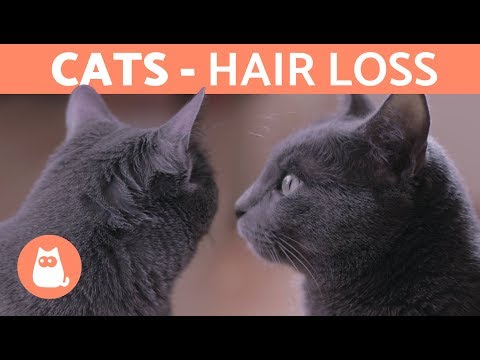
Many of these diseases can lead to a cat's hair not only changing color, but to fall out. It is important to consult with a veterinarian if you notice any such changes, as early detection and treatment of underlying conditions can improve outcomes. For more information, check out our AnimalWised video below:
If you want to read similar articles to My Cat's Fur Is Changing Color, we recommend you visit our Facts about the animal kingdom category.
1. Imes, D. L., Geary, L. A., Grahn, R. A., & Lyons, L. A. (2006). Albinism in the domestic cat (Felis catus) is associated with a tyrosinase (TYR) mutation. Animal Genetics, 37(2), 175-178.
https://www.ncbi.nlm.nih.gov/pmc/articles/PMC1464423/