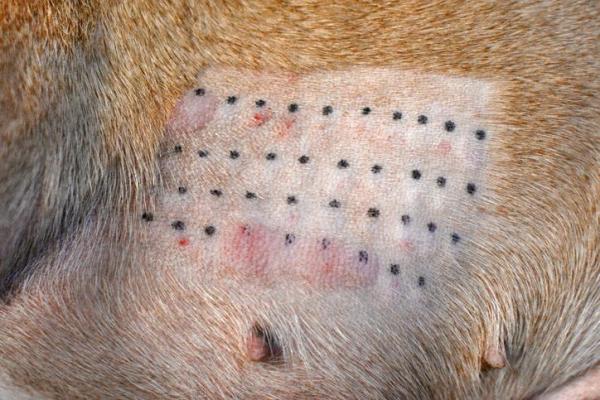
Hives in dogs, also referred to as Urticaria, can be defined as visible bulges on the skin, in addition to noticeable reddened skin inflammation. Have you noticed your dog scratching more than normal? This, in addition to a swollen face, is a common symptom of hives in dogs.
For more about the causes, symptoms, treatment and home remedies for hives on a dog’s skin, keep reading here at AnimalWised.
My dog has bumps all over his body: itching
Hives on a dog’s skin can appear acutely or chronically. Is your dog’s skin purple? Hive color can vary from rash-like red to a range of purple shades, similar to that of a bruise.
There are different types of hives in dogs, and treatment will depend largely on the type. Some hives may remit spontaneously after a short time, while others may not. For more about what causes hives in dogs and the different types, keep reading below. These raised areas may change in size or fade as the reaction develops, so their appearance can vary over time.
For more, we recommend reading our article where we discuss the most common skin diseases on dogs.
Hives in dogs: causes
The first thing to clarify is that a bruise on a dog’s skin is generally caused by a strong blow to the area. The impact causes bleeding under the skin, resulting in discoloration.
Hives in dogs, however, are usually linked to allergic reactions. These occur when a dog's immune system overreacts to a substance that, in principle, poses no threat. Have you noticed bumps on your dog's skin? They may appear as a reaction to an insect bite, parasites, food, vaccines, etc. In addition, heat, light, exercise, stress and drugs can also result in such reactions, but these would be considered non-immunological. The timing of the outbreak and any recent changes in your dog’s environment or routine can help your veterinarian look for a possible trigger.
If you’re wondering, ‘‘Can dogs get hives from stress?’’ The answer is yes, they can, although this is not very common. Read about stress in dogs here.
For more, we recommend reading our article where we discuss everything you need to know about dog food allergies.
My dog is losing his hair in patches
The combination of hair loss and hives in dogs is often associated with pruritus (itchy skin). A dog will then scratch the skin to relieve this itching, which often ends up breaking the hair, resulting in hair loss (canine alopecia). In addition, this excessive scratching can also cause other injuries.
In general, this type of hives in dogs is caused by an allergic reaction or the presence of parasites. If the hair loss continues or the skin becomes sore, have your dog checked by a veterinarian.

Dermatitis in dogs
Dermatitis in dogs refers to inflammation of the skin and is often confused with canine hives. Dermatitis and hives are, however, different.
If you notice red spots on your dog's belly, this is most likely due to atopic dermatitis, which may or may not be caused by an allergic reaction. Hives, however, nearly always occur as a result of an allergic reaction. For more, read our article where we discuss everything you need to know about atopic dermatitis in dogs.
Scabies in dogs
As we’ve already mentioned, on some occasions, the cutaneous manifestations of pathologies can quite easily resemble hives. Another example of this is sarcoptic mange in dogs, in which red dots appear that can cause itching and hair loss due to excessive scratching. Thus, if you notice this type of ‘hives’ on your dog’s elbows, we recommend consulting your veterinarian to rule out the possibility of scabies. Folliculitis can also appear as a series of papules on a dog’s skin, which can also be confused with hives.
Because of these resemblances, it is necessary to go to a veterinarian in order to diagnose the hives correctly. A photo of the skin changes can be useful if they have faded by the time of the appointment.
For more, we recommend reading about scabies in dogs and folliculitis in dogs here.

Hives in dogs: symptoms
The most common symptoms of hives in dogs include:
- Swelling on the face, abdomen and legs
- Redness on the face, abdomen and legs
- Swollen eyes
- Muzzle swelling
- Excessive drooling
Although hives are not always a serious condition, they can worsen if left untreated. Seek urgent veterinary care if your dog has difficulty breathing, collapses, or develops rapidly increasing swelling, as these can be signs of a severe reaction. For more, read, why does my dog have irritated skin?
Hives in dogs: treatment
When treating hives in dogs, it is important to determine whether the condition is acute or chronic. If acute, it will be easier to find the cause that triggered the reaction, thereby controlling it. If chronic, however, determining the cause will prove slightly more difficult.
A veterinarian will be the one to diagnose and treat this reaction correctly. If, for example, the reaction is due to a food allergy, a vet may administer an elimination diet, modifying the dog’s diet according to the organism’s response to food. Keep track of any new foods, products or medications your dog has encountered, as these details may help with the assessment.
Medication for hives in dogs
A veterinarian may prescribe corticosteroids or antihistamines to control the symptoms of hives in dogs, which can be administered intravenously if necessary. Creams specifically targeted to treating hives in dogs may also be administered.
All medication used to treat hives in dogs should be professionally administered.
Dog hives remedy
It’s important to remember that if the cause of the hives is unknown, you should always consult a veterinarian before administering any hive medication or home remedy.
Once diagnosed by a professional, in addition to the medication, you can also opt for some home remedies for hives in dogs. These methods should only be applied under veterinary supervision, making sure that they do not interfere with any additional prescribed drugs. Some dog hives remedies include:
- Oatmeal: recommended for its moisturizing properties. You can make an oatmeal shampoo at home and use it to wash the affected area.
- Olive oil: is a natural moisturizer. Simply apply a small amount of olive oil directly onto the affected area. Massage it in gently for proper absorption.
- Honey: also helps to soften skin, especially if eroded. Apply the honey directly onto the dog’s skin and let it act. Make sure that your dog does not ingest or lick it. For more, read how to stop your dog from scratching a wound.
- Aloe Vera: is well known for its beneficial properties, especially when treating damaged skin. All you have to do is cut a segment of the leaf, peel it, and apply the gel from inside onto the damaged area.
Do not give your dog human medication unless a veterinarian specifically advises you to, since the appropriate product and dose depend on the dog.
This article is purely informative. AnimalWised does not have the authority to prescribe any veterinary treatment or create a diagnosis. We invite you to take your pet to the veterinarian if they are suffering from any condition or pain.
If you want to read similar articles to My Dog Has Hives - Symptoms, Causes And Home Remedies, we recommend you visit our Skin problems category.
- Hives and Rashes (Urticaria) in Dogs - Dog Owners (Merck Veterinary Manual)
- SWAIM, Steven; BOHLING, Mark. 2008. Avances en el tratamiento de las heridas en pequeños animales.
- Libros Cúpula. (2018). Remedios caseros para perros y gatos. Más de 1000 soluciones para los problemas de tu mascota.