Our planet is full of extraordinary organisms and animals, capable of living under the most extreme conditions. Organisms that live in extreme environments are also referred to as extremophiles and they can include bacteria, Archaea, and Eukarya.
Keep reading here at AnimalWised for more about the animals and organisms that live in extreme environments, fun facts and characteristics included!
Extremophiles examples
Did you know that bacteria were the first organisms to populate planet Earth? Bacteria even existed when there was no atmosphere to protect them from UV rays, as well as no regulation of the Earth's temperature. It was during this time that many species had to adapt in order to survive in these extreme conditions.
Types of extremophiles
According to the 5 kingdom system of classification, bacteria are unicellular prokaryotic organisms that belong to the Monera kingdom. Bacteria can live in extremely hot temperatures and grow optimally at 45 °C, but can also survive at temperatures above 100 °C. These bacteria live in geysers or in hydrothermal vents on the ocean floor.
Extremophiles include three domains of life: bacteria, archaea, and eukarya. Other than the already mentioned microbes in extreme environments, these extremophiles also include eukaryotes, like protists[1]. Moreover, extremophiles can inhabit a vast array of environments, from acidic hot springs to the icy waters of polar regions, showcasing the incredible adaptability of life on Earth.

How do Archaea survive in extreme environments?
Extremophiles' adaptations to extreme environments (specifically archaea) are incredibly fascinating! Among these are psychrophilic bacteria, which prefer sub-zero temperatures and are found in environments such as Antarctica. Acidophilic bacteria flourish under highly acidic conditions and inhabit soils, volcanic waters, and the gastric fluids of animals. Lastly, alkaliphilic bacteria thrive in environments with a pH that does not exceed 13, inhabiting saline soils and waters.
Archaea possess unique cell membrane structures and metabolic pathways that enable them to survive where other organisms cannot. For example, their cell membranes contain ether bonds, which are more resistant to extreme heat and acidity compared to the ester bonds found in the membranes of other organisms. This structural adaptation is one of the reasons archaea can thrive in such inhospitable environments.
Keep reading to discover more about extremophile adaptations and animals that live in extreme environments.
Animals that can survive in extreme conditions
There are some animals that live in extreme heat, which does not adversely affect them, but how? The Pompeii worm (Alvinella pompejana), for example, inhabits the hydrothermal vents of our oceans. This animal is able to survive at temperatures above 80 ºC, mainly thanks to its symbiosis with the bacteria that live on its skin, thereby protecting it.
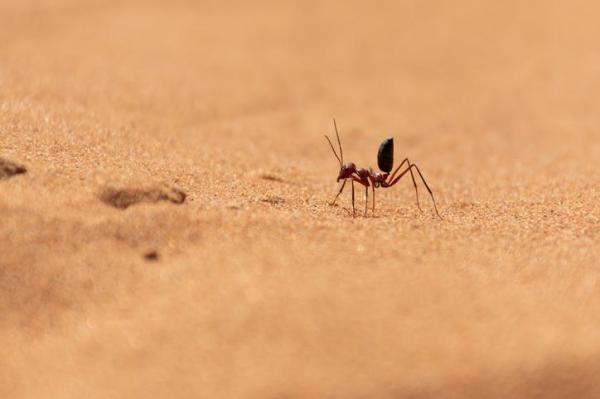
Another amazingly resilient animal is the Sahara Desert Ant (Cataglyphis bicolor). This is the only ant, of all ant species, that is able to survive in temperatures that exceed 45 ºC. These ants have adapted by developing long legs that keep their bodies away from the hot desert sand, as well as a unique ability to navigate using polarized light from the sun.
Just like there are animals resistant to heat, the same applies to freezing cold environments. So, what animal can survive the coldest temperatures? The wood frog (Lithobates sylvaticus) is able to remain frozen at temperatures below -18 °C, before returning back to life months later. This distinct ability is achievable mainly thanks to the accumulation of glucose in their tissue. This glucose serves as a cryoprotectant, preventing tissue damage normally caused by freezing.
The flat bark beetle (Cucujus clavipes puniceus) is another organism that can withstand freezing temperatures. In this case, the flat bark beetle can survive in environments of -58 °C. This survival is possible due to an accumulation of proteins and an alcohol in the body that acts as an antifreeze. This antifreeze results in a reduction of water in the body, forcing a concentration of these proteins. Amazingly, flat bark beetle larvae can survive in temperatures below -150 °C without freezing. This larvae enters into a vitrification process when temperatures fall below -50 °C, allowing for survival.

Animals that live in extreme humidity
In addition to those organisms that can live in extreme heat or extreme cold, we also have many that are able to survive in extreme humidity. Cockroaches, for example, are animals that love humidity, as well as extremely warm temperatures. If the relative humidity drops below 20%, these animals are able to survive. If and when this humidity drop occurs, cockroaches are able to reduce their respiratory rate in order to avoid their bodies drying out.
Animals that live in tropical forests have also adapted to extremely humid environments, where relative humidity easily exceeds 90%. In most cases, other animals under these conditions would die due to the proliferation of fungi. However, some species have developed antifungal properties in their skin or fur to combat this threat, allowing them to thrive in such moisture-rich environments.
Animals that can live without water
Water is essential for life, but not all animals need to ingest it directly to hydrate. Did you know that Kangaroo rats (Dipodomys sp.) never drink water? They are able to do this with the help of two mechanisms. The first one being that they ingest water from the food that they eat. In addition to this, a Kangaroo rat’s body reacts in such a way that it releases metabolic water, keeping it hydrated.
Camels (Camelus sp.) experience a similar process. Camels get water from the vegetation which they ingest. Additionally, when a camel drinks water in oases, they are able to accumulate it in the form of fat in their hump. This 'storing' method allows camels to reserve water for months on end without the need of actually ingesting it.
In general, animals that inhabit deserts have adapted to this scarcity of water, each one carrying sophisticated mechanisms in order to survive without it. For instance, the thorny devil lizard (Moloch horridus) has the remarkable ability to channel dew or rainwater along grooves in its skin directly to its mouth.
For more about animal adaptation, you may find our article about the most fascinating animal senses in the world interesting.

If you want to read similar articles to Organisms That Live in Extreme Environments, we recommend you visit our Facts about the animal kingdom category.
- Campbell, B. J., Stein, J. L., & Cary, S. C. (2003). Evidence of chemolithoautotrophy in the bacterial community associated with Alvinella pompejana, a hydrothermal vent polychaete. Appl. Environ. Microbiol., 69(9), 5070-5078.
- Larson, D. J., Middle, L., Vu, H., Zhang, W., Serianni, A. S., Duman, J., & Barnes, B. M. (2014). Wood frog adaptations to overwintering in Alaska: new limits to freezing tolerance. Journal of Experimental Biology, 217(12), 2193-2200.
- Lighton, J. R. B., & Wehner, R. (1993). Ventilation and respiratory metabolism in the thermophilic desert ant, Cataglyphis bicolor (Hymenoptera, Formicidae). Journal of Comparative Physiology B, 163(1), 11-17.
- Málaga, H. B. Z., & Cabrera, R. C. (2017). Aislamiento e identificación de bacterias celulolíticas termófilos de géiseres naturales de Candarave-Tacna. Ciencia & Desarrollo, (18).
- Mullen, R. K. (1971). Energy metabolism and body water turnover rates of two species of free-living kangaroo rats, Dipodomys merriami and Dipodomys microps. Comparative Biochemistry and Physiology, (3), 379-390.
- Sformo, T., Walters, K., Jeannet, K., Wowk, B., Fahy, G. M., Barnes, B. M., & Duman, J. G. (2010). Deep supercooling, vitrification and limited survival to–100 C in the Alaskan beetle Cucujus clavipes puniceus (Coleoptera: Cucujidae) larvae. Journal of Experimental Biology, 213(3), 502-509.