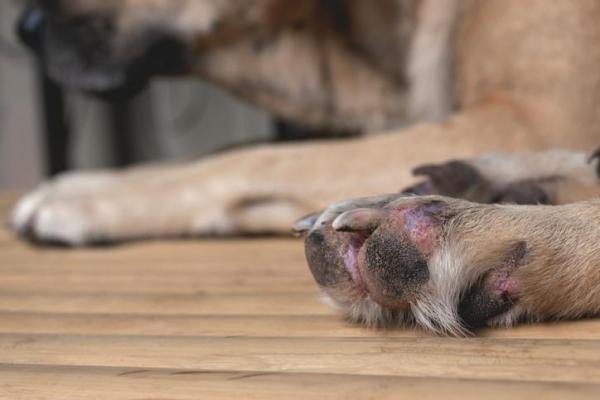
A dog’s paws and paw pads are an incredibly delicate part of their anatomy, especially because they are constantly in contact with the ground. For this reason, this area of a dog’s body often suffers from injuries and disorders. One of the most common canine paw disorders is known as pododermatitis in dogs.
Have you noticed that your dog is struggling to walk or its paws are inflamed and red? If so, pododermatitis could be the culprit. Keep reading here at AnimalWised and discover everything you need to know about pododermatitis in dogs including its causes, symptoms and treatment.
Pododermatitis in dogs: what is it?
Pododermatitis in dogs, also referred to as ‘Interdigital Dermatitis’, consists of an inflammation of a dog’s paws or feet. Pododermatitis in dogs causes may vary; however, the most common are blows to the area or the presence of foreign bodies which have resulted in injury. Consequently, pododermatitis is more frequent in dogs that live in wooded areas, hunt, race, or engage in jumping activities.
Understanding the environment your dog is exposed to can help prevent pododermatitis. For more, we recommend reading our article where we discuss everything you need to know about sensitive dog paws.

Pododermatitis in dogs: causes
As we’ve already mentioned above, pododermatitis in dogs causes can vary drastically. Possible causes of pododermatitis in dogs may include:
- Irritation by a foreign object.
- Allergies, which can be triggered by environmental factors like pollen or food.
- The presence of parasites, such as scabies, mites, or fleas.
- The development of fungi, which thrive in moist environments.
- Hypothyroidism, which can affect skin health.
- Autoimmune disorders or interdigital cysts.
- Some psychological issues can cause a dog to lick this area excessively, resulting in dermatitis.
It should be noted that environmental factors play a significant role in many of these causes. For more, we recommend taking a look at our article where we discuss, ‘‘Why does my dog keep licking its paws?’’
Pododermatitis in dogs: symptoms
Have you noticed sores in dogs' paws or your dog losing hair on paws? It’s important to know that canine pododermatitis can affect all four limbs. The symptoms of canine pododermatitis include:
- Erythema (redness).
- Edema (swelling or inflammation) that can spread to the legs.
- Nodules or small lumps.
- Wounds, fistulas, or blisters.
- Serosanguineous exudates.
- Swelling and discomfort.
- Limping.
- Darkened hair from licking.
- Alopecia (hair loss).
- Pain and frequent licking, which can worsen the condition.
Recognizing these symptoms early can lead to quicker treatment and relief for your pet. For more, read ‘‘Why is my dog limping on their back leg?’’

My dog has swollen legs, is it pododermatitis?
If a dog’s legs are inflamed, red or peeling, it is possible that we are dealing with a case of pododermatitis. However, there are other disorders which present similar symptoms. Therefore, if you do notice this swelling, consult a veterinarian to diagnose it correctly as there is a possibility that your dog’s legs may be swollen as a result of a circulatory problem, trauma, or even an allergic reaction.
Timely diagnosis can prevent complications, ensuring your pet receives the appropriate care.
Pododermatitis in dogs: diagnosis
Treatment for pododermatitis in dogs will depend on its cause (which is why diagnosis is of the utmost importance). If one leg is affected, it is often likely that its origin is rooted in trauma or damage. If you notice symptoms appearing in more than one limb or paw, the diagnosis could point to an autoimmune problem, allergy, or scabies. A veterinarian will also analyze the hair and skin area to rule out the presence of parasites or mites.
For cases in which a cause is not detected, a professional may perform a biopsy and/or blood tests. This thorough approach helps in tailoring the treatment plan specifically to the underlying cause, ensuring effective management.
For more, read about atopic dermatitis in dogs.

Pododermatitis in dogs: treatment
In order for the pododermatitis in dogs treatment to be successful, correct diagnosis is key. Treating pododermatitis in dogs may include:
- Pododermatitis itself can be treated with a topical treatment to soothe and heal the skin.
- Infectious pododermatitis in dogs (of bacterial origin) will require antibiotics, prescribed by a professional.
- The presence of fungi will require antifungal medication.
- Parasites treatment will require the appropriate antiparasitic medication.
- In addition, a veterinarian will likely clean and disinfect the area where the pododermatitis is present (with disinfectants such as chlorhexidine).
- Presence of a foreign body will require an extraction by the veterinarian.
- Scabies or any other systemic disease will require specific treatment and the appropriate measures to maintain the dog’s quality of life.
- Allergies cannot be completely cured but symptoms can be alleviated with antihistamines or other medications.
Incorporating a balanced diet and regular vet check-ups can also aid in preventing recurrence. For more, read about how to treat a dog’s paw pad injury.

Pododermatitis in dogs: home treatment
Home remedies for pododermatitis in dogs will be focused on keeping this area well sanitized. Of course, any cleaning done should only occur after a veterinarian’s analysis so as not to worsen the picture.
Always make sure to clean the area well with a gauze or cotton soaked in saline, especially before applying topical treatment. Any disinfectant or drug must be prescribed by a veterinarian only. A veterinarian may also recommend the use of an Elizabeth cone so that your dog doesn’t lick the infected area.
To relieve the itching and/or discomfort, apply a cold compress on the inflamed area. Additionally, maintaining a clean and dry environment for your dog can hasten recovery and prevent further irritation.
For more, take a look at our article where we discuss the use of Aloe Vera for a dog’s paw pads.
Pododermatitis in dogs: is it serious?
Pododermatitis is not a serious condition. You should, however, always consult your veterinarian as soon as you notice symptoms. Treatment is key in making sure that the injury doesn’t worsen due to bacterial growth. In addition, a dog can aggravate the pododermatitis injury through excessive biting, scratching, and licking.
In some cases, treating pododermatitis can prove to be difficult, especially in cases of allergies or autoimmune diseases. Lifelong treatment may be necessary for both of the aforementioned conditions. Consistent monitoring and follow-up care can help manage symptoms effectively, allowing your dog to lead a comfortable life.
This article is purely informative. AnimalWised does not have the authority to prescribe any veterinary treatment or create a diagnosis. We invite you to take your pet to the veterinarian if they are suffering from any condition or pain.
If you want to read similar articles to Pododermatitis in Dogs - Causes, Symptoms And Treatment, we recommend you visit our Other health problems category.
- Pododermatitis. Boletín de Dermatología Veterinaria, Nº6, 2018.
- AVEPA. La dermatología del día a día. Asociación de Veterinarios Españoles Especialistas en Pequeños Animales.
- (2008). Remedios caseros para perros y gatos. Barcelona: Libros Cúpula.