
There are more than 400 dog breeds, each with its own peculiarities that distinguish it from the others. Some of these characteristics might seem quite strange, such as having a blue tongue. Although they are normally referred to as blue, the dark pigmentation on a dog's tongue sometimes appears black or a lighter shade closer to purple. Do you know any dog breeds with blue tongues? The Chow Chow is probably the most famous one, but there are other dogs that can have blue tongues.
AnimalWised is here to give you a list of the top 9 dog breeds with blue tongues and explain why some breeds of dogs have blue tongues. Throughout history, different hypotheses have been suggested to explain this rare tongue color. Keep reading if you are curious to find out more.
Why are there dog breeds with blue tongues?
Most dog breeds do not have blue tongues; rather, they have the more common pink tongues. However, there are some dog breeds that have naturally blue tongues. It is important not to confuse naturally blue tongues in dogs with tongues that turn blue or purple due to a disease. If you have a dog that does not belong to a blue-tongued breed, consult this AnimalWised article on why your dog has a purple tongue. A sudden change in tongue color, particularly alongside breathing difficulty or weakness, can signal a serious health problem and needs prompt veterinary attention.
There have been many myths and theories about dogs with blue tongues. Scientists have not been able to agree on the exact reason for naturally occurring blue-black or purple tongues in dogs. Some theories suggest that blue coloration in a dog's tongue is due to a genetic mutation that causes a greater concentration of melanin or pigmentation cells in the tongue, giving rise to its peculiar shade. The amount and distribution of pigment can vary between individual dogs, so a few spots do not mean that a dog belongs to a particular breed.
Do you know which dog breeds have dark tongues? Here are 9 of the top breeds of dogs with blue tongues.
Dog breeds with blue tongues
Various breeds of dogs show naturally occurring blue tongues or blue-black spotted tongues. Here are the breeds we will look at in this article:
- Shar Pei
- Chow Chow
- German Shepherd
- Akita
- Rottweiler
- Border Collie
- Korean Jindo
- Tibetan Mastiff
- Pomeranian
Of these, the Shar Pei and Chow Chow are the only two dog breeds with completely blue tongues in all individuals. In the rest of the breeds we will look at, only some individuals have blue pigmentation on their tongues. Individuals of these breeds may show a few blue spots on their tongues or have larger dark patches that make the whole tongue appear bluish.
It was once believed that other breeds showing blue tongues meant they had some Chow Chow blood in their heritage. However, this is not the case, as pure breeds can also have blue tongues. These are probably caused by excess pigmentation in the individual dog, much like birthmarks in humans. Below you will find more information about each of the dog breeds with blue tongues. These markings are usually just a natural variation when they have been present for a long time, but any sudden change in color should be taken seriously.
1. Shar Pei
The Shar Pei is a Chinese dog breed that is distinguished by its appearance and, of course, its blue tongue. All Shar Peis have blue tongues, although these can vary in shade from bluish-black to lavender purple. The Shar Pei is also known for its thick fur and wrinkled skin folds. It has a large head and a full, slightly darker snout that give it a gentle and friendly appearance. Shar Peis are calm and affectionate dogs, although they tend to be cautious around strangers. This trait, along with the fact that they are muscular and robust, means that they have historically made great guard dogs. Their dark tongue is a normal feature of the breed, rather than a sign of illness.

2. Chow Chow
The dog best known for its blue tongue is the Chow Chow. It is a Chinese breed and is known as one of the world's oldest dog breeds, appearing as far back as 2,000 years ago. The Chow Chow and the Shar Pei are believed to share a lineage, since they are both known for their distinctive dark tongues. In China, there are various legends about how the Chow Chow got its blue tongue. The tongue may look darker or lighter depending on the individual, but its pigmentation is a characteristic feature of the breed.
The Chow Chow has a large head and a short, slightly flat snout. It has small, erect ears and rounded eyes. The Chow's coat is usually plush and can be either long or short. In addition, it has more fur around the neck, giving it the appearance of a lion.
For more information about this breed, here is another AnimalWised article on the Chow Chow and its blue tongue.

3. German Shepherd
The German Shepherd is an easily recognizable dog, known for its appearance, intelligence, loyalty and courage. Although it is not very common, some German Shepherds have black or blue spots on their tongues. The reason for this tongue coloration is the same as in the Chow Chow and Shar Pei breeds: a concentration of pigment cells in the tongue. However, with the German Shepherd breed, it only appears in a few individual dogs.
You should be aware of your dog's natural tongue color and keep an eye out for any changes. If your German Shepherd normally has a pink tongue and you suddenly notice some black spots or purple coloring, consult a veterinarian to rule out any health problems. Checking the tongue occasionally can help you notice a change from your dog's usual coloring.

4. Akita
The Akita is a dog originally from Japan, and is venerated there for its loyalty and courage. It is a very independent and intelligent breed. The Akita has a very dense coat that can vary in length from short to medium and is adapted to cold climates. Its coat is white with light brown or reddish patches on the upper part of its body. Its nose is black. The Akita's tongue, though usually pink, can have blue or black patches or spots. These patches can vary in size, and a dog's usual coloring is a helpful point of comparison.

5. Rottweiler
The Rottweiler is an active, attentive and muscular breed of dog, known for its fierce appearance. However, despite their reputation for being dangerous, they are in fact very loving and affectionate with their owners. The Rottweiler is an ancient breed that spread across Europe alongside the conquering armies of the Roman Empire. It has triangular ears, medium brown eyes and a coarse coat with reddish or rust markings. Some Rottweilers can have blue tongues, caused by either dark spots or patches of pigmentation. As in other breeds with occasional markings, these spots may affect only part of the tongue.

6. Border Collie
The Border Collie breed is native to Scotland, where it has historically been used as a sheepdog. They are very intelligent and energetic dogs, and need to engage in physical activity at least once a day. The Border Collie has a thick coat with straight hairs. They are predominantly white on the lower part of the body, with different shades of brown covering the rest. Like the previous breeds discussed, some Collies have naturally blue tongues, with either overall blue-purple pigmentation or blue-black spots. In most cases, the rest of the tongue remains pink, so the dark areas may stand out clearly.

7. Korean Jindo
As the name implies, this dog breed comes from Korea, specifically from Jindo Island. They are known for their hunting skills, intelligence and independence. This breed of dog is very protective and affectionate with its loved ones. The Jindo is fiercely loyal and usually creates a strong emotional bond with one person in the family. It has a soft and dense coat that can be reddish, white, black or gray. Some individuals have blue or black tongues. The color of the coat does not determine whether a Jindo has these darker tongue markings.
Source: kr.pixtastock

8. Tibetan Mastiff
The Tibetan Mastiff is an impressive-looking dog due to its large size and heavy coat. They are noble, affectionate and playful dogs, although they can be cautious with strangers. It is important to properly socialize them when they are puppies. Otherwise, they have a tendency to develop a destructive personality. The Tibetan Mastiff has abundant, thick fur that is normally reddish in color, with some darker areas or patches. Most individuals have pink tongues, although some have tongues with dark patches or blue-black spots. Their tongue color varies between individuals, just like the markings on their coats.

9. Pomeranian
The last breed on this list is the Pomeranian, a dog known for its abundant cream, orange or brown fur. The Pomeranian is a small breed of dog that weighs only around 3.5 kilos. Some individuals have blue-toned tongues or show blue spots, although most have the more common pink tongue. Pomeranians have a protective personality and are attentive dogs that distrust strangers. However, they are very affectionate with their human companions. A small spot can be easy to miss, so it is useful to notice what is normal for your dog.

Other animals with blue tongues
Apart from dogs, there are other species with blue tongues. Some of the other animals with bluish, black or purple pigmentation on their tongues are:
- Giraffe
- Black bear
- Blue tongued lizard
- Okapi
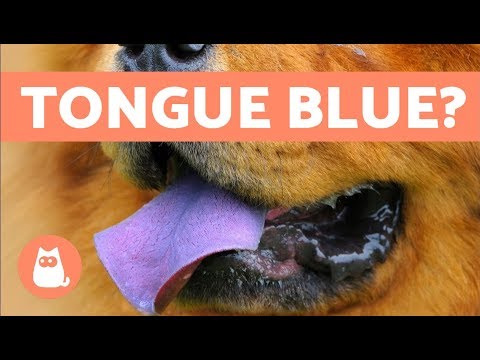
Here is a video with more details about dogs with blue tongues. In dogs, tongue pigmentation can range from a few small spots to coloring that covers most of the tongue.
If you want to read similar articles to Top 9 Dog Breeds with Blue Tongues, we recommend you visit our Facts about the animal kingdom category.
- Dog Breeds With Blue Tongues and What They Mean (American Kennel Club)
- Shar Pei Federation Cynologique Internationale. Available at: http://www.fci.be/Nomenclature/Standards/309g02-es.pdf
- Chow chow. Federation Cynologique Internationale. Available at: http://www.fci.be/Nomenclature/Standards/205g05-es.pdf
- Rottweiler Federation Cynologique Internationale. Available at: http://www.fci.be/Nomenclature/Standards/147g02-es.pdf
- Tibetan Mastiff . American Kennel Club Available at:
https://www.akc.org/dog-breeds/tibetan-mastiff/ - Korea Jindo Dog . Federation Cynologique Internationale. Available at: http://www.fci.be/Nomenclature/Standards/334g05-es.pdf
- Border Collie Federation Cynologique Internationale. Available at: http://www.fci.be/Nomenclature/Standards/297g01-es.pdf
- Akita Federation Cynologique Internationale. Available at: http://www.fci.be/Nomenclature/Standards/255g05-es.pdf
- Deutscher Schäferhund . Federation Cynologique Internationale. Available at: http://www.fci.be/Nomenclature/Standards/166g01-de.pdf