Hybrid animals are a result of a crossing from two animals of different species. These such crossings result in animals whose appearance presents mixed characteristics, and trust us, they are beautiful! Some of these animal hybrids are so incredibly fascinating that it’s hard to believe they are even real.
Additionally, not all species are able to mate with each other, so when this does happen it is incredibly rare. Keep reading here at AnimalWised to discover more than 20+ hybrid animals, their characteristics, as well as what they look like.
Hybrid animal: characteristics
An animal born from a cross between two parents of different species or subspecies is more commonly referred to as a hybrid. As we’ve already mentioned, not all animals can be crossbred. For two animals to breed, they usually need to belong to the same genus, in addition to sharing the same chromosomes. There are some rare examples of hybrid animals which are not part of the same genus.
Did you know that a mule is a hybrid between a donkey and a horse? Generally, however, these crossbreeds do not occur naturally, and many of the hybrid animals that live today are a result of human intervention. This intervention often aims to combine desirable traits from both species, leading to hybrids that might have advantages over their parent species.
Have you ever wondered about hybrid animal reproduction? Keep reading below to find out whether or not hybrid animals can reproduce.
Are hybrid animals sterile?
Among the most common characteristics of hybrid animals is that most are sterile, meaning they cannot birth new offspring. But, why can’t hybrid animals reproduce?
Each and every species has a specific chromosomal load that is transmitted to offspring, but that also needs to coincide at the cellular level during the process of meiosis. This is otherwise known as a cell division which occurs during sexual reproduction to give rise to a new genome. During meiosis, the paternal chromosomes duplicate and take on the genetic load of both parents, which defines specific characteristics, such as coat color, size, etc. However, when dealing with animals of two different species, the number of chromosomes may not be the same. Additionally, each chromosome which corresponds to a specific characteristic may not match that of the other parent. For example, if chromosome 1 of the father corresponds to fur color, and chromosome 1 of the mother corresponds to tail size, the genetic load does not manufacture correctly, which means that the movement of genes is tampered with.
Despite all of this aforementioned information, fertile hybridization is possible in plants. In fact, the rise and heightened concern regarding global warming is currently inciting the crossing of plants of different species as a form of survival. Although most of these pairings are sterile, there is a possibility that some may reproduce (although rare).
What kind of animal hybrids are fertile?
Other than some records of fertile mules, the only recorded fertile animal hybrid is the coywolf (wolf-coyote hybrid). There are ongoing studies to better understand the genetic mechanisms behind the fertility of such hybrids, which could offer insights into evolutionary processes.
11 examples of hybrid animals
To better understand the animal hybridization process as well as which animal crossings currently exist, we’ll be listing the most common animal hybrids. The 10 most common hybrid animals include:
- Narluga (Narwhal + Beluga)
- Liger (lion + tigress)
- Tigon (tiger + lioness)
- Beefalo (cow + American bison)
- Zeedonk (zebra + ass)
- Zorse (zebra + mare)
- Wholphin (false killer whale + bottlenose dolphin)
- Hinny (horse + donkey)
- Mule (Mare + Donkey)
- Pumapard (leopard + puma)
- Cama (dromedary + llama)
For more, you may also be interested in reading a little about the history of hybrids. We suggest taking a look at our article where we discuss the 6 most powerful legendary creatures. Hybrid animals often challenge our understanding of species and genetics, offering a unique window into the complexities of nature.
1. Narluga
The Narluga is a narwhal-beluga whale hybrid, who are both from the Monodontidae family. This incredibly unusual marine animal crossing, when discovered, was considered a likelihood, mainly due to the fact that narwhals and belugas are considered the most closely related of any other species.
Narlugas can only be seen in Arctic waters and, although today they have grown in population as a result of a crossing motivated by global warming, records of the first sighting were made in 1980. This hybrid can grow up to 6 meters long and weigh about 1600 tons.
Narluga fun fact: Narwhals and belugas are known to adopt each other. This behavior indicates a complex social structure, which might facilitate hybridization in natural settings.

2. Liger
The liger is a cross between a male lion and a female tiger (tigress). A liger’s fascinating appearance presents a mixture of both its parents: its back and legs usually carry tiger stripes while its head is more similar to that of a lion, and males even develop manes.
The liger can reach up to 4 meters long, making it the largest cat in the world. Its legs are, however, shorter than both of its parents. Ligers often face health challenges due to their size, including joint issues and organ stress.
Liger fun fact: Due to the fact that their habitats do not overlap in the wild, they are only bred in captivity and are a man-made species. Conservationists often debate the ethics of creating such hybrids.

3. Tigon
A tigon is a hybrid between a male tiger and a female lion (lioness). Tigons are generally smaller than their parents and look like a lion, but with striped fur. In fact, size is practically the only difference between a liger and a tigon.
Tigon fun fact: Many animal conservationists argue that the controlled breeding of tigons in captivity is ‘inhumane,’ and for this reason, tigon breeding is illegal in many countries. This legal stance highlights the growing concern for animal welfare in hybrid breeding programs.

4. Beefalo
The beefalo, also known as a cattalo, is a hybrid of both a domestic cow and American bison. The beefalo resembles that of a corpulent bull with dense fur.
This crossing was originally practiced by farmers in the 1970s, since meat produced from beefalos contain less fat than that from cattle. In addition, beefalos are considered a hardier breed, specifically when it comes to fighting off disease. Their resilience makes them a preferred choice in regions with harsh climates.
Beefalo fun fact: Beefalos are one of few fertile hybrid animals in the world. This fertility has allowed for their continued breeding and integration into agricultural practices.

5. Zeedonk
Zeedonks, also known as zedonks, are a hybrid of a zebra and a donkey. This cross was, and still is, possible due to the fact that both zebras and donkeys come from the equidae family. This animal crossing generally occurs naturally in the African savannah, where both species live together.
Zeedonks carry a bone structure similar to that of zebras, except they have gray fur below their striped legs. Their unique appearance makes them a subject of fascination for visitors in wildlife reserves.
Zedonk fun facts: They are incredibly fast and can reach up to 35 miles per hour. This speed, combined with their agility, helps them evade predators in the wild.

6. Zorse
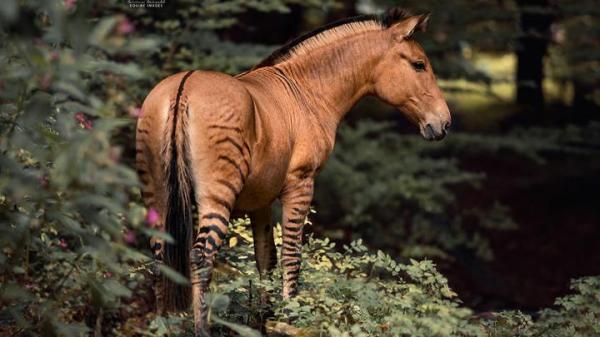
Have you ever heard of a zorse, a hybrid of a zebra and horse? Zebras are able to mate with any member of the equine family, not only donkeys. A zorse hybrid is possible when mating includes a male zebra and a mare (female horse).
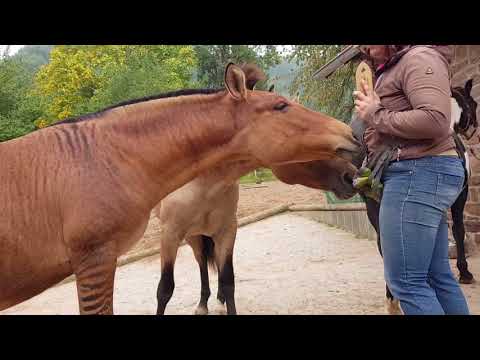
The zorse is smaller than a horse, with a short and rigid mane. The typical zebra stripes are also usually present on its brown fur. The zorse is, without a doubt, one of the most beautiful hybrid specimens on earth. Would you like to see for yourself? Watch the video below!
Zorse fun fact: Zorses are generally harder to train than horses due to their strong wild zebra gene. This wild nature presents unique challenges for those attempting to domesticate them.
7. Wholphin
Another extremely rare hybrid is the wholphin, a crossbreed of a common bottlenose dolphin (female) and a false killer whale (male). Generally, the term ‘wholphin’ describes any hybrid of a dolphin and whale, and its appearance will vary depending on the species.
A wholphin’s size and dentures are two characteristics that help differentiate it from its parents. Wholphins are generally smaller in size with fewer teeth than its predecessors. These unique dental structures often pique the interest of marine biologists studying hybrid vigor.
Wholphin fun fact: The creation of the wholphin was accidental. This serendipitous hybrid has since provided valuable insights into cetacean genetics.

8. Hinny
Did you know that a hinny is a result of a crossing between a male horse and a female donkey? Due to the fact that both of these species, part of the equine family, do not live in the same habitat, their breeding requires human intervention. Hinnies were, therefore, one of the few hybrid animal species completely created by man.
Hinnies are the size of a horse with a head similar to that of a donkey. Its bulky body carries a hairy tail.
Hinny fun fact: Hinnies are generally healthier than horses. Their hybrid vigor often results in fewer genetic diseases compared to their parent species.

9. Mules
In direct contrast to hinnies, we have mules, which are the offspring of a crossing between a mare (female horse) and a male donkey. The mule is, in fact, probably the best-known and most widely distributed hybrid animal in the world. Additionally, mules have been working as transportation animals for years and, like hinnies, mules are sterile.
Mules are taller than donkeys but smaller than horses. They stand out for having more strength than donkeys but they carry a similar coat. Mules are known for their endurance and ability to work in tough terrains.
Mule fun fact: A mule can carry up to 20% of its own weight. This capacity makes them invaluable in rugged landscapes where other animals might struggle.

10. Pumapard
A pumapard is the result of a cross between a female leopard and a male puma. This cat is thinner than a cougar and has spotted leopard fur. Its legs are short and its general appearance is an intermediate between the two parent species.
Pumpapards are not a result of a natural crossing, but are rather created by man. There are no current live species of the pumapard.
Pumapard fun fact: Pumapards tend to suffer from dwarfism. This condition often results in various health issues that prevent these hybrids from thriving in the wild.
11. Cama
A cama is a cross between a male dromedary camel and a female llama. The cama carries a head similar to that of a llama while its mantle color is similar to that of a dromedary camel, minus the hump.
This hybrid does not occur naturally and is a result of human intervention. Camas are often bred to combine the size and strength of camels with the gentle nature of llamas.
Cama fun fact: Due to the large difference in size between a camel and a llama, this crossbreeding required artificial insemination. This method ensures the successful creation of these unique hybrids.

Hybrid animal examples
Although the previous hybrid animals are the most well-known, the truth is that they are not the only ones that exist. Additional captivity and wild hybrid animals include:
- Geep hybrid (goat + sheep)
- Coydog hybrid (coyote + dog)
- Coywolf (coyote + wolf)
- Dzo hybrid (yak + cow)
- Savannah cat hybrid (serval + domestic cat)
- Pizzly hybrid (brown bear + polar bear)
- Jaglion hybrid (jaguar + lioness)
- Leopon hybrid (lion + leopard)
- Tigard hybrid (tiger + leopard)
- Yakalo hybrid (yak + American bison)
- Zubron hybrid (cow + European bison)
Did you already know about all of these cross-bred animals before reading this list? And do you know of more hybrids which we have not already mentioned? If so, post them into our comments section below! The exploration of hybrid animals continues to captivate scientists and animal enthusiasts alike, as it challenges our understanding of genetics and species boundaries.

If you want to read similar articles to What Are Hybrid Animals? - List And Examples, we recommend you visit our Facts about the animal kingdom category.
- Híbridos: los extraños animales que ha creado el cambio climático. BBC Mundo (2017, 5 de abril). Consulta: https://www.bbc.com/mundo/noticias-39481792
- Fioravanti, C. (2011, julio). Cuando los híbridos son fértiles. Pesquisa Fapesp, n 185. Consulta: https://revistapesquisa.fapesp.br/es/2011/07/01/cuando-los-hibridos-son-fertiles/
- Bittel, J. The narluga is a strange hybrid. But it’s far from alone. The Washington Post. (2019, 27 de junio). Consulta: https://www.washingtonpost.com/science/2019/06/27/narluga-is-strange-hybrid-its-far-alone/?noredirect=on