
Ladybugs are beautiful insects we often find flying around the garden. However, many of us don't know much about them. If you've been asking yourself questions such as, what do ladybugs eat or how long do they live for, you've come to the right place.
In this AnimalWised article we're going to talk about what ladybugs eat. However, we'll also go over some basic information about these cute little insects. Keep reading to learn more!
About ladybugs
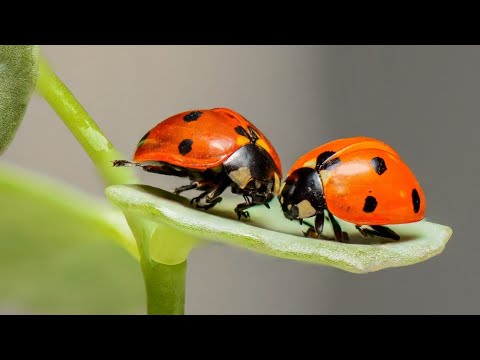
Ladybugs (Coccinellidae) are invertebrate insects native to Europe but were introduced to North America in the 1950s. These charming creatures measure about 0.3-0.4 inches in size and can live for 2-3 years in the wild. Their vibrant red color makes them a favorite among nature enthusiasts. On the other hand, farmers value them for their insatiable appetite.
While they may appear harmless and innocent, ladybugs are actually omnivores that feed on plant-eating insects and, occasionally, certain plants. Interestingly, some ladybugs even eat other ladybugs! Continue reading to delve deeper into their diet.
What ladybugs eat
As we've previously mentioned, ladybugs are omnivores. More precisely, they are opportunistic carnivores, primarily feeding on plant-eating insects and even other ladybugs. Nonetheless, they may nibble on a leaf now and then. This feeding behavior makes them highly valued by farmers as a natural pest-control option.
It should be noted that there are specific species of ladybugs that are herbivores. This includes species from the Epilachninae subfamily, all of which are herbivores. These variations in diet among different ladybug species reflect their adaptability and ecological roles in various environments.

What do ladybug larvae eat?
In general, larvae and adult ladybugs share a diet predominantly consisting of plant-eating insects. However, some larvae can diversify their diet by consuming fungi, nectar, and pollen as well. This dietary flexibility allows them to thrive in different ecological niches and adapt to available food resources.
How much can ladybugs eat?
Ladybugs have a voracious appetite and employ a unique feeding strategy. They lay thousands of eggs in the colonies of the insects they prey upon, ensuring that when the larvae hatch, food is readily available. This strategy significantly boosts the larvae's survival rate.
So, how much do ladybugs actually consume? A single larva can devour about 500 individuals of its prey during its development. Depending on the species and available food, they can sometimes consume more than 1,000 individual insects. Upon reaching adulthood, they shift their preference to larger insect species, showcasing the dynamic nature of their feeding habits.
Cannibalism in ladybugs
An intriguing aspect of a ladybug's diet is their tendency toward cannibalism during the larval stage. This behavior typically occurs when one larva hatches before the others and feeds on newly hatched or even unhatched siblings. This survival strategy may be driven by competition for resources.
In this regard, ladybug cannibalism highlights their complex and sometimes ruthless survival tactics within their natural environment.
If you found this article interesting, you may also want to read our article about the largest insects in the world.
Want to learn more? Watch this video about ladybugs and their diet.
If you want to read similar articles to What Do Ladybugs Eat? - All About Ladybugs!, we recommend you visit our Facts about the animal kingdom category.
- Gordon, RD (1985). The Coccinellidae (Coleoptera) of America north of Mexico . Journal of the New York Entomological Society, 93 (1).
- Hagen, KS (1962). Biology and ecology of predaceous Coccinellidae . Annual review of entomology, 7 (1), 289-326.
- Hodek, I., & Michaud, JP (2013). Why is Coccinella septempunctata so successful? (A point-of-view) . AXIS, 105 (1), 1-12.
- Hodek, I. (2013). Biology of coccinellidae . Springer Science & Business Media.
- Hodek, I., & Honêk, A. (2013). Ecology of coccinellidae (Vol. 54) . Springer Science & Business Media.