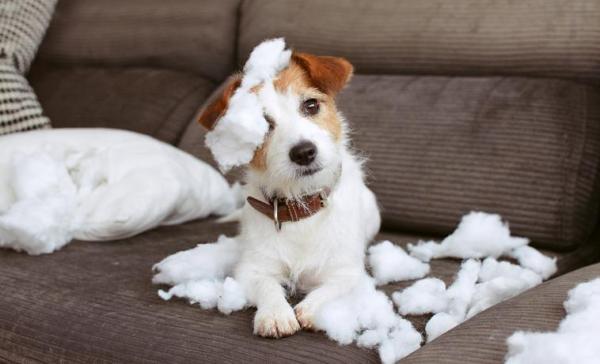
Unlike most humans, dogs use their mouths to interact with almost anything in their environment. As puppies, they have to develop this skill so they are able to prosper. This can lead to them biting everything in sight as they explore the larger world around them. It is a natural instinct which we should not scold them for. Instead, we can guide them into channeling their biting and chewing tendencies into something more tolerable for both them and us.
At AnimalWised, we answer the question, “when do puppies stop chewing everything?” We show you why biting is such an important part of a puppy's development, but also why it needs to be controlled for everyone's well-being.
My puppy bites everything
One characteristic behavior which often defines a puppy is their tendency to bite. Shoes, toys, furniture, clothes, cables and even ourselves can become surrogates for chew toys. Puppies can bite consistently and will not yet have learned when to stop or which objects are inappropriate to chew.
These little dogs will manifest exploratory behavior as part of their normal development. It is typical of young animals in various species, especially among mammals. By investigating their surroundings and their limits, the puppy can acquire lessons which will serve them well throughout their lifetime. Although dogs have paws, they do not have opposable thumbs as we do. They require other means to manipulate objects in their environment, leading them to use their mouths for this purpose.
Additionally, puppies have what are known as ‘baby teeth’. As with humans, these are present in the early stages of life. They are smaller and finer than the adult teeth which will eventually grow to replace them. The time when the permanent teeth begin to push through is often when biting behavior occurs most in puppies. They try to relieve the frustration of the situation by teething on almost anything.
The time when dogs lose their deciduous teeth (another word for baby teeth) is at about 4 months of age. As the adult teeth grow in and become permanent, puppies tend to reduce their teething. This is often when they stop chewing on everything, or at least do it with reduced intensity. Whenever a puppy stops biting everything, it is important to know it is not their fault. They are simply adhering to their nature and are not being malicious in any way.
During this stage, offer appropriate chew toys and supervise your puppy so they can explore safely. If they choose an unsuitable object, calmly redirect them to a toy they are allowed to chew. Keeping tempting items out of reach can help prevent them from practicing unwanted habits.

My dog bites my hands
Although biting is normal behavior in puppies, it is not a desirable one when they become adults. We need to find a way to teach bite inhibition. This is a learned behavior whereby the dog learns not to bite hard on something they shouldn't. This is something which is often learned with their siblings and mother. A mother or another puppy will show them clearly that they do not tolerate biting. It is important to know that this type of biting is part of play behavior and is not usually a sign of aggressiveness.
Although biting is normal, it will lead to problems if the puppy does not learn bite inhibition. It might be funny or cute if a puppy bites without causing any pain. When a fully grown dog bites you, it can cause serious pain and spread disease. Even smaller dogs can cause serious damage, especially to vulnerable people such as children or the elderly.
Some puppies will learn bite inhibition quickly and naturally. Others will need a little assistance. If a puppy bites while playing, you might be able to simply interrupt the game and give them a chew toy instead. We need to repeat this as many times as necessary until they assimilate the correct behavior. When they do behave correctly, we will congratulate them with treats, caresses or positive words. In a short time they should stop biting everything and interact more positively.
Try to respond consistently each time, so your puppy can understand which behavior ends the game and what they can chew instead. Avoid rough hand games that encourage them to bite fingers, and keep play calm if they become overexcited. Short breaks can help them settle before you continue.
My puppy won't stop biting
Sometimes a puppy bites everything but doesn't give up even when we call their attention. In these cases, we need to look at their living situation. If they spend a lot of time alone, are understimulated or are experiencing stress, then their biting might be related. Biting and destructive behaviors in general are common behavioral problems associated with various issues.
To correct these behavioral problems, we need to look at the cause of the destructive behavior. It is not so much a problem with bite inhibition as an attempt to relieve frustration. To reduce frustration, we can improve their environmental enrichment. We do this by providing distractions and interactions in their environment with which they can engage.
We will also need to provide the dog with more attention, company and exercise. These are essentials which can reduce anxiety. If it is a puppy, then we need to be careful about going outside, as they need to have their vaccination schedule initiated.
If we are unable to redress the situation on our own and stop the dog from chewing everything, then we will need to seek an ethologist. This is someone who knows canine behavior and can look at the specific issues affecting the individual dog. There may be reasons for their stress which we cannot discern on our own. They will also be able to provide some practical guidance as to how you can improve their life.
Offering a selection of safe toys and rotating them can help keep your puppy interested in appropriate activities. At the same time, put away items they might chew and make sure they have a comfortable place to rest. These simple changes can support training, although they may not address the underlying cause on their own.

When do puppies stop biting?
As we explain above, there are various reasons why a dog will not stop chewing everything. One of them has to do with the loss of baby teeth and the development of permanent adult teeth. While it will depend on certain factors, such as the breed of dog, a puppy should finish developing their adult teeth at 7 months. After this time, they should reduce the amount of chewing and biting.
Even at the age of 7 months, the dog will continue to be a puppy. This means they are playful and exploratory, behaviors which will continue even after they stop teething. From around one year, most dog breeds will have matured enough to stop chewing on everything.
It is possible the dog will continue to bite and chew on things they shouldn't. While this could be due to the aforementioned stress, it could also be due to separation anxiety. If we spend a lot of time with our puppy and then stop when we go to work, they may become scared that their security is leaving with you. Another reason for excessive chewing in dogs could also be a lack of proper education on our part. We need to teach basic commands and training to both strengthen our bond and improve their safety.
The timing can vary from one puppy to another, so age is only a general guide. Continue providing suitable chew toys and rewarding calm behavior as your dog matures. If chewing suddenly increases or is accompanied by other worrying changes, consider discussing it with a veterinarian or a canine behavior professional.
My dog bites other dogs while playing
Games during which dogs exchange bites are common. They can seem quite aggressive at times, but it is more common for them to hold their jaw over the other dog without biting down. They may even growl, but you can generally tell when play turns serious. This type of play is used to gauge the other's strength, mark their limits and, in the case of puppies, see how far they can bite without harming anyone.
Some caregivers can't tell the difference between play fighting and actual aggression. They may intervene too quickly, even though the behaviors are completely healthy. We need to look at the dog's posture and body language. These can tell us if the dogs are being serious or only playing. If a dog is having fun, they will often plant their front legs on the ground and angle their body. Raising their rump and wagging their tail show the other dog the type of interaction they are looking for.
On the other hand, if a dog remains motionless while watching what the other does, bristles their fur, snarls or bares their teeth, they are likely to want to fight. If they pounce on the other or bite aggressively, then there is a problem. If we see our dog becoming aggressive regularly, then we need to seek a professional canine educator to prevent this behavior.
It is also important to mark the difference between a dog which likes to nibble and bite in a playful way and actual biting. A healthy and happy dog can carry out the former without incurring any trouble. If we repress healthy expressions during play, it can cause them to be stressed, as they don't understand the problem. We should also be careful to ensure other dogs do not play too rough with ours.
Keep an eye on both dogs throughout play and give them a break if either one seems uncomfortable or tries to move away. Play should remain relaxed and reciprocal, with both dogs able to pause or disengage. If you are unsure how to interpret their behavior, calmly separate them and ask a professional for guidance.
When does a puppy stop peeing at home?
Chewing and biting are not the only problematic behaviors of puppies. Caregivers will often wonder when their puppy will stop peeing in the home. The two behaviors are linked, as they have to do with the maturation process of the dog. In the case of urination and sphincter control, there are many variables which depend on each individual dog and their living conditions.
If we are able to spend a lot of time with the puppy, then we can take them outside to urinate more often. It provides us with more learning opportunities. Even so, teaching a puppy to urinate on the street can last a few months. Some dogs are able to wait throughout the day for walks to urinate. In these cases, the wait overnight may simply be too long and they will urinate inside.
The situation can last until approximately one year of life, unless we walk them very early in the morning and very late at night. This means we reduce the hours they have to spend between outings. Of course, it is important not to scold the puppy. They will not understand why, and it can worsen the situation rather than improving it.
A regular schedule can make toilet training easier to follow. Take your puppy out after waking, eating and playing, and praise them when they urinate in the right place. Accidents can happen while they are still learning, so clean the area and continue with the routine without punishment.

If you want to read similar articles to When Do Puppies Stop Chewing Everything?, we recommend you visit our Behavioral problems category.
- Puppy Teething and Nipping: A Survival Guide (American Kennel Club)