Is Chicken Broth for Dogs Good?

Chicken broth has been a common ingredient in human cuisine for centuries, thanks to its comforting and nourishing properties. It's often used as a base for soups, stews, and other dishes. However, many pet owners may wonder if it's safe for their furry companions to consume. Although chicken broth may seem harmless, there are a few things to consider before feeding it to your dog.
In this article, we'll explore if chicken broth is good for dogs and provide you with some guidelines to follow to ensure your dog's safety and well-being.
Can dogs eat chicken broth?
Chicken broth is a suitable and beneficial food for dogs, as it provides proper hydration and essential nutrients without any toxic components. It can serve multiple purposes, such as providing an extra supply of liquids, enhancing the taste of regular food, or serving as a reward for good behavior. However, it's crucial to prepare chicken broth at home rather than using commercial broths that may contain high levels of salt, seasonings, and additives that can harm your dog's health.
Remember to always consult with your veterinarian before making any significant changes to your dog's diet, including adding chicken broth. They can provide guidance on how much broth to give your dog and how often, based on their individual needs and health conditions. Additionally, some dogs may have specific dietary needs or restrictions that only a vet can properly address, ensuring your pet's diet remains balanced and healthy.
Don't miss out on our other article discussing the best healthy diets for dogs.
Benefits of chicken broth for dogs
Homemade chicken broth can provide several benefits to dogs, including:
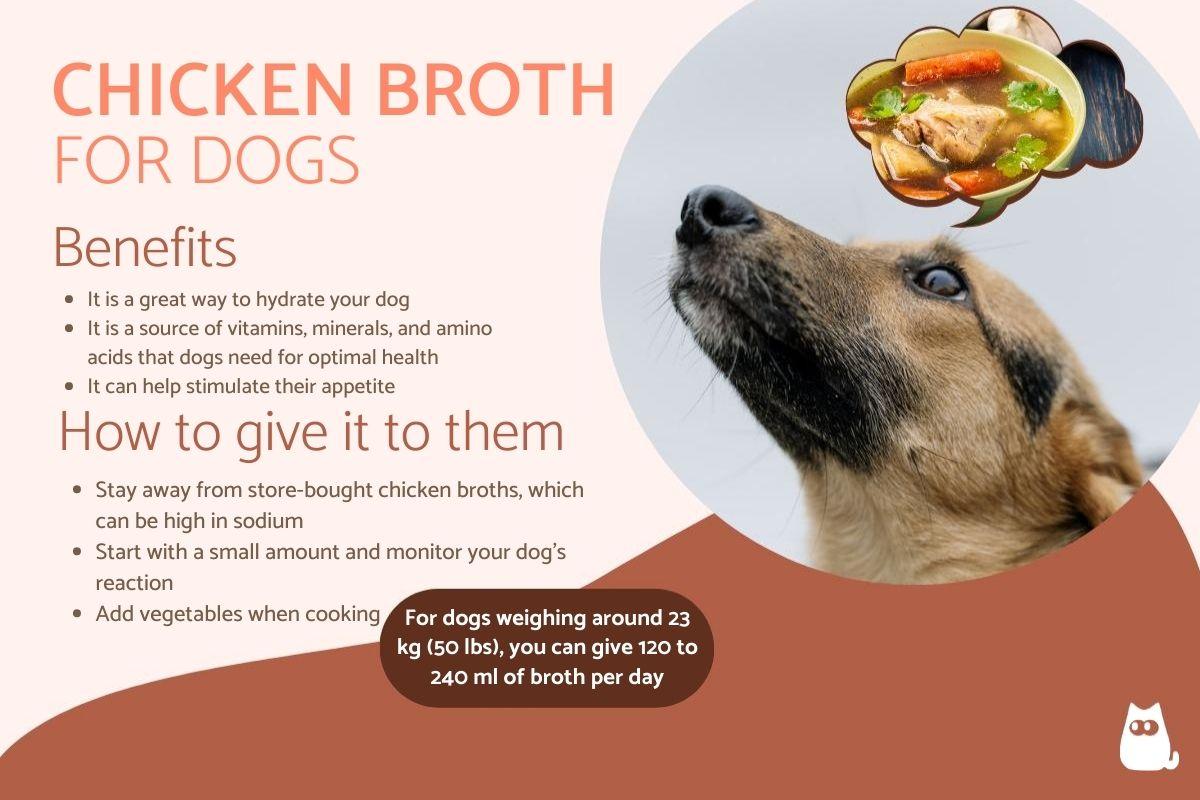
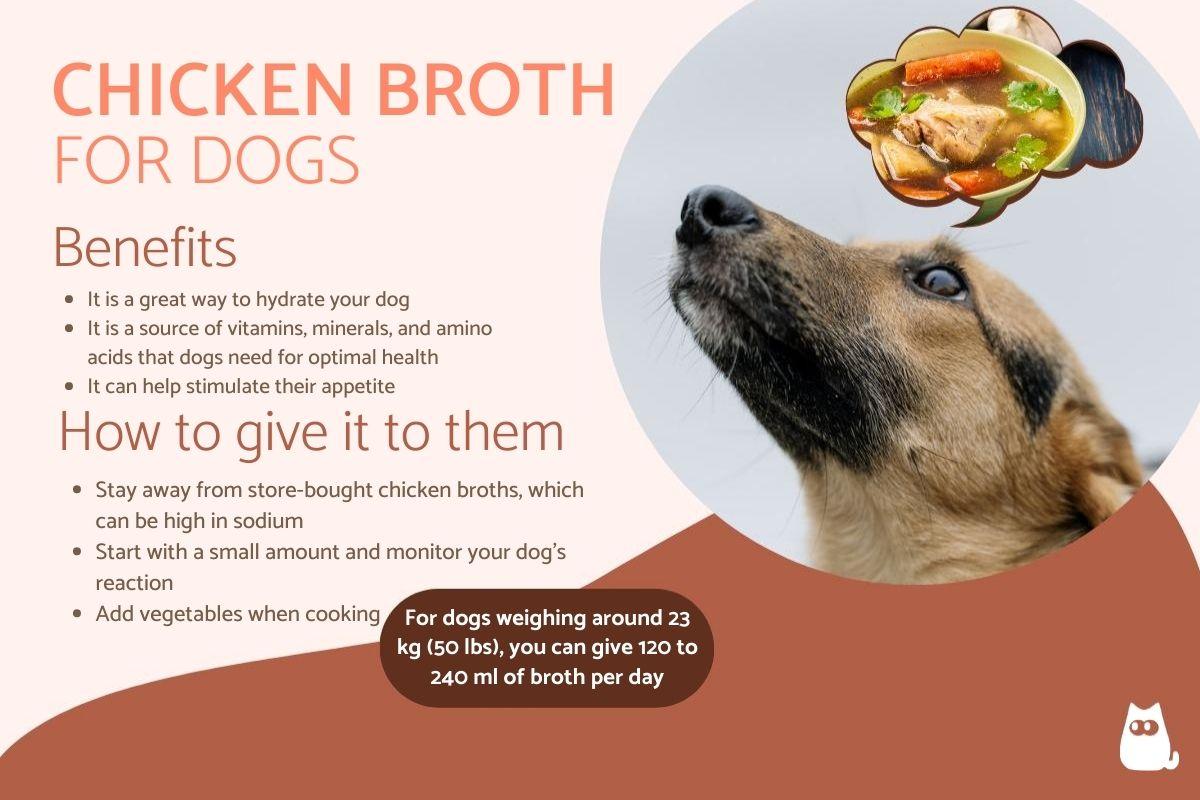
- Hydration: it is a great way to hydrate your dog, particularly if they are not drinking enough water. The broth provides essential fluids and electrolytes that can help maintain your dog's overall health.
- Nutrients: it can be a good source of vitamins, minerals, and amino acids that dogs need for optimal health. The broth can provide important nutrients such as calcium, magnesium, and phosphorus, which are essential for healthy bones and teeth. Furthermore, these nutrients support various bodily functions, contributing to your dog's overall vitality.
- Appetite stimulation: if your dog is a picky eater, adding chicken broth to their food can help stimulate their appetite. The broth can add flavor and moisture to the food, making it more appealing to your dog. This can be especially useful for older dogs or those recovering from illness, as it encourages them to eat and regain strength.
- Digestive health: it can help soothe an upset stomach or digestive issues in dogs. The gelatin found in chicken bones can help improve digestion and promote a healthy gut. Gelatin works by attracting and holding digestive juices, thereby improving nutrient absorption.
- Joint health: when made from chicken bones, it can contain natural sources of glucosamine and chondroitin, which are essential nutrients for joint health in dogs. These nutrients can help prevent or alleviate joint problems, such as arthritis. Regular consumption of chicken broth can thus be a proactive measure for maintaining mobility and joint health.
If you have a dog with stiff joints or suspect they may have arthritis, it's crucial to educate yourself on the condition and effective management techniques. This way, you can make informed decisions about your dog's care and diet.
How to make homemade chicken broth for dogs?
To make chicken broth for dogs, you will need the following ingredients:
- Chicken bones and meat (Avoid using chicken that contains skin or fat, as these can cause digestive problems for your dog.)
- Vegetables such as carrots, celery, or pumpkin (optional)
- Water
Here are the steps to make chicken broth for dogs:
- Place the chicken bones and meat in a large pot and cover them with water. The water should be enough to cover the bones and meat completely. It's important to use a generous amount of water to ensure the broth is rich in nutrients.
- If desired, add vegetables such as carrots, celery, or pumpkin to the pot for added flavor and nutrients. Be sure to cut the vegetables into small pieces to help them cook thoroughly and release their nutrients into the broth.
- Bring the mixture to a boil over high heat, then reduce the heat to low and simmer for several hours. You can also use a slow cooker to cook the broth overnight. This method allows the bones to break down, releasing beneficial nutrients like collagen and glycine into the broth.
- Skim off any foam or fat that rises to the top of the pot during cooking. Removing this helps to ensure the broth remains clear and healthy for your dog.
- Once the broth has cooked for several hours, remove the pot from the heat and allow it to cool.¡ Proper cooling is important to avoid any burns when serving it to your dog.
- Strain the broth through a fine-mesh strainer or cheesecloth to remove any solids, and discard them. This ensures the broth is smooth and free of any bits that could be a choking hazard.
Finally, allow the broth to cool completely before giving it to your dog. You can store the broth in the fridge for up to four days, or freeze it for later use. Remember to always consult with your veterinarian before giving your dog any new food, including chicken broth.
Adding vegetables is a great way to make the chicken broth even tastier and more beneficial for your dog. Be sure to check out our list of recommended vegetables for dogs.

How to give chicken broth for dogs
The amount of chicken broth that you can give your dog depends on several factors, including their size, weight, and overall health. As a general rule, it is recommended to give your dog no more than 10% of their daily caloric intake in the form of treats or supplements, including chicken broth.
As a rough estimate, for a dog weighing around 23 kg (50 lbs), you can give about 120 to 240 ml (1/2 to 1 cup) of chicken broth per day, but this may vary based on the factors mentioned above. It's always best to start with a small amount and monitor your dog's reaction before increasing the amount. Signs of overfeeding can include vomiting, diarrhea, and excessive thirst.
It's important to note that chicken broth should enhance your dog's diet, not replace it. The broth serves to add moisture and flavor, potentially making dry kibble more appetizing. However, it is not a standalone meal replacement.
You may also be interested in this other article, where we discuss whether dogs can eat chicken feet.
Potential side effects of chicken broth in dogs
When prepared correctly and given in moderation, chicken broth is generally safe and beneficial for dogs. However, there are some potential side effects and contraindications to be aware of.
Stay away from store-bought chicken broths, which can be high in sodium, which can lead to dehydration, electrolyte imbalances, and other health problems in dogs. Homemade broth can be made with less or no salt to minimize this risk. However, there is a higher risk for chicken broth to become contaminated with harmful bacteria if it's not stored properly or made with questionable ingredients. It's important to handle and prepare the broth safely and use only high-quality ingredients.
Some dogs may have allergies or sensitivities to chicken or other ingredients used in the broth, which can cause digestive upset, skin irritation, or other allergic reactions. If you notice these symptoms, it's best to stop feeding your dog the broth and consult with a veterinarian.
If your dog is taking any medications, it's critical to check with your veterinarian before adding chicken broth to their diet. Some medications may interact with certain ingredients in the broth or may require adjustments to dosage. This ensures that your dog can safely enjoy the benefits of chicken broth without compromising their medical regimen.
If you think your dog may have a food allergy or intolerance, it's crucial to consult with a veterinarian. Understanding the specific allergens affecting your dog can help tailor a diet that avoids triggers while still providing essential nutrients. For more information on dog food allergies, including symptoms, causes, and treatment options, check out our article on the topic.
If you want to read similar articles to Is Chicken Broth for Dogs Good?, we recommend you visit our Homemade diets category.