Conjunctivitis in Rabbits - Causes, Symptoms and Treatment


See files for Rabbits
Conjunctivitis in rabbits, known also as weepy eye, is a common rabbit eye infection. Conjunctivitis in rabbits can occur in one or both eyes and could be indicative of a dental disorder, hence the importance of early veterinary assistance. If you notice any symptoms of conjunctivitis in your rabbit, treatment is mandatory.
For more about the symptoms, causes, and treatment of conjunctivitis in rabbits, keep reading here at AnimalWised.
Rabbit eye problems: conjunctivitis
Conjunctivitis in rabbits consists of an inflammation of the conjunctiva, which is the tissue that surrounds the eye. The causes of conjunctivitis in rabbits can vary from the presence of a foreign body or an infection to an allergic reaction. This rabbit eye infection can initially present as mild inflammation, which can then escalate to a serious condition that, if left untreated, could cause irreparable damage to the affected eye or eyes.
Conjunctivitis predisposes the appearance of opportunistic, viral, or bacterial infections. In cases of bacterial infections, an abundant, thick, and yellowish discharge is produced that must be treated with antibiotics. Additionally, maintaining a clean and stress-free environment for your rabbit can aid in preventing such infections. Keep reading for more about conjunctivitis in rabbits symptoms and conjunctivitis in rabbits treatment.
Conjunctivitis in rabbits: symptoms
Conjunctivitis in rabbits symptoms include:
- Weepy eyes in rabbits: tearing.
- Due to this excessive tearing in rabbits, you may notice that the hair around the eye(s) is wet. Due to this humidity around the eyes, dermatitis could occur, which causes itching and hair loss.
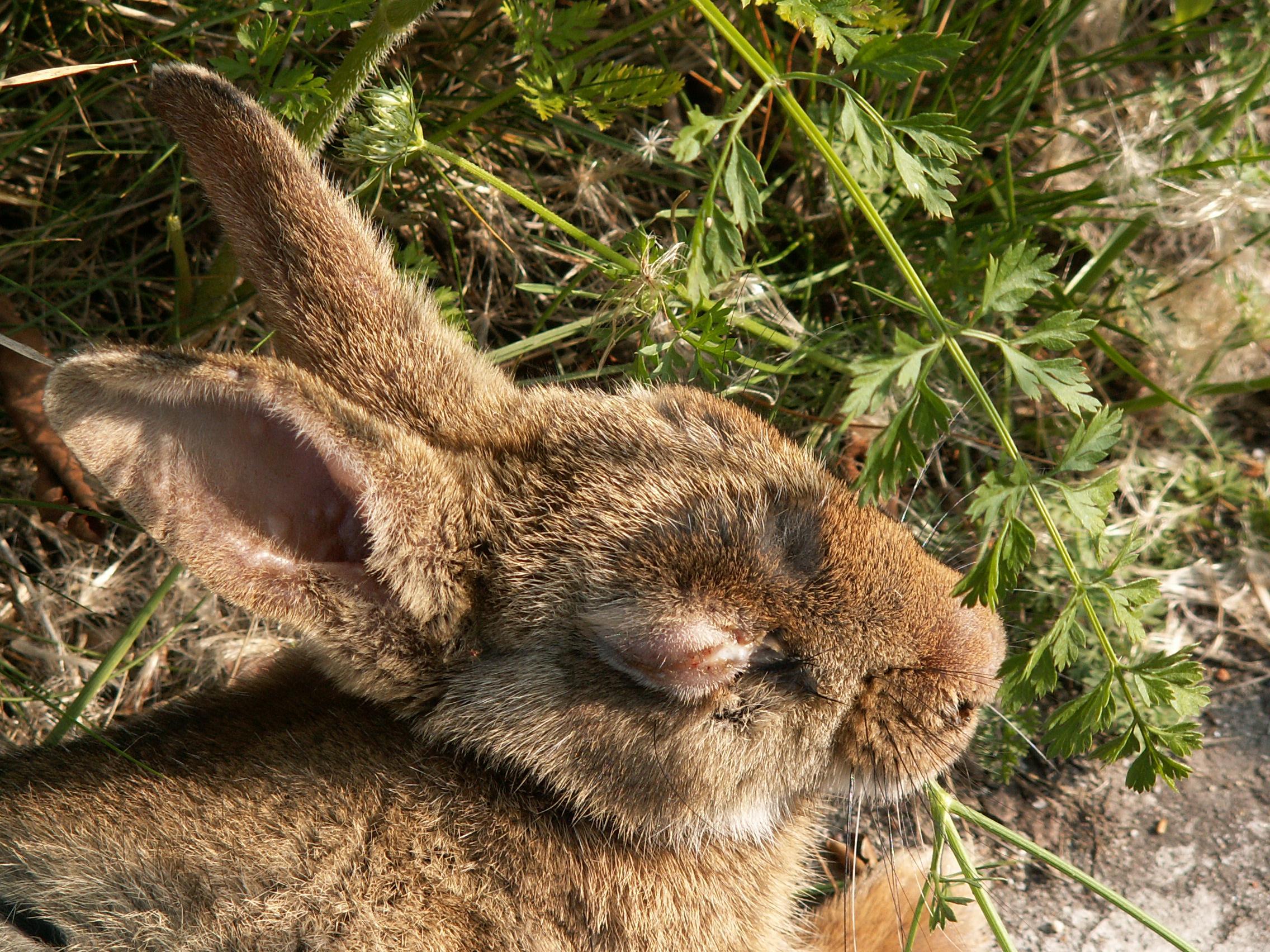
- Inflammation of the eyelids: you may notice that your rabbit’s eyes may appear closed with accumulated secretions and pus.
- Photophobia: intolerance to light.
- Redness.
- Some rabbits may appear more lethargic.
- Decrease in appetite.
- Eye rubbing.
- When the lacrimation (flow of tears) becomes a thick secretion, it may cause a more severe and noticeable eye infection.
If you notice that your rabbit is unable to open its eyes, with evident pus or abundant sleep in/around its eyes, we recommend consulting a veterinarian as soon as possible. Early intervention can prevent further complications and ensure a swift recovery.
For more, we recommend reading our article about common diseases in rabbits.

Conjunctivitis in rabbits: treatment
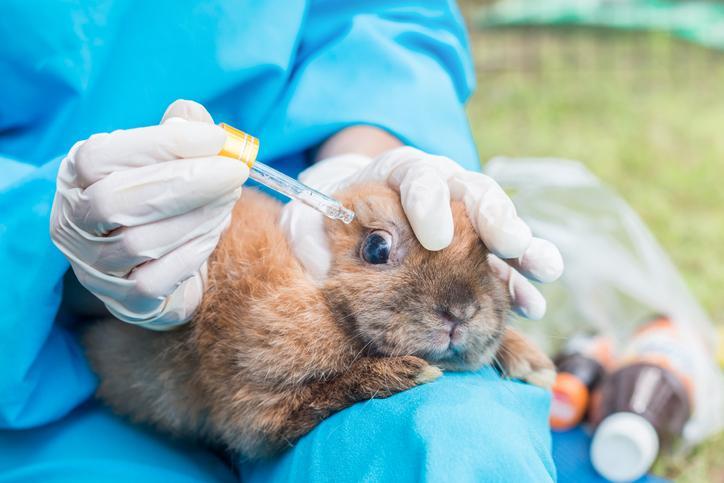
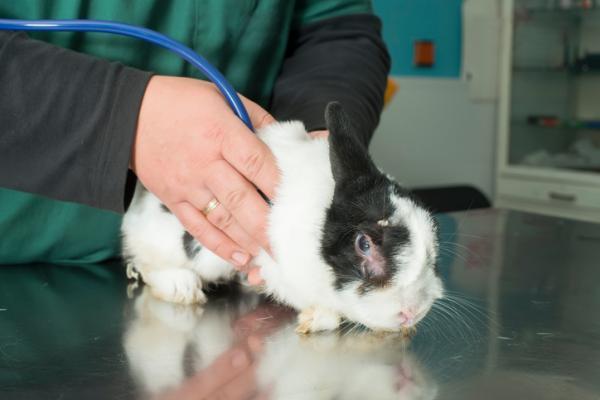
After examining your rabbit’s eye(s) and confirming a diagnosis, a veterinarian will prescribe the appropriate treatment accordingly. This treatment usually consists of antibiotics, painkillers, and drops specific to treating conjunctivitis in rabbits. The composition of the drops will depend on your rabbit’s specific infection. If the cause is due to a foreign object, such as dust or hay, your vet may opt for intensive eye cleaning to eliminate the obstruction.
In some cases, ophthalmic ointments may also be prescribed. It is crucial to follow the vet's instructions closely and complete the full course of medication even if symptoms seem to improve.
Conjunctivitis in rabbits: home remedies
Are you looking for some home remedies for conjunctivitis in rabbits? The first thing to remember is that when it comes to conjunctivitis, veterinary treatment is 100% necessary. This is especially the case if you are dealing with conjunctivitis in baby rabbits. Nonetheless, maintaining a clean environment and minimizing allergens can support medical treatment.
Some veterinarians may suggest that if your rabbit is suffering from a foreign body present in the eyes, you clean it out with saline water and change the hay in your rabbit’s cage. In addition, if your rabbit is allergic to anything in its vicinity, make sure you remove this object.
Remember that before applying any veterinary prescribed ointments or eye drops, you will have to clean the rabbit’s eye(s) from the inside to outside with a gauze or cotton wool (moistened in physiological saline or warm water). This cleaning process should be done gently and quickly to avoid unnecessary stress. Ensuring your rabbit remains calm during treatment is vital for its recovery. Is your rabbit stressed or nervous? Find out by reading our article where we discuss everything you need to know about stress in rabbits.
Conjunctivitis in rabbits: teeth problems
Now that we know how to treat conjunctivitis in rabbits when caused by an eye infection, it’s important to know that weepy eyes in rabbits can also be caused by dental overgrowth. Did you know that a rabbit’s teeth never stop growing? This dental overgrowth in rabbits interferes with the nasolacrimal duct, which is what allows for excess tears to drain. If there is an obstruction in this duct, excess accumulates in the eyes. A veterinarian will be able to diagnose this problem accordingly with the use of a dental x-ray.
Treatment for this type of conjunctivitis in rabbits includes the extraction of these pieces. One must make sure to always offer their rabbits adequate nutrition to wear down their teeth. In addition, we recommend periodically checking your rabbit’s mouth and teeth growth and if you notice that your rabbit is experiencing difficulty feeding, consult a veterinarian. Ensuring a diet rich in fibrous materials can naturally wear down their teeth, preventing this condition.
If the cause of eye discharge in rabbits is due to the aforementioned dental problem, we recommend cleaning the eyes well with saline solution. This should be done regularly to minimize discomfort and prevent infections. For more about this topic, read up about caring for rabbit teeth in our article where we look at abnormal rabbit teeth growth.
Mucopurulent conjunctivitis in rabbits
When conjunctivitis is characterized by the appearance of a very intense mucopurulent secretion, our rabbit could be suffering from myxomatosis. Myxomatosis in rabbits is a viral disease in which tumors are produced in the mucous membranes. Symptoms of myxomatosis in rabbits include:
- Lethargy.
- Inflammation of the eyelids.
- Anorexia.
- Fever.
- Head and face swelling.
- Otitis in rabbits.
- Difficulty moving and breathing.
- Blindness.
- Hemorrhages.
- Seizures.
Chronic myxomatosis in rabbits, which is less common, is when myxomatosis is accompanied by blepharoconjunctivitis, causing an inflammation of the eyelids, conjunctiva, and purulent ocular secretion. This disease is incredibly serious and can be potentially fatal if not treated in time. Prevention includes a proper vaccination schedule recommended by a veterinarian. Regular check-ups can also help in identifying symptoms early, ensuring timely intervention. For more, read our article about vaccinations for rabbits.

This article is purely informative. AnimalWised does not have the authority to prescribe any veterinary treatment or create a diagnosis. We invite you to take your pet to the veterinarian if they are suffering from any condition or pain.
If you want to read similar articles to Conjunctivitis in Rabbits - Causes, Symptoms and Treatment, we recommend you visit our Eye problems category.