What Does a Grasshopper Eat?

 Add us on Google
We often see grasshoppers jumping from one plant to another, blending seamlessly into the lush greenery. Some of us may pause and watch these fascinating insects, pondering the intricacies of their lives.
In this AnimalWised article, we're going to explore what a grasshopper eats and drinks. We'll also discuss the dietary differences between green and brown grasshoppers. Let's dive right in!
Grasshopper digestive system
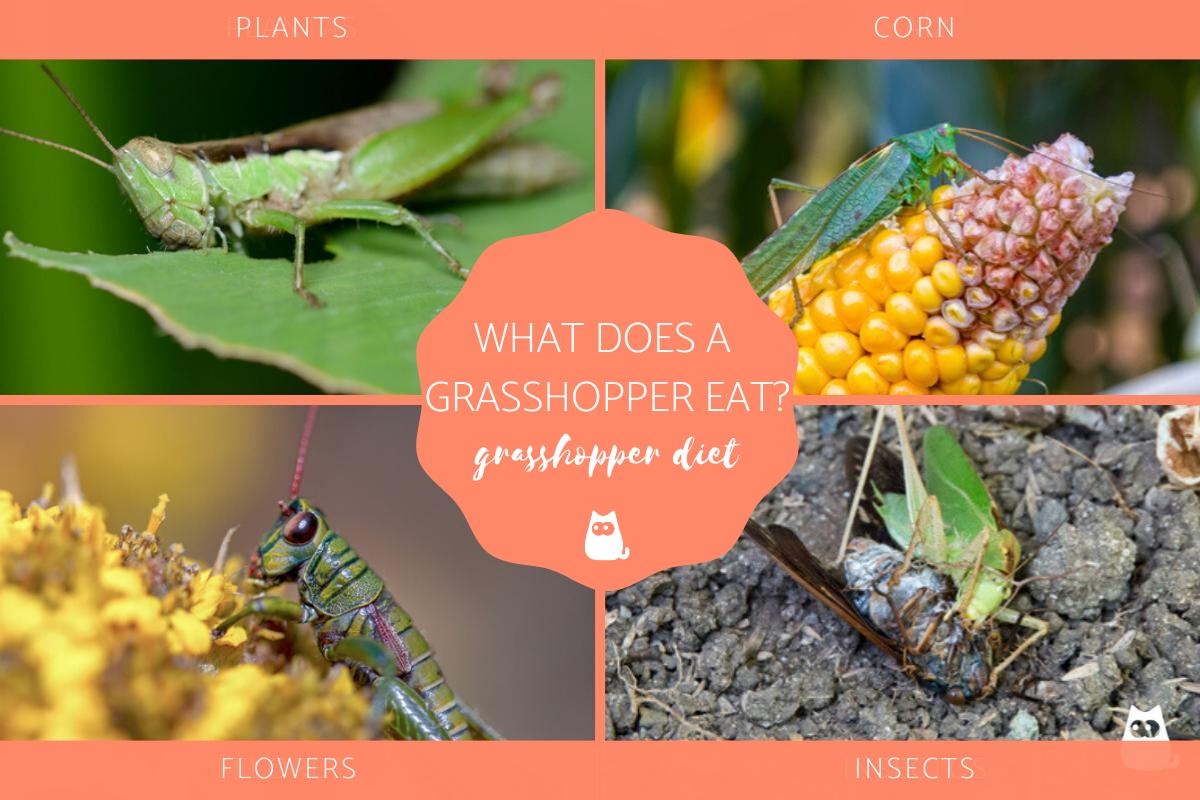
Grasshoppers possess a chewing mouth apparatus that varies slightly depending on their diet. This apparatus includes mandibular, maxillary, and labial structures, which aid in feeding. While some grasshoppers can be carnivorous, most are phytophagous, primarily consuming plants. This plant-based diet can sometimes result in damage to crops.
In the following sections, we will delve into the diets of two types of grasshoppers: the green grasshopper and the brown grasshopper, also known as the rufous grasshopper.
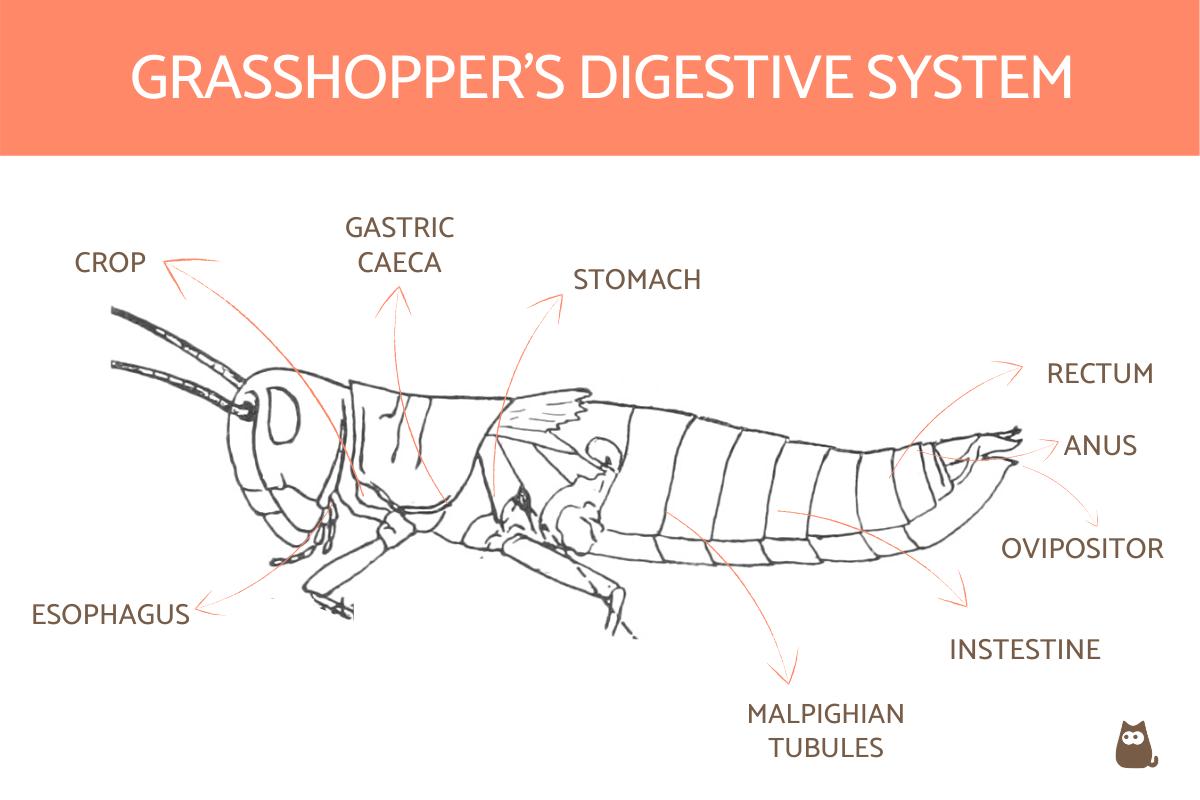
Understanding a grasshopper's diet requires examining their anatomy, particularly their digestive system. Food is first ingested through the mouth and then passes into the esophagus, which delivers it to the crop. Unlike humans, grasshoppers have a crop, an organ for storing food. From there, it moves to the gizzard, a structure that grinds the food for digestion.
As the processed food travels through the digestive system, it reaches the gastric caeca before entering the stomach for further breakdown. Nutrients are absorbed as the food proceeds through the intestine, and any remaining water content is extracted in the rectum. Ultimately, the undigested remnants are excreted through the anus after the grasshopper has absorbed the nutrients it requires.

Differences between brown and green grasshoppers
Both brown and green grasshoppers have similar structures, but their differing lifestyles result in some morphological distinctions between the brown grasshopper and the well-known green grasshopper seen in nature.
Brown grasshopper
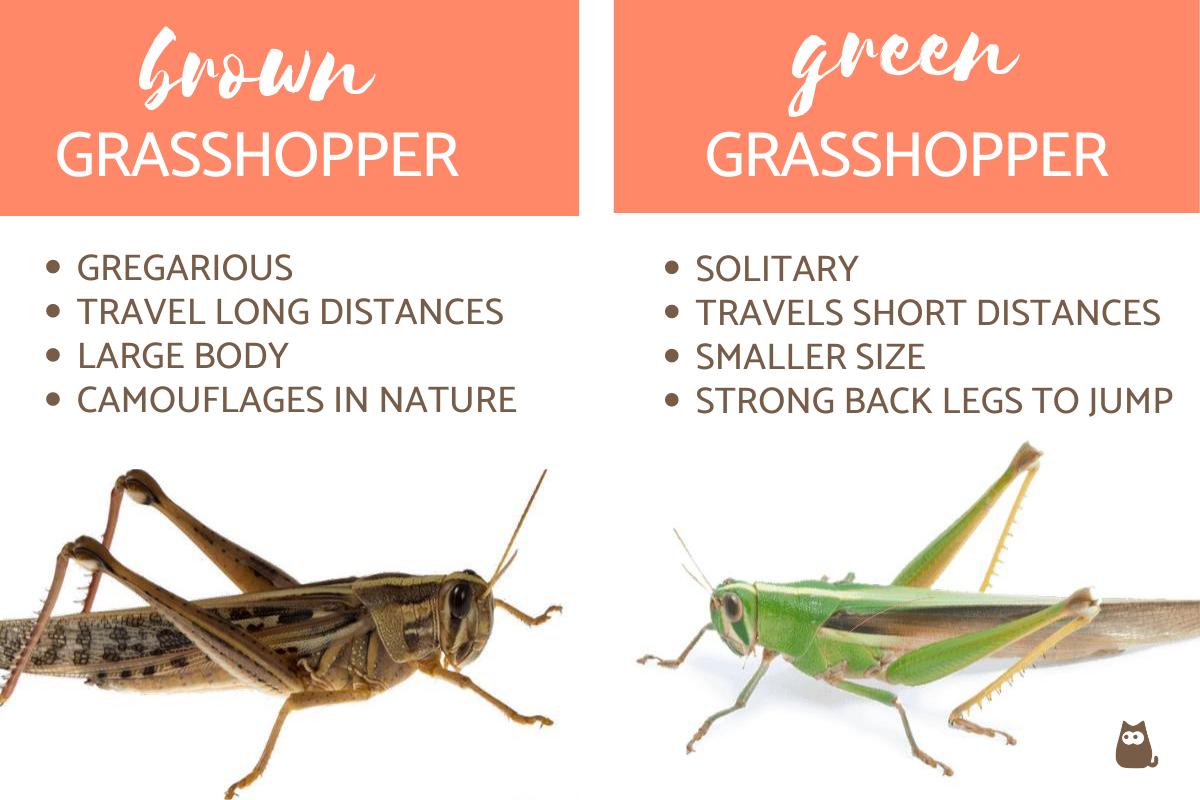
The rufous grasshopper is noted for its gregarious behavior. These grasshoppers congregate in large groups and are capable of migrating long distances in search of food. Consequently, they have evolved longer and more robust structures, such as their wings, to facilitate these migrations.
Their brown coloration helps them blend into their surroundings, similar to other grasshoppers in the pangagid family. Some grasshoppers have reduced or lost their ability to fly, increasing their vulnerability to predators. For these insects, having a brown hue is advantageous for camouflage among leaves or on the ground.
Green grasshopper
Green grasshoppers are typically solitary creatures. They inhabit vegetation and travel short distances for food. Their powerful jumping back legs allow them to escape predators swiftly when threatened.
If you're enjoying this article, we also invite you to check out our article on the largest insects in the world.
The green grasshoppers' vibrant color aids in their camouflaging amidst the lush greenery, offering protection from predators. These grasshoppers are also adept at navigating through dense vegetation, which is crucial for their survival and feeding habits.

What do grasshoppers eat?
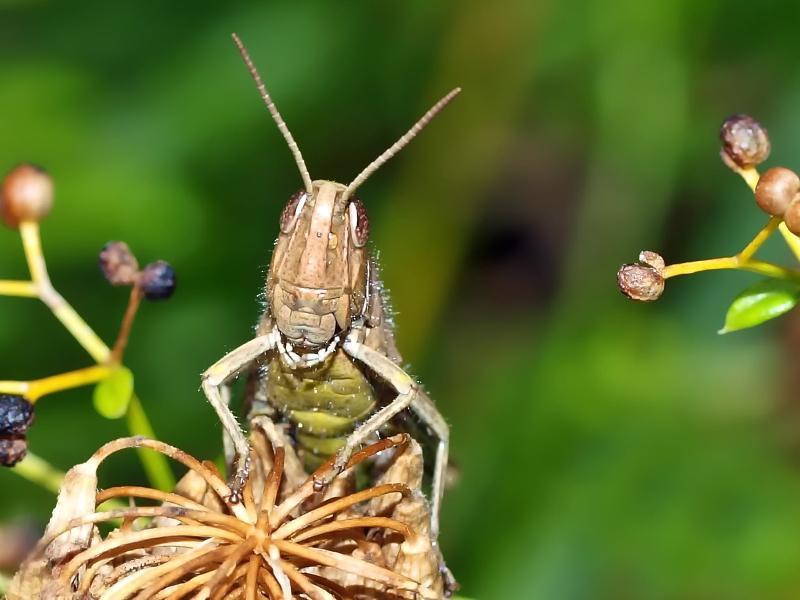
Grasshoppers have taste buds on their antennae, which help them assess the quality of food before it is consumed and crushed with their strong jaws.
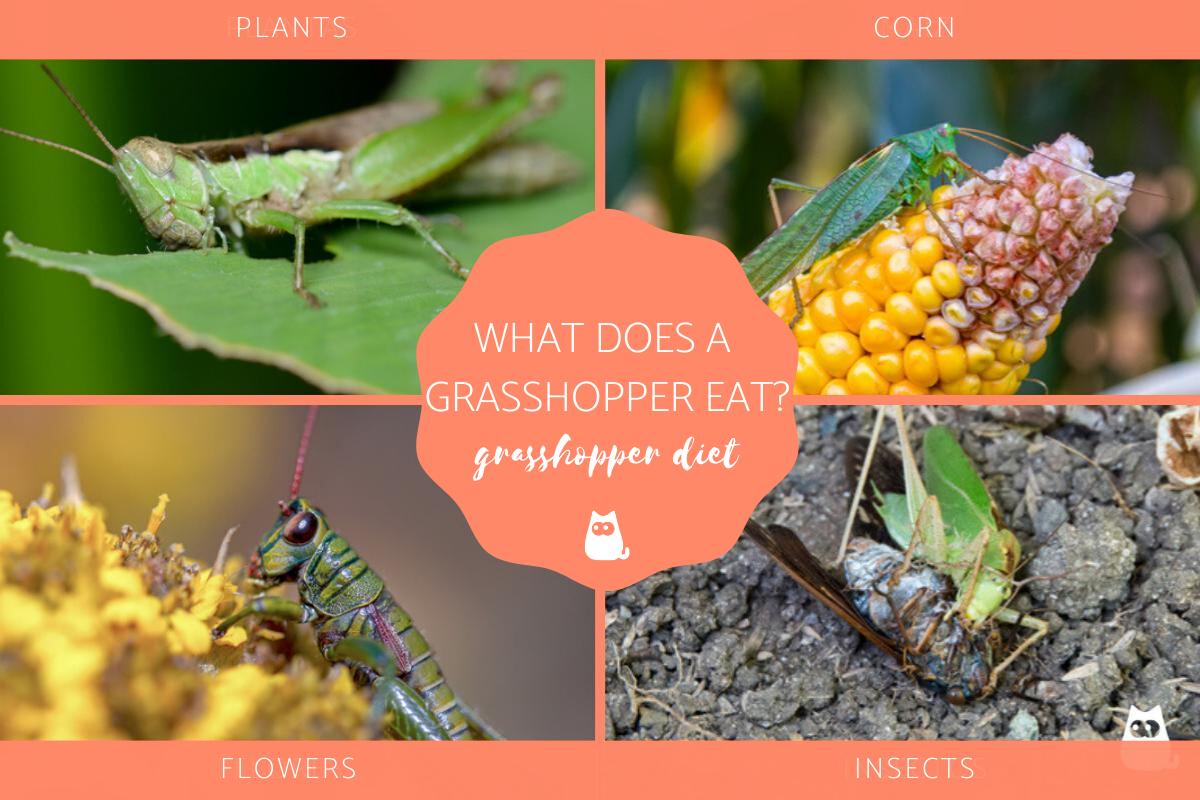
Primarily, they are phytophagous animals, meaning they consume a significant amount of plant matter, including leaves, grass, and fruit. However, it should be noted that some species also feed on small insects like mosquitoes.
Let's explore the dietary differences between green and brown grasshoppers:
What do brown grasshoppers eat?
Rufous grasshoppers are primarily herbivores, forming large swarms capable of consuming vast quantities of plants daily. Their voracious appetite can cause significant economic damage, as they are known to impact peanut, soybean, and corn crops, among others.
These grasshoppers must consume the equivalent of their body weight each day, leading them to feed on hundreds of different plant species. The genus locusts Schistocerca is a prime example of this behavior.
What do green grasshoppers eat?
Green grasshoppers also consume a wide variety of plants, including different species of plants, fruits, and herbs. However, some within this group are predatory or omnivorous.
The Tettigoniidae family includes some predatory grasshoppers, such as the common green grasshopper (Tettigonia viridissima), which feeds on other animals like small insects (caterpillars, flies, mosquitoes, larvae, etc.).
Green grasshoppers' diverse diet allows them to adapt to various environments, ensuring their survival. This adaptability is particularly useful in changing climates where certain plant or insect populations might fluctuate.

Do grasshoppers drink water?
No, grasshoppers don't drink water like we do. In nature, similar to other herbivorous insects, grasshoppers obtain their required water intake from the plants they consume. For instance, grass is about 85% water, making it an excellent source of hydration for grasshoppers.
As these insects consume large quantities of plants, they remain adequately hydrated. However, they will receive more water if they consume grass or leaves with higher moisture content. Consequently, it's common to find grasshoppers near humid areas, where the vegetation offers rich and moist plants for nourishment and hydration.
This reliance on plant moisture is vital for their survival, especially in regions where water sources are scarce. The ability to extract sufficient water from their diet is an evolutionary advantage that supports their thriving existence in various habitats.
Now that you know what grasshoppers eat, you may be interested in this other article about animals that consume insects.
If you want to read similar articles to What Does a Grasshopper Eat?, we recommend you visit our Healthy diets category.
- Buratovich. (2003). Locust. An ancient plague . Website: museantafefe.com.ar/descargas/35_texto7.pdf
- Cadena O., Cardona J .. (2015). Introduction to the Colombian grasshoppers . Colombia
- Clemente M., García., Presa J .. (1987). Key to the genera of Iberian grasshoppers (orthoptera, caelifera) . University of Murcia.
- López H., Oromí P .. (2006). Acrostira Tenerifae (Orthoptera, Pamphagidae) . Dialnet Website: https://dialnet.unirioja.es/buscar/documentos?querysDismax.DOCUMENTAL_TODO=acrostira+tenerifae
- Vitti D., Szwark D., Parodi M., Colombo F .. (2017). Locusts, plagues of yesterday and today . Voices and Echoes (22-25): EEA Reconquista.