Why Does My Cat Keep Peeing on My Bed?


See files for Cats
Getting ready to go to bed but seeing that your bed is wet with your cat's urine is a complete nightmare! The reason behind why your cat keeps peeing on your bed can be due to a number of reasons that we will go through below.
Keep reading this AnimalWised article to know why your cat keeps peeing on your bed or clothes, as well as learn how to stop them from repeating this odd behaviour.
Why your cat is peeing on your bed or clothes
Medical reasons
The first cause that should be ruled out is medical issues, such as hormonal and chemical imbalances in their body, bladder infections, and other urinary tract problems. Before considering other causes, it's best to take your cat to the veterinarian for a check-up. Make sure to tell them about their abnormal behaviour of peeing on your bed or clothes.
Once you have brought your cat to the vet and ruled out any medical reasons, you can now try to figure out what other cause it can be. The reason why we first rule out any medical issue is because these can get very serious when not properly diagnosed and treated. Conditions like urinary tract infections can lead to significant discomfort for your pet and may result in other health complications if left unaddressed.
Litter box isn't comfortable
The next reason is that your cat is dissatisfied with their litter box. Whether it is the sand you have chosen, cleanliness, sharing with another cat, or location, your cat doesn't like their litter box.
You'll need to make sure there are enough litter boxes for the number of cats you have in your home, that the sand is high quality so it won't irritate your cat, the litter box is cleaned regularly, and make sure it's a comfortable litter box. We also encourage you to read our article on how many litter boxes you should have for two cats. Additionally, consider the type of litter box you are using; some cats prefer covered boxes, while others may feel confined in them.
Your cat feels jealousy
Another possibility is that your cat is feeling jealousy. This is common when you first introduce another cat or any other pet to your cat. It can also occur if your partner is spending more time at your home or has moved in. Cats can sometimes be territorial so they will want to demonstrate in their own way that it is their home and you are their family.
Cats are also animals that are comfortable with a routine. Therefore, if someone comes and disrupts your usual lifestyle or routine, your cat will feel upset. It's important to introduce changes gradually and give your cat time to adjust to new family dynamics. Providing your cat with extra attention and reassurance can help mitigate feelings of jealousy.
They feel anxiety or stress
Anxiety or stress in cats can be caused by many things. Whether it is a new location, new pet or person in the household, or a change in their diet, cats are very sensitive to these changes and may feel upset about it. Another reason could be that you're leaving your cat alone at home for too long and they're suffering from separation anxiety. Sudden loud noises or changes in household activity can also be stressors. Providing interactive toys or calming aids like pheromone diffusers can help soothe an anxious cat.

How to stop your cat from peeing on your bed or clothes
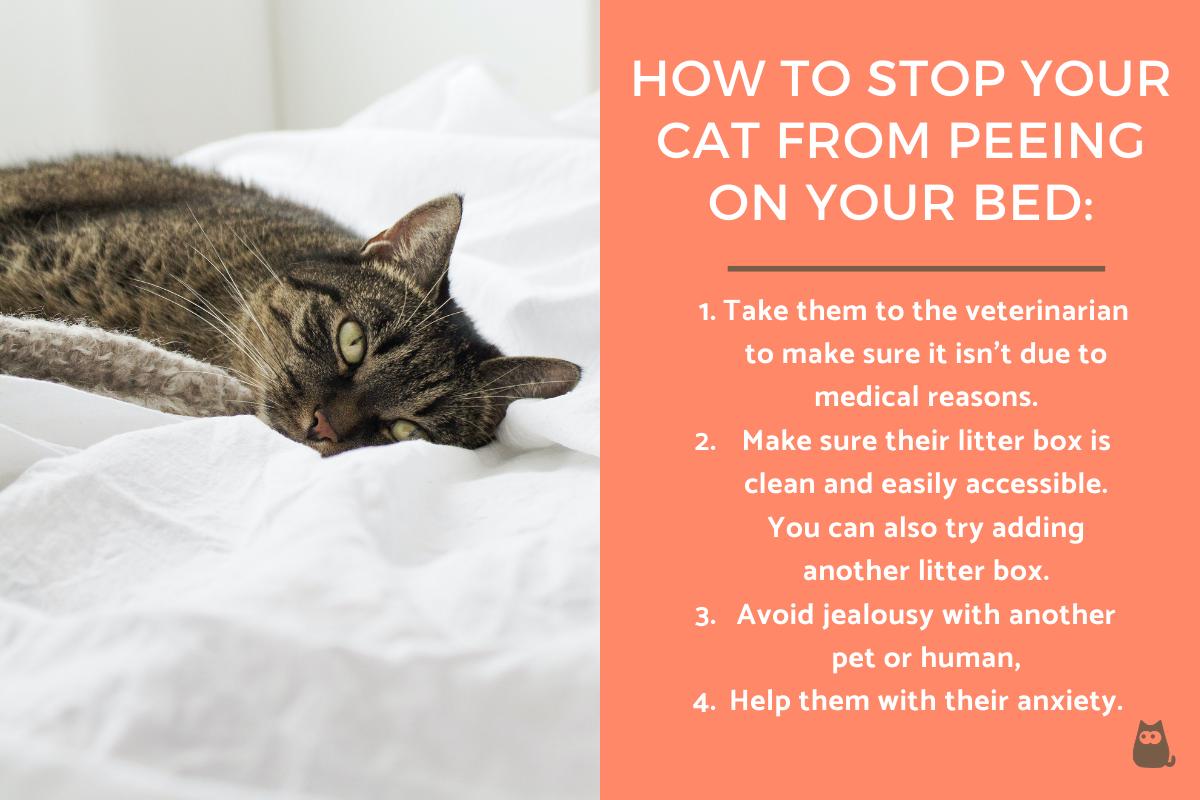
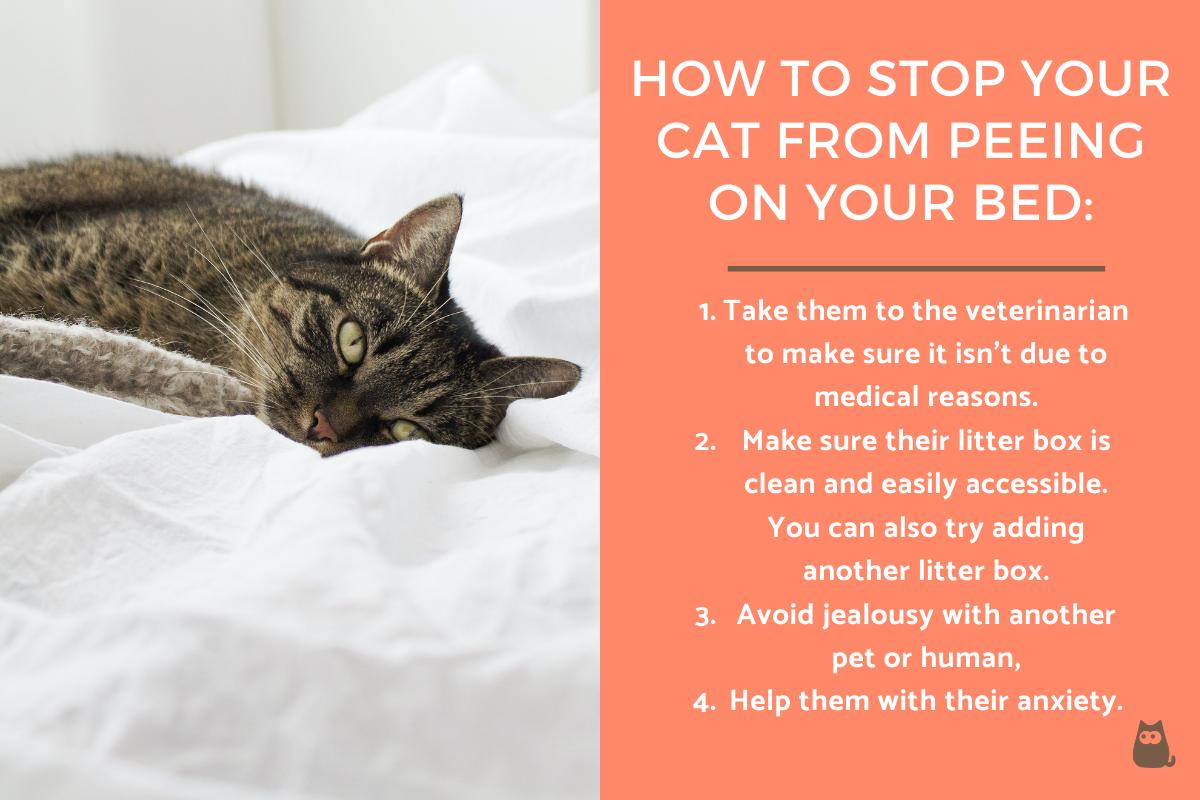
Take them to the veterinarian
As we've previously mentioned, the first thing you should do is take your cat for a check-up with their veterinarian. It's important to first rule out any medical issues as these can get serious if not properly diagnosed and treated.
To avoid more serious issues in the future, it's best you call up your veterinarian, tell them about the issue, and book an appointment. Regular check-ups can also help in early detection of potential health problems.
Add another litter box
If your cat is dissatisfied with their litter box, there are certain things you can do to improve it. Take these tips into consideration:
- Location: Choose a calm and private area that is easy to access for your cat.
- Litter sand: Choose a natural litter that won't irritate your cat. Some cats prefer unscented litter as strong fragrances can be off-putting.
- Type of litter box: Remember to choose a litter box that is comfortable for your cat to get in and out of. Some cats prefer open boxes, while others might like the privacy of a covered box.
- Amount of litter boxes: There should be two litter boxes for each cat in the household. This gives them options and prevents territorial disputes.
- Cleanliness: Remember to clean your cat's litter box regularly. You should remove their feces at least once a day and thoroughly clean their litter box at least once a week. A dirty litter box can be a major deterrent for cats.
Avoid making your cat jealous
This can be difficult, however, it's important to not shock your cat with a big change. Instead, take baby steps towards getting them used to the new pet or person in the household.
If it's another cat, or any other pet, take the time to properly introduce them to each other. First you'll want them to get to know each other's scent through a toy. Then they can meet in a neutral place. Your cat will most likely hiss and go back to “their territory”. Allow them to do so. Then, you can slowly make more steps for them to observe and get used to each other. Read more in our article about how to introduce a new cat to your cat.
If the new element is a person, you'll also need to take small steps until your cat realises that they are not a threat or an invasion but are in fact a new member of their family. Make sure you give your cat lots of attention and affection so they do not feel left out. Try not to change their routine too much. And, you should get the new person to feed your cat once in a while and play with them everyday until they are accepted. Building a positive association with the new person or pet can significantly ease the transition.
Help their stress or anxiety
If your cat is experiencing stress or anxiety, you'll need to find the cause of this and try to improve their mood. Cats are simple animals. They need a high quality diet, company, toys, play time, and health care. Try to observe where the stress or anxiety is coming from. Are they spending too much time alone? Is their diet causing deficiencies? Ensuring a well-balanced diet and plenty of mental stimulation can greatly enhance a cat's quality of life.
You can also consult a feline behaviour specialist to help you understand your cat's behaviour. We'll also include our video below about understanding your cat's behaviour! These specialists can offer tailored advice and strategies to improve your cat's well-being, helping to resolve issues more effectively.

This article is purely informative. AnimalWised does not have the authority to prescribe any veterinary treatment or create a diagnosis. We invite you to take your pet to the veterinarian if they are suffering from any condition or pain.
If you want to read similar articles to Why Does My Cat Keep Peeing on My Bed?, we recommend you visit our Other health problems category.
- Feline Behavior Problems: House Soiling (Cornell University College of Veterinary Medicine)
- Cat Carer Guide to Lower Urinary Tract Diseases (International Cat Care)
- Behavior Problems in Cats (Merck Veterinary Manual)