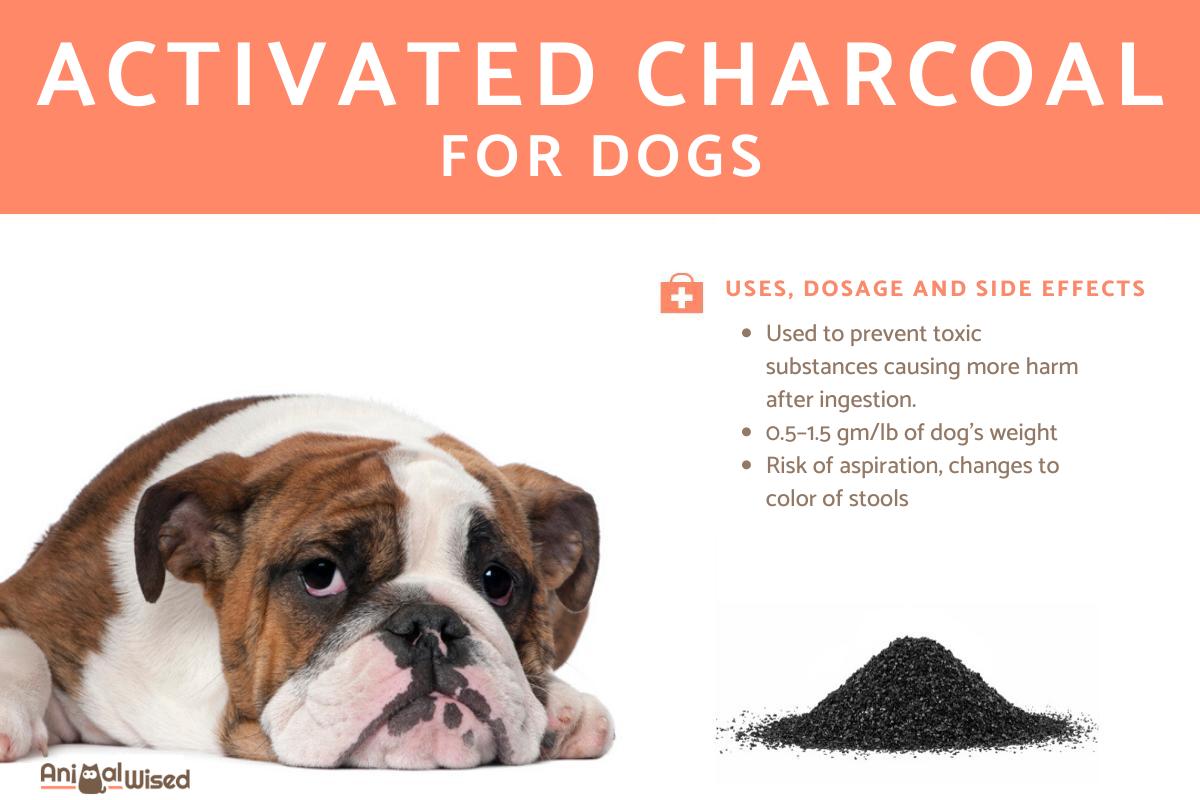
Activated Charcoal for Dogs - Uses, Dosage and Side Effects


 Add us on Google

See files for Dogs
Some of us might be aware that activated charcoal can be a good addition to any first aid kit. This is due to its adsorptive properties which can be useful in an emergency situation. Specifically, it works to prevent toxins from entering the dog's nervous system in the case of poisoning. It is increasingly touted as having many additional benefits. Some people use it as a supplement for themselves and consider using it for their dogs.
At AnimalWised, we look at activated charcoal for dogs, sometimes also known as activated carbon. In addition to discovering the uses, dosage and side effects of activated carbon, we find out if it is a supplement you should give your dog.
What is activated charcoal for dogs?
Also known as activated carbon, activated charcoal is a form of carbon with numerous applications. It is a product derived from various materials, such as wood, almonds, coconut husks, palm trees, peat, or mineral coal. It has a wide range of industrial uses, primarily as a filtration medium to refine different products and compounds. Although the outcomes and processes may vary, the use of activated charcoal for dogs is similarly a type of filtration.
Activated charcoal for dogs works by binding to toxic products, thereby preventing or reducing their absorption in the dog's body. This is achieved through a process called adsorption. In the production of activated charcoal, the carbon is treated to form numerous pores, significantly increasing its surface area. Molecules are adsorbed because they attach to the charcoal's surface. As they are adsorbed, they are not absorbed by the dog's system.
For activated charcoal to neutralize toxins in the dog's body, direct contact between the carbon and the toxicant is necessary. This means the dog must ingest activated charcoal if they have consumed something harmful. A single gram of activated charcoal can absorb between 100 to 1000 mg of toxins. Its use is generally considered safe, but it does not serve as an antidote for all poisons. It is most effective when toxins impact the gastrointestinal tract.
The effectiveness of activated carbon relies on factors such as the nature of the ingested substance and the contents of the dog's stomach. It's crucial to note that it is more effective when administered promptly. If substantial time has passed and the poison has been absorbed, offering activated charcoal will no longer benefit the dog. Combining it with other ingredients can enhance the digestive system's health.

Uses of activated charcoal for dogs
While activated charcoal is commonly used for intoxication, it has other applications in canine care. It can be administered to treat gastrointestinal upset. In cases of gas, diarrhea, or other digestive issues, the carbon can protect the gastrointestinal wall and aid digestion. Evidence suggests it can reduce malodorous flatulence in dogs by altering the production or availability of hydrogen sulfide in the large intestine[1]. However, more conclusive studies are needed.
For intoxication or poisoning in dogs, activated charcoal can be an excellent first aid treatment. If we discover our dog has ingested a toxic substance, we may be able to eliminate it by inducing vomiting in the dog. This procedure is not recommended to be done at home, so it is crucial to take them to an emergency veterinary center as quickly as possible.
Activated charcoal can cause the dog to vomit, but this doesn't always occur. The primary use is as previously mentioned, i.e., adsorbing the toxin molecules and preventing them from entering the dog's nervous system.
When NOT to use activated charcoal for dogs
Do not induce vomiting if the dog:
- Has swallowed cleaning or petroleum products
- Has already vomited
- Is not fully conscious
- Exhibits respiratory difficulties or neurological damage
Finally, it's important to recognize that there are various activated charcoal products on the market. Not all are suitable for veterinary use, so ensure you read the label of any product before administering.

Can I give my dog activated charcoal supplements?
Although several studies have been conducted to test the efficacy of activated charcoal on intoxication, there is less information regarding its use as a supplement. This is particularly true in canine veterinary medicine. Some sources make bold claims about activated carbon providing benefits such as improving kidney function and lowering cholesterol. Unfortunately, there is limited evidence to substantiate these claims.
Moreover, giving activated charcoal to a dog can pose certain risks. Since it adsorbs various molecules, it is useful in preventing toxins from entering the dog's system. However, it can also do the same for certain nutrients found in food. This can lead to deficiencies if given regularly, although a substantial amount would be required for this to occur.
Administering activated charcoal supplements to your dog is unlikely to cause harm in small amounts. However, they are not likely to be beneficial unless used for a specific issue such as excessive gas in the dog. Even in these cases, activated charcoal may not be the best treatment option. Consulting your veterinarian is crucial before giving your dog any supplements. They can provide guidance based on your dog's specific health needs and conditions.
How to administer activated charcoal for dogs
In cases of intoxication, it is imperative to take your dog to a veterinarian as this is considered an emergency. In some instances, a vet may be inaccessible, so we should call a clinic for advice. Ideally, activated charcoal should only be given in a clinical environment. If this is not feasible, the veterinarian should provide guidance on administering it over the phone.
The activated charcoal for intoxication should come in a large syringe. To administer the dosage, we should:
- Lay down towels as it can get messy.
- Ensure the dog is conscious and can swallow on their own.
- Position the nozzle of the syringe at the side of their mouth and push in a small amount, allowing them time to swallow.
- Keep their head level and do not tilt it far back as it increases the risk of aspiration.
- Insert the entire dose of activated charcoal incrementally until it is complete.
It's crucial not to give activated charcoal to a dog that has lost consciousness or is unable to swallow for any reason. This is because they can easily aspirate. Additionally, we should be aware that the dog's stools will turn black for some bowel movements following activated charcoal treatment. This is normal and should resolve within a few days.
Activated charcoal for dogs dosage
Activated charcoal is available in various preparations. Not all are suitable for dogs experiencing intoxication. The type of activated charcoal for dogs suitable for a canine first aid kit typically comes in a syringe and often contains additional ingredients such as sorbitol to act as a laxative. This helps expedite the passage of toxins through the dog's digestive system.
The activated charcoal dosage should be administered according to the veterinarian's instructions. However, a general guideline is 0.5–1.5 grams per pound of body weight (0.5–1.5 gm/lb). Activated charcoal tablets are sold in doses by milligram and are not suitable for this purpose. Always ensure correct dosage and consult with a vet to avoid any potential complications.

Side effects of activated charcoal for dogs
Since activated charcoal for dogs is not absorbed or metabolized, adverse effects are rare. However, the administration itself can be risky. Therefore, we must be vigilant for the following signs:
- Lack of coordination
- Mental or behavioral changes
- Tremors
- Panting
- Seizures
- Coma
If any of these signs are observed, it is imperative to inform the vet immediately. As mentioned earlier, the dog's feces will change color to black for up to a few days. For more insights, check out our related article on the different types of dog feces to learn more about what they indicate about your dog's health.

This article is purely informative. AnimalWised does not have the authority to prescribe any veterinary treatment or create a diagnosis. We invite you to take your pet to the veterinarian if they are suffering from any condition or pain.
If you want to read similar articles to Activated Charcoal for Dogs - Uses, Dosage and Side Effects, we recommend you visit our Medicine category.
1. Giffard, C. J., Collins, S. B., Stoodley, N. C., Butterwick, R. F., & Batt, R. M. (2001). Administration of charcoal, Yucca schidigera, and zinc acetate to reduce malodorous flatulence in dogs. Journal of the American Veterinary Medical Association, 218(6), 892–896.
https://doi.org/10.2460/javma.2001.218.892