A Complete List Of Desert Animals


 Add us on Google
Our planet has climates of all kinds: from raw winters to soft springs. These different types of climate and variety of geographical areas are so great, that in each one different species of fauna and flora can be found. But what kind of animals exist in the desert?
In this AnimalWised article we will present you with a list of desert animals that will definitely fascinate you!
Animals that live in the Sahara desert
The Sahara is one of the largest deserts in the world. It is located in North Africa, and some of its sand dunes can reach almost two hundred meters in height. It is an arid and dry desert, where you can find some oasis around which certain types of animal and plant life have developed. Among the animals we can find in this desert are:
Addax (Addax nasomaculatus)
Today, the Addax is in critical danger of extinction. We can find small populations of this animal in countries like Nigeria and Chad.
The Addax is a kind of antelope that has been depleted by indiscriminate hunting. This animal is perfectly suited to its environment. It is able to live off little amounts of water, as it rests during the hottest hours of the day. At night, the Addax feeds on the limited vegetation found in the desert. Its ability to survive in extreme conditions is truly remarkable and highlights the intricate balance of desert ecosystems.
Arabian camel (Camelus dromedarius)
Also called the dromedary, this camel is unique to its species. Its main characteristic is a hump that is located on its back. To resist the hot sands of the desert, this camel needed to adapt its body. This mammal has long lashes to prevent sand from entering its eyes, and callous knees and ankles to isolate high temperatures.
However, the most notable feature of this camel is its hump. This hump allows it to produce water with the fat it accumulates. In this way, the animal remains hydrated no matter how far away it may be from water. The dromedary's remarkable adaptation mechanisms make it an essential resource for desert inhabitants.
Western African crocodile (Crocodylus suchus)
The Western African crocodile is found in several parts of Africa, including the Saharan desert. In ancient times, this species was venerated by the Egyptians as a god, therefore they were mummified.
This species is spread across the Saharan region of Mauritania. It protects itself from the sun with its powerful armor (thick skin), and by taking baths in the nearest river. The presence of these reptiles in such an arid environment demonstrates the incredible adaptability of life forms.
Deathstalker (Leiurus quinquestriatus)
This scorpion is also known as the Palestinian scorpion. It has a yellowish tone throughout its body with a thin black stinger. This coloring is a characteristic which allows it to remain hidden from possible predators.
When this does not work, the scorpion has a poison that, if stung, can be incredibly painful. A sting by this scorpion cannot normally kill an adult human, however, it can badly harm a person, specifically a child or elderly. The deathstalker's potent venom is a reminder of the hidden dangers that lurk in the desert sands.
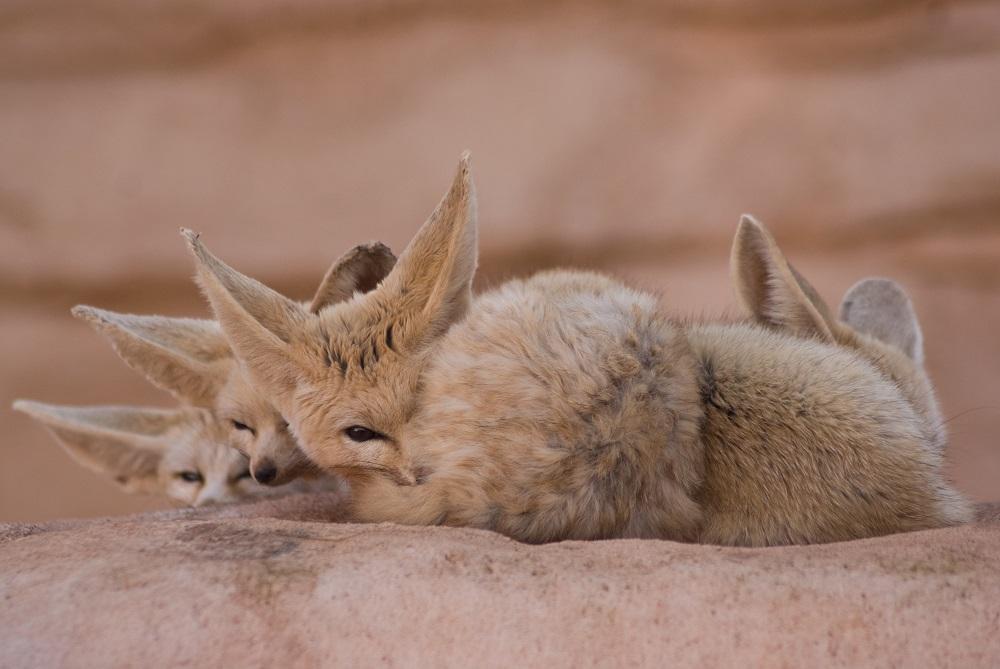
Fennec Fox (Vulpes zerda)
The Fennec Fox is a small mammal of the canine family that lives in the Sahara desert. Its coat, between blond and reddish, allows it to camouflage itself easily, as it ‘‘dissolves’’ with the sand dunes. One of its main distinguishing features is its long ears, which allow it to regulate its temperature. These large ears help to cool its body when it is very hot. This animal is mostly nocturnal, at which point it leaves its burrow to hunt. It can survive a long time without water.
Animals that live in the Mexican desert
The Mexican desert occupies around 40% of the total surface of the country. There are in fact four deserts in different parts of the country: San Luis de Potosi, Baja California, Sonora, and Chihuahua. Some of these beautiful deserts are not only part of Mexico, but also of the United States.
In each of them live different species of animals and plants, such as:
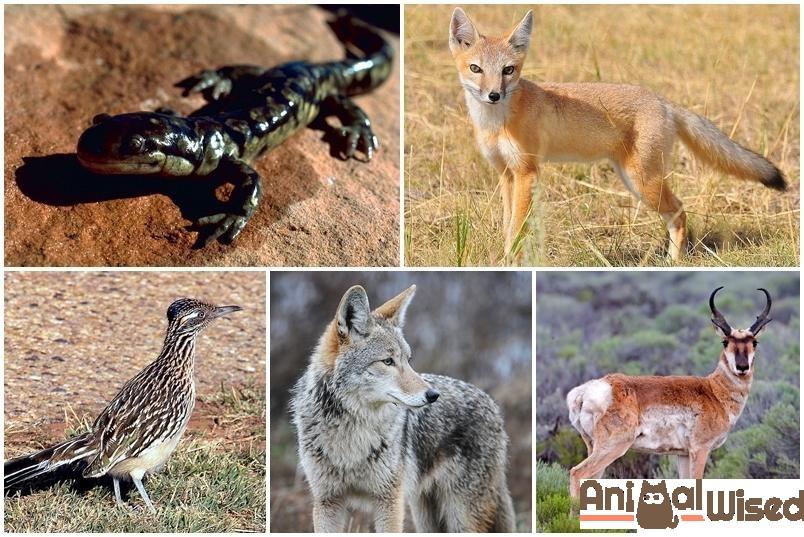
Swift fox (Vulpes velox)
The size of a house cat, the swift fox not only feeds on other animals, but also on fruits and herbs. They build burrows among the sand, where they stay cool during the day. They hunt during the night. The swift fox's adaptability makes it a key player in the delicate desert ecosystem.
Pronghorn (Antilocapra americana)
This animal is not only found in Mexico, but also in some areas of the United States and Canada. This mammal is similar to the antelope, but unique in its kind. It moves in a herd, especially during the hottest seasons. As it has adapted to the hostile environment of the desert, it feeds on the scarce grass and plants such as cactus, typical of sandy and dry ecosystems. The pronghorn's impressive speed and endurance are crucial for its survival in such a challenging environment.
Tiger Salamander (Ambystoma tigrinum)
Tiger Salamanders live on land and only approach aquatic environments for reproduction periods. Their larvae are very resistant, so they are able to support their development in adverse natural conditions, such as those that are present in deserts. They feed mostly on worms and small insects. The resilience of the tiger salamander's larvae is a testament to the evolutionary adaptations that enable life in extreme conditions.
Greater roadrunner (Geococcyx californianus)
The roadrunner became very popular thanks to the cartoon. However, their actual appearance is not at all similar to what they have been presented as on television. It is in fact a rather small bird, which can only perform flights at low altitude, so it spends most of its time on land. It is however capable of running at great speeds, a little over 30 kilometers per hour. The roadrunner's agility and speed are vital for evading predators and catching prey in the vast desert expanse.
Coyote (Canis latrans)
You can find coyotes in both the Mexican desert and in Canada. It adapts easily to diverse ecosystems, which allows it to live in an arid environment. During warmer months, coyotes remain in packs, as a way to ensure support when it comes to hunting and protecting themselves. The coyote's adaptability and social structure highlight its resilience in harsh conditions.

Animals that live in the Chilean desert
You can find several deserts in Chile. The most popular is the Atacama, located in the north of the country. It is the most arid desert in the world. This area is rich in metallic, non-metallic resources and magnesium salt, which is an important source for the Chilean economy. When the rainfall in the area exceeds the annual average, a natural phenomenon known as the ‘flowery desert’ occurs.
Chile shares sections of its deserts with neighboring borders, such as the Pacific desert and the arid diagonal of South America. Among these vast and fascinating deserts we can find:
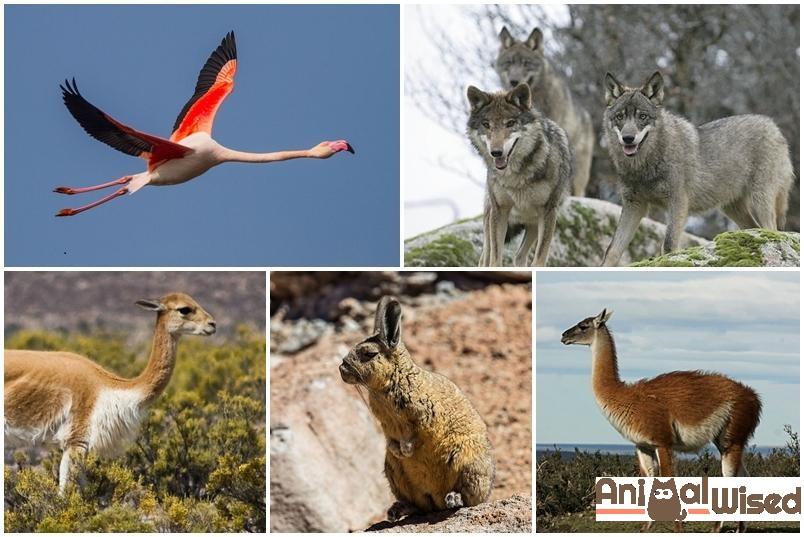
Vicuña (Vicugna vicugna)
Vicuña is a mammal which is part of the camel family. It carries beige and cream fur, so it is easily confused with desert areas. Its legs are padded, allowing them to move easily on very hot or rocky soils; In addition, its thick and dense coat protects them from temperature inclemency. This coat blocks wind passage, its waste and protects this animal from the cold during the night. The vicuña's wool is highly valued, adding economic significance to its conservation.
Guanaco (Lama guanicoe)
This mammal also falls under the camel umbrella. Its delicate build feeds on small herbs and bushes. They live in flocks, where the male is responsible for protecting the young and the female. Its coat is reddish and sandy, which is beneficial and necessary for an animal that lives between dunes and rocks. The guanaco's social structure and adaptability are essential for their survival in the harsh desert landscape.
Southern Viscacha (Lagidium viscacia)
The Southern Viscacha is a rodent which is physically similar to the hare. You can find this little rodent in Chile, Peru, and Argentina. Its fur is thick, which protects it from the desert wind and keeps it warm at night. They take refuge among rocks and feed on small herbs. The viscacha's ability to find shelter and sustenance in such a barren environment is remarkable.
Gray Wolf (Canis lupus)
It is a canine species smaller than most wolves, with gray, dirty and sandy fur. This wolf is not only found in deserts, but can also be seen in meadows and fields. The gray wolf adapts easily to almost any environment. In the desert, it feeds on reptiles, small rodents, and mammals, such as mice and hares. The gray wolf's versatile diet and adaptability make it a formidable survivor.
Flamingos (Phoenicopterus)
Although it may seem strange, Chilean flamingos are typical to the Atacama desert. Most of them accumulate in the National Flamingo Reserve, where despite the desert climate, you can find rivers and other water sources. These resources make it possible for the presence of these beautiful birds. The flamingo's presence in such an arid region is a testament to the diversity of life that can adapt to desert conditions.

Animals that live in the Antarctic desert
Contrary to what most people think, and a surprising fact for many, is that Antarctica is in fact a desert. The word "desert" does not only mean arid areas where heat reigns, but any inhospitable space where life is scarce due to adverse conditions.
Even so, plants and animals have managed to develop sufficient defenses in order to keep this freezing climate their home. And here they are:
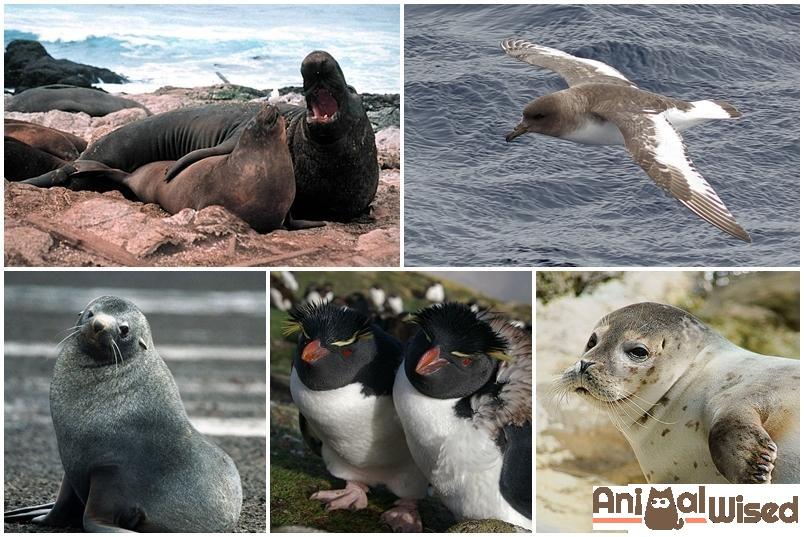
Seal (Phocidae)
Seals are marine mammals that are also capable of surviving on land. Seals are covered in little hair and thick skin. This thick skin functions as protection against low temperatures. They feed on penguins, fish, and other marine animals. The seal's adaptability to both land and sea environments is crucial for its survival in the Antarctic desert.
Penguin (Spheniscidae)
Although penguins are birds, they do not fly. Their lives take place on land and in water. Therefore, their wings have had to adapt perfectly for the ocean. In the water, penguin wings function as fins, capable of propelling them through water at high speeds. Their bodies are also conditioned to withstand cold weather. Under their layers of feathers, you can find thick fat. Penguins' unique adaptations enable them to thrive in the harsh Antarctic environment.
Antarctic Petrel (Thalassoica antarctica)
This white-breasted bird can be found in certain regions of the Antarctic continent. Its body has adapted to withstand the cold, and it feeds on small marine animals, such as krill and other crustaceans. The petrel's ability to endure extreme conditions while maintaining its feeding habits is a testament to the resilience of Antarctic wildlife.
Marine Elephant (Mirounga)
The Elephant seal presents a marked dimorphism between males and females, because the males weigh and measure twice as much as their female counterparts. They feed on other marine animals. Their considerable layer of fat that forms on their bodies aids them against the icy water of Antarctica. The elephant seal's physical adaptations are vital for its survival in the frigid Antarctic waters.
Antarctic fur seal (Arctophoca gazella)
Antarctic fur seals are able to live on both land and in the ocean. They feed on krill, fish, and crustaceans. Like their relatives, they are able to live in this freezing environment due to their thick layer of skin and fat that insulates the cold. The fur seal's dual habitat capabilities underscore the remarkable adaptations necessary for life in the Antarctic desert.

Animals that live in other deserts
On our planet, there are several deserts, so many that they are often difficult to keep up with. In each one of these deserts, we can find interesting and fascinating species that have grown to adapt to their harsh environments. The most commonly known desert animals which haven’t yet been mentioned are:
- Buzzard
- Dorcas gazelle
- Dingo
- Barn Owl
- Hyena
- Wildcat
- African wild dog
- Cobra
- Peccary
- Beetles
- Elephant of the desert
- Spiders
- Mice
- Narwhal
- Krill
These animals represent the incredible diversity and adaptability of life that can be found in deserts around the world. From the buzzing insects to the stealthy predators, each plays a crucial role in maintaining the delicate balance of these ecosystems.
If you want to read similar articles to A Complete List Of Desert Animals, we recommend you visit our Facts about the animal kingdom category.