Different Types of Deer Species

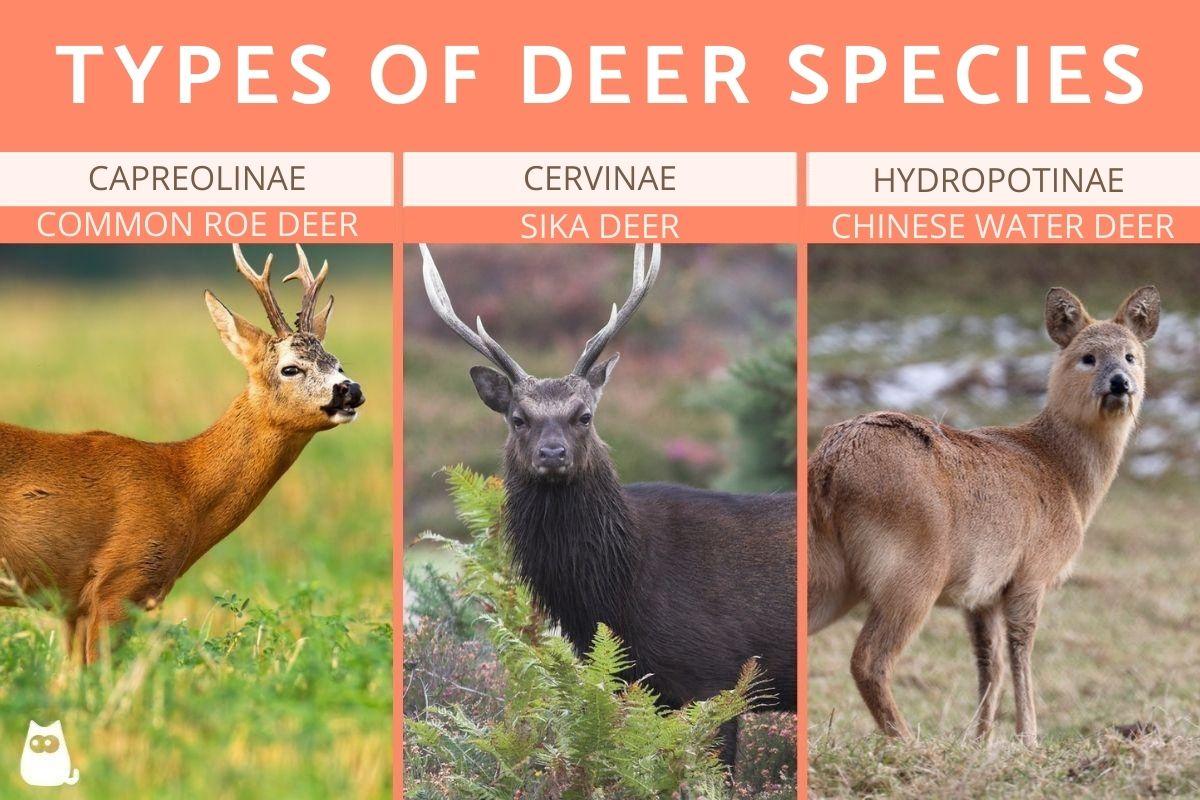
Did you know that deer have existed on our planet for over 34 million years? This large family of herbivorous mammals began their long evolutionary journey in the Oligocene period. Many changes have affected the various deer species over these years, but the end result is the taxonomic family known as Cervidae. This family is more generally known as deer or true deer, since there are other similar mammal species which are sometimes confused with deer. Within the 48 species and 30 taxonomic genera of Cervidae there is great variation, but they all have key characteristics which make them deer.
At AnimalWised, we explain what are the different types of deer species. We provide details about what makes an animal a cervid and provide photos for you to see the similarities and differences for yourself.
Taxonomic classification of deer
Animals within the Cervidae family are commonly known as deer, but are also sometimes known as cervids. All are mammals which fall into the same family and here are the taxonomic groupings of deer:
- Kingdom: Animalia
- Edge: Chordata
- Class: Mammalia
- Order: Artiodactyla
- Suborder: Ruminantia
- Family: Cervidae
Now that we have taxonomically grouped the different types of deer species, we will look at the subfamilies and genera which the different species fall under. We look at the similarities and differences which allow us to determine them as separate species. It should be noted that this classification helps in understanding evolutionary relationships and ecological roles within their habitats.
Characteristics of deer
When it comes to knowing the characteristics that define the different types of deer, their anatomical features are some of the most distinguishable. These features are not purely aesthetic, but also play important functions in their eating and behavioral habits.
Anatomical features
In deer types, as in other animals belonging to the Artiodactyla order, the limbs end in an even number of hoof-shaped toes. This makes them even-toed ungulates and the toes rest on the ground when they walk. Generally, their legs are thin, as are their neck and head when compared to their thicker and heavier main body. This body structure aids in swift movements and agility, crucial for escaping predators.
Another of the most outstanding characteristics of deer is the presence of antlers. These appear most commonly, but not exclusively, on males of certain species. Antlers are made from hardened keratin which have velvety coatings. They are protrusions from the skull, but they are not bone. This means they differ from the bony antlers of bovids and other horned animals.
Additionally, cervid antlers are characterized by having a molting period when the antlers are shed completely. This either happens annually or exclusively when they are young, depending on the species of deer. Velvet shedding also occurs to males. Interestingly, this process is influenced by hormonal changes related to seasonal variations.
Take a look at our article on do fallow deer shed their antlers to learn more.
Deer behavior
The territorial behavior of male deer is a characteristic behavior. This results in males using their antlers to duel with other males in order to mate with as many females as possible. During this mating period, the unique ability of red deer (Cervus elaphus) to emit thunderous howls is very distinctive. The purpose is to communicate their presence, territoriality, and dominance to attract females. In addition to this vocalization, body language and scent marking are also crucial in establishing territory and attracting mates.
Deer diet and feeding
Cervids follow a herbivorous diet, consuming all kinds of leaves, shoots, flowers, twigs, and grasses. The way that deer consume vegetation is by browsing or grazing, with subsequent digestion characteristic of types of ruminant animals. Their digestive system is adapted to break down tough plant material efficiently, involving a multi-chambered stomach that allows for fermentation and nutrient absorption.
The vast majority of deer species live in large herds, in which they move to migrate when the seasons change. The purpose of this migration is to find greener vegetation on which to graze and warmer temperatures to survive. This behavior is particularly observed in species inhabiting regions with harsh winters, ensuring their survival and continuity of the species.
Types of deer (deer, roe deer and elk)
The taxonomic family Cervidae includes a large number of deer species that we can find in natural and artificial habitats (the latter including reserves and zoos). The majestic moose (Alces alces) is the largest deer species in the world as they can reach up to 7' at the withers. The smallest deer is the Chinese water deer (Hydropotes inermis inermis) which only reaches around the knee of an adult human. These size variations illustrate the diverse evolutionary paths taken by deer species, adapting to different environmental challenges.
In this section, we will see in more detail what are the different types of deer that exist. We can differentiate according to the taxonomic subfamily to which they belong:
Subfamily Capreolinae
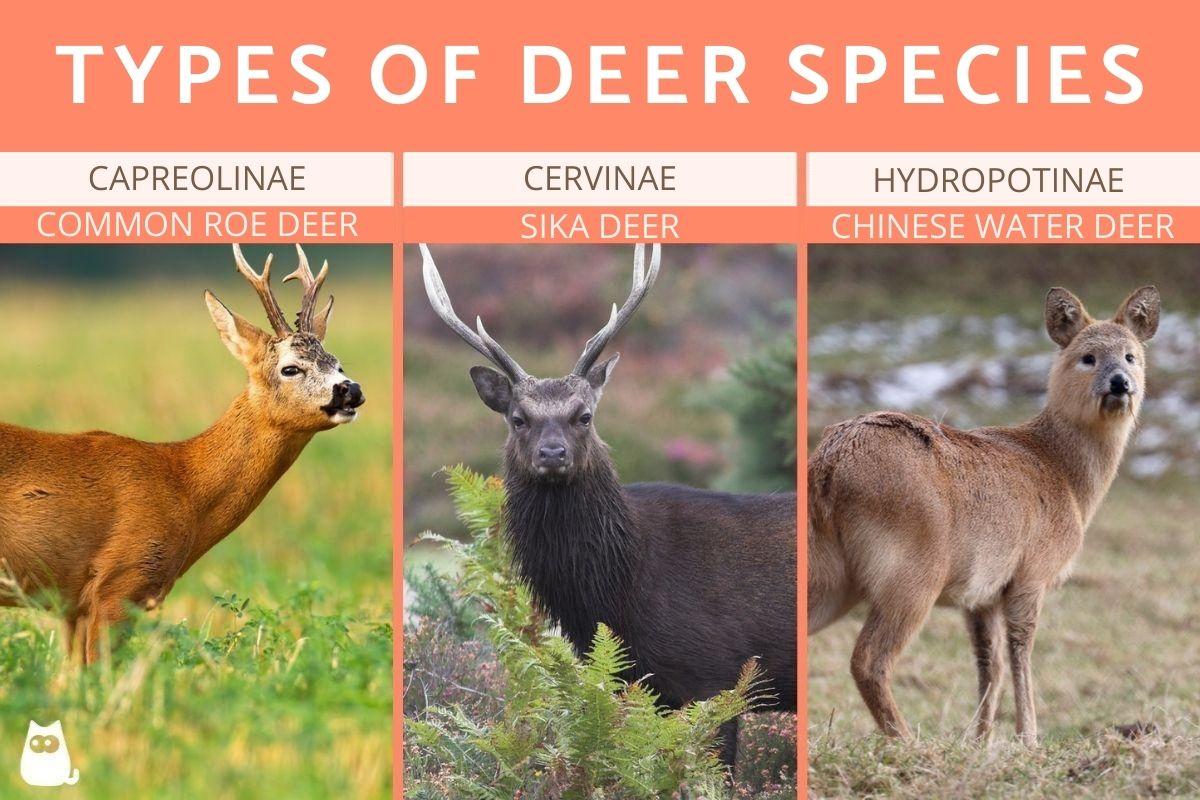
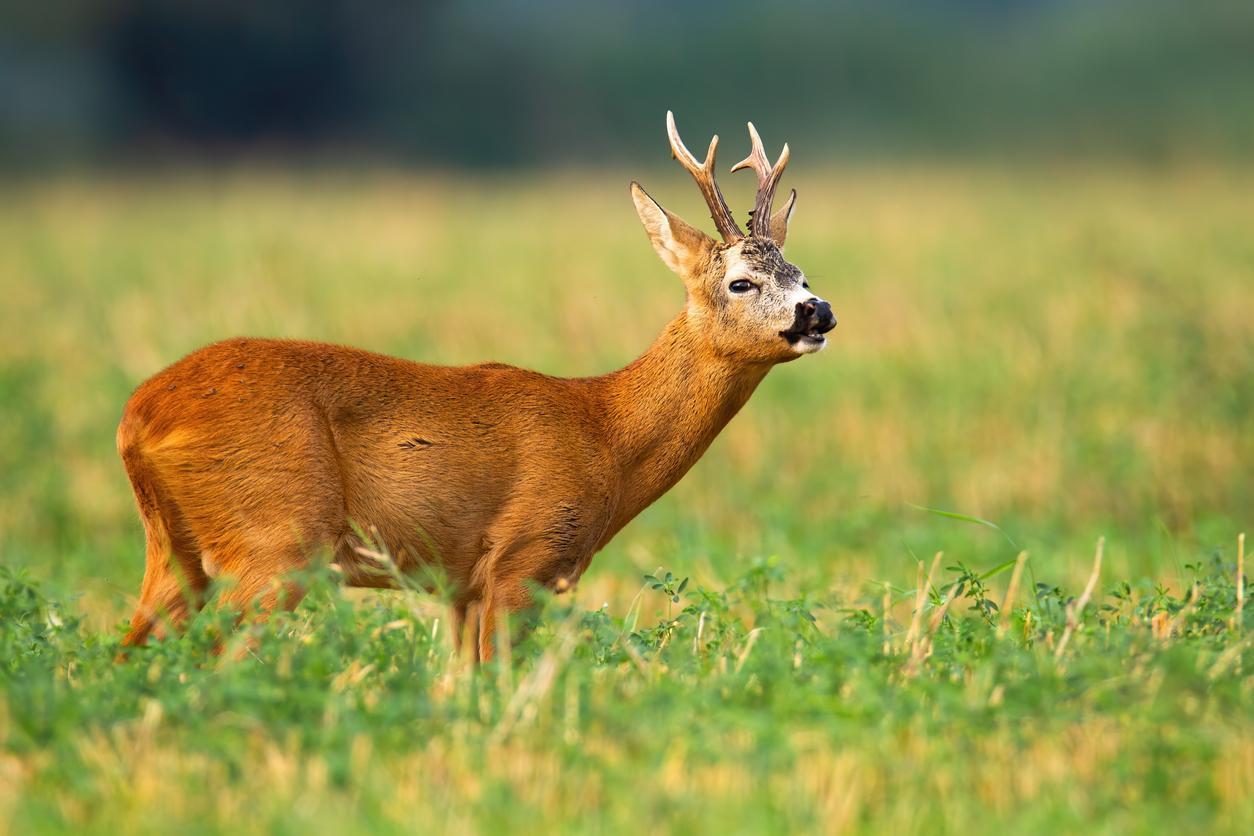
The Capreolinae subfamily includes all deer species of those commonly known as ‘New World deer’, such as the majestic elk and reindeer (or caribou), which live in herds, and the solitary roe deer. Let's see in the following list the official taxonomic classification of the Capreolinae subfamily to know both their common and scientific names.
Genus Alces:
- Moose/Eurasian elk (Alces alces)
Genus Capreolus:
- Common roe deer (Capreolus capreolus)
- Eastern or Siberian roe deer (Capreolus pygargus)
Genus Hippocamelus:
- Taruca or north Andean deer (Hippocamelus antisensis)
- Guemal or south Andean deer (Hippocamelus bisulcus)
Genus Mazama:
- Red brocket (Mazama americana)
- Small red brocket (Mazama bororo)
- Mérida brocket (Mazama bricenii)
- Gray brocket (Mazama gouazoubira)
- Pygmy brocket (Mazama nana)
- Yucatan brown brocket (Mazama pandora)
- Little red brocket (Mazama rufina)
- Central American red brocket (Mazama temama)
Genus Odocoileus:
- Mule deer (Odocoileus hemionus)
- White-tailed deer or Virginia deer (Odocoileus virginianus)
Genus Ozotoceros:
- Pampas deer (Ozotoceros bezoarticus)
- Southern pudu (Pudu puda)
- Northern pudu (Pudu mephistophiles)
Genus Rangifer:
- Reindeer or caribou (Rangifer tarandus)
Understanding the diversity within the Capreolinae subfamily emphasizes the adaptive strategies these species have developed to thrive in various environments, from dense forests to open plains.

Subfamily Cervinae
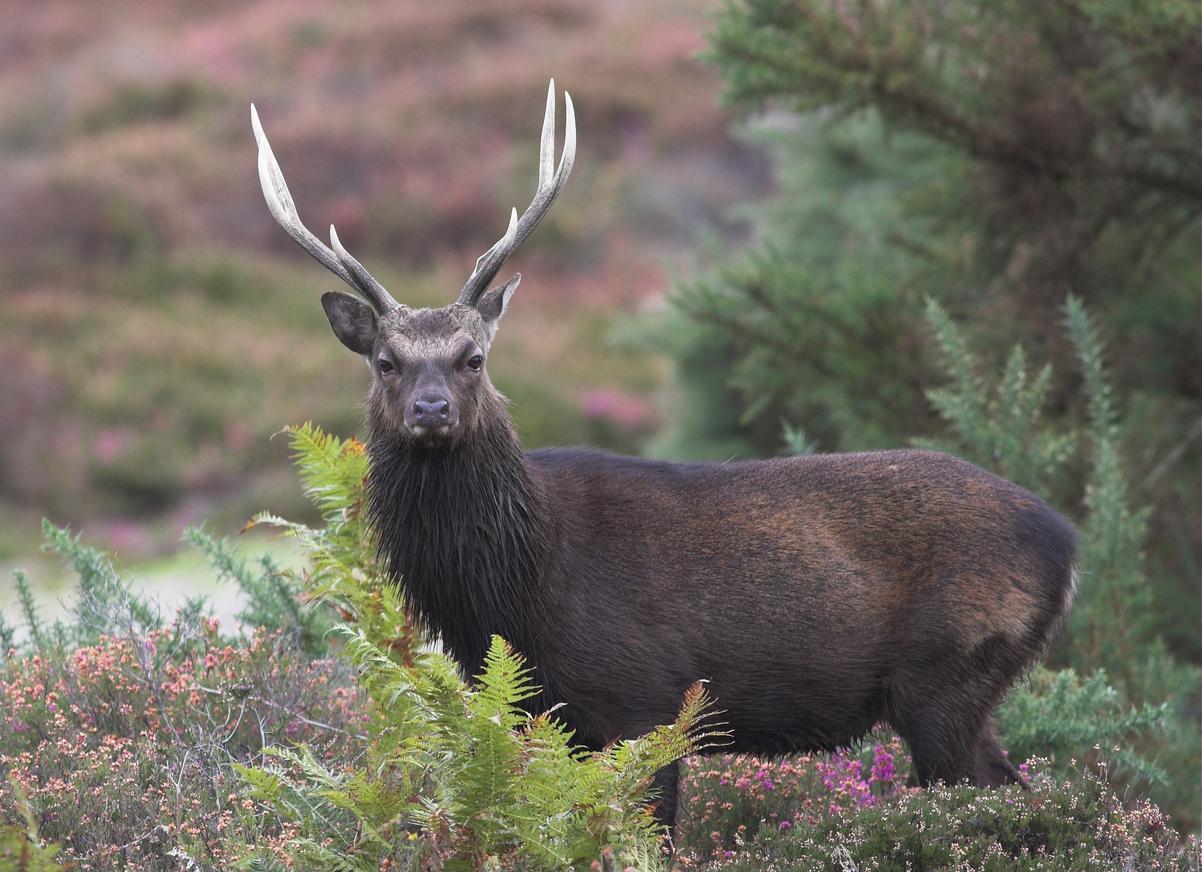
The Cervinae subfamily is the second and largest subfamily of the 3 that make up the Cervidae family. It includes a total of 10 different genera and up to 26 extant deer species:
Genus Axis:
- Chital, axis deer or spotted deer (Axis axis)
- Calamian deer or Calamian hog deer (Axis calamianensis)
Genus Cervus:
- Elk or wapati (Cervus canadensis)
- Red deer (Cervus elaphus)
- Sika deer or Japanese deer (Cervus nippon)
Genus Dama:
- European fallow deer (Dama dama)
Genus Elaphodus:
- Tufted deer (Elaphodus cephalophus)
Elaphurus genus:
- Père David's deer or elaphure (Elaphurus davidianus)
Genus Muntiacus:
- Bornean yellow muntjac (Muntiacus atherodes)
- Black muntjac or hairy-fronted muntjac (Muntiacus crinifrons)
- Fea's muntjac (Muntiacus feae)
- Gongshan muntjac (Muntiacus gongshanensis)
- Indian muntjac (Muntiacus muntjak)
- Leaf muntjac (Muntiacus putaoensis)
- Reeves' muntjac (Muntiacus reevesi)
- Truong Son muntjac (Muntiacus truongsonensis)
- Giant muntjac (Muntiacus vuquangensis)
Genus Przewalskium:
- Thorold's deer or white-lipped deer (Przewalskium albirostris)
Genus Rucervus:
- Swamp deer or barasingha (Rucervus duvaucelii)
- Eld's Deer or thamin (Rucervus eldii)
Genus Rusa:
- Visayan spotted deer (Rusa alfredi)
- Javan rusa (Rusa timorensis)
- Sambar (Rusa unicolor)
Regardless of the deer species or type, you may want to know if you can keep deer as companion animals. Our article on deer as pets will explain everything you need to know. Additionally, the Cervinae subfamily showcases a rich variety of adaptations, demonstrating how these species have evolved to occupy diverse ecological niches across various continents.

Subfamily Hydropotinae
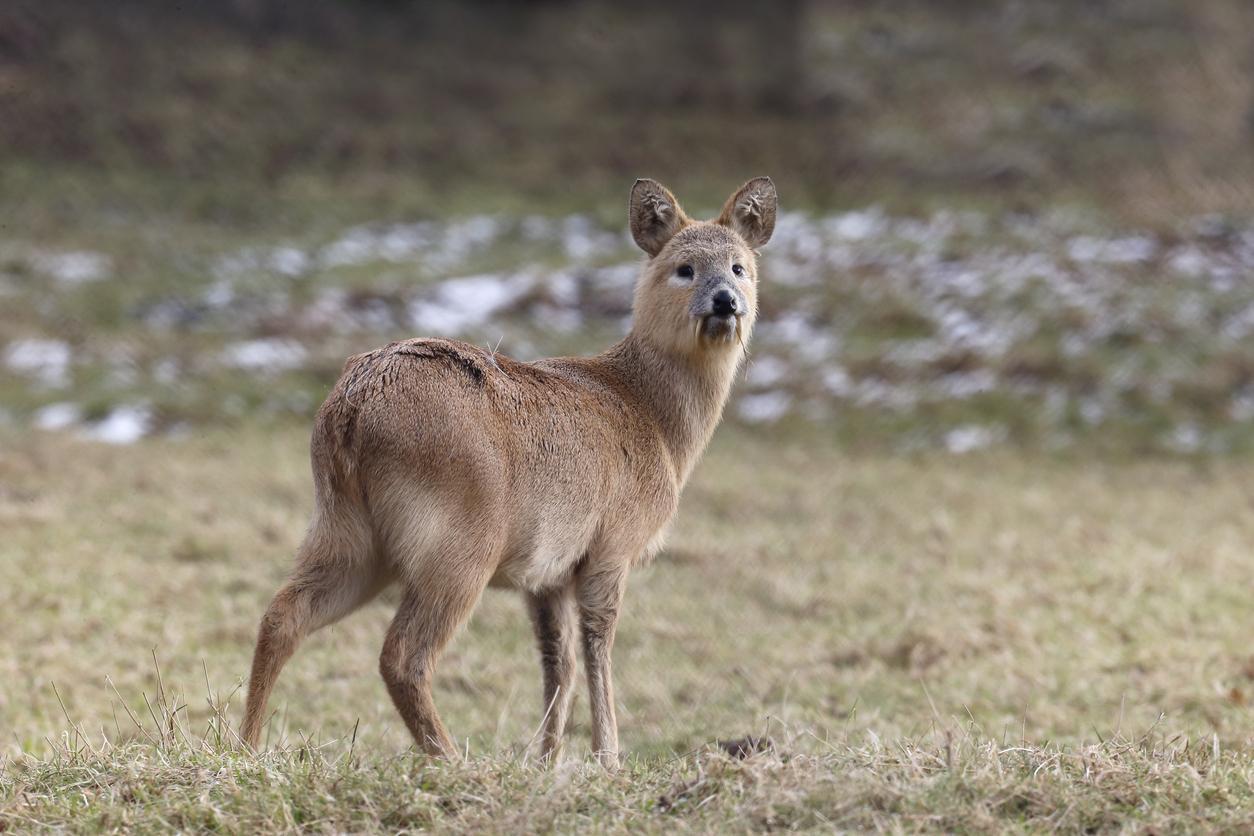
The third and last subfamily of cervids is represented exclusively by the genus Hydropotes, with the Chinese water deer (Hydropotes inermis) being the only species in this subfamily. It is a type of deer that is smaller than its relatives the Capreolinae and Cervidae, since they barely reach 14 kg in weight. They are much lighter compared to the heavy elk, deer and reindeer, whose adult males reach up to 600, 200 and 180 kg, respectively.
Another anatomical characteristic that differentiates water deer from other cervids is the lack of antlers, both in adult males and females. This curious fact could be directly related to the evolution of the different species of the Cervidae family, since water deer are the oldest species of the taxonomic family (from an evolutionary context). This suggests that antler development in other deer species was a later evolutionary innovation.
The appearance of branched antlers in the vast majority of the remaining deer species could be interpreted as a later adaptation, due to an evolutionary strategy of the larger deer that began to appear and diversify through numerous and diverse habitats of Central and East Asia. This means their antlers were not a problem of displacement, but an aid to defend their new territories and even measure their strength during mating periods. This adaptation highlights the dynamic evolutionary pressures deer faced in different environments.
It is worth highlighting the geographical distribution of water deer is reduced to 4 countries in the world. They are native deer of the mountains and rivers of China and Korea, as well as species introduced in England and France, where they became wild species. This limited distribution underscores the importance of conservation efforts to ensure their continued survival amidst habitat loss and other environmental challenges.

Distribution of different types of deer
Having seen the types of deer species, we should know a little more about where they live. Cervids inhabit practically any region of the planet. Depending on the subfamily to which they belong and given their biological evolution, deer species find their natural habitats on the European continent or in Asia, America and even North Africa.
However, the presence of deer in Australia and New Zealand is due to the introduction of these species made by humans. When indicating the specific geographic distribution of a deer species, it is easier to look at the types of habitat rather than to differentiate by continent. This approach helps in understanding the ecological requirements and adaptations of each species.
To know more about different deer species, take a look at our article on the differences between deer, elk, moose and reindeer. Understanding the global distribution of deer not only highlights their ecological diversity but also emphasizes the role humans have played in shaping their current ranges.
If you want to read similar articles to Different Types of Deer Species, we recommend you visit our Facts about the animal kingdom category.
- Wilson, E., & Reeder, M. (2005). Mammal Species of the World. A Taxonomic and Geographic Reference (3rd ed). Johns Hopkins University Press, Volume 2. Retrieved from: https://www.departments.bucknell.edu/biology/resources/msw3/browse.asp?s=y&id=14200205
- Braza, F., et al., (1994). Methods for the study and management of cervids. CSIC, Junta de Andalucía, Ministry of the Environment. Retrieved from: https://digital.csic.es/bitstream/10261/44361/1/www.STADTAUS.com_Metodo%20de%20estudios%20Cervidos.pdf
- Hu, J., Fang, SG., & Wan, QH. (2006). Genetic Diversity of Chinese Water Deer ( Hydropotes inermis inermis): Implications for Conservation. Biochem Genet, 44, 156-167. https://doi.org/10.1007/s10528-006-9020-7