Can Cockatiels Talk Like Parrots?


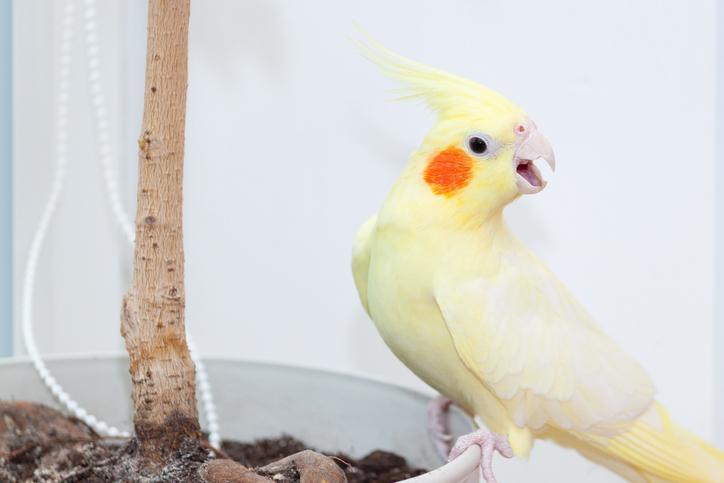
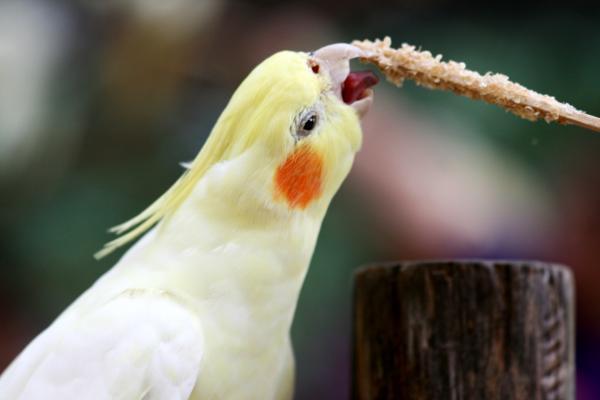
Cockatiels are beautiful and playful birds that make wonderful house pets. They are very curious and enjoy playing with new objects, socialising and imitating song and talk. These birds have an impressive vocal capacity, but can cockatiels talk like parrots?
In this AnimalWised article, we're going to talk about a cockatiel's vocalisation capacity as well as how to train them to talk and sing.
Cockatiel Behavior
Like many birds, cockatiels require a lot of social interaction. In fact, it's encouraged to adopt cockatiels in pairs so they can keep each other's company, helping them feel entertained, safe and accompanied. These interactions are crucial for their mental and emotional well-being as they thrive in environments where they feel secure and engaged.
Another important factor for these birds is communication. Their main source of communication is through sound, this is why we often hear them chatting or singing. Cockatiels naturally imitate different sounds they hear and associate them with certain situations. It's fascinating how they can recognize patterns and even replicate them in a playful manner. We'll go further into detail in the sections below.
Cockatiels are also very playful. They'll interact with other people, animals and different objects they may come across. Their curiosity makes them entertaining animal companions as they also encourage us to play with them. Training them to do certain tricks through positive reinforcement is also very enjoyable for them. This not only helps in bonding but also in keeping their minds active and healthy.
To learn more, we encourage you to also read our article about understanding cockatiel's behaviour.
Can cockatiels talk like parrots?
No, cockatiels cannot talk like parrots. Parrots are able to pronounce human words to a greater precision and are able to learn more words than cockatiels. We should clarify that when we say talk, we mean pronounce or imitate. Although we cannot have a conversation with birds, they can learn what words or phrases we use in certain situations and will learn to use them like us.
Nevertheless, cockatiels can talk and sing. These birds are very intelligent and will imitate the words, phrases and songs you say around them. They will do this in their own way, different to parrots and other birds. Their unique vocalization style adds a charming aspect to their personality, making them delightful companions.
How can cockatiels speak?
Cockatiels, like other birds, do not have vocal chords like humans. However, they do have an organ called syrinx which allows them to adapt the sound they emit. This is why birds have such varied speech and can even imitate some of the words we say.
The syrinx is a vocal organ that allows birds to produce sounds. What's truly interesting is that the syrinx is surrounded by muscles that birds use to change the sound they emit. While humans have lips to modify the sounds we emit, birds have the muscles around their syrinx. This intricate system enables them to create a wide range of sounds and even mimic some human speech.
Learn more about the bird vocal anatomy on our article about why parrots can talk like humans.
What can cockatiels say?
As we've previously said, although cockatiels cannot talk like parrots they can imitate certain words and sounds. The most common are phrases such as: hi, good boy, how are you, pretty bird, kiss, etc. They often pick up on frequently repeated phrases, showcasing their ability to associate sounds with specific contexts or emotions.
To learn more watch this video compilation on cockatiels talking and singing. This way you'll have a better understanding on how they pronounce certain words and how much they love to sing!
When do cockatiels start talking?
There is no strict age when cockatiels begin to speak. This will occur once your bird reaches a certain mature age. This is because when they are young they mostly make noises to ask for food. During their early stages, their vocalizations are primarily centered around expressing basic needs and comfort.
Nevertheless, the average age for when a cockatiel will begin vocalising is 8 months of age. That means that you'll be training them to speak for a couple of months until they can begin to vocalise and imitate. However, each cockatiel is different and may start before or after 8 months of age. Factors such as individual personality and environmental stimuli can influence their rate of learning.
If you're wondering whether to adopt a male or female cockatiel, we invite you to read our article on the difference between male and female cockatiel birds. Understanding these differences can help cater to their specific needs and preferences.

How to train your cockatiel to talk
Firstly, it's important to understand that you should not force your cockatiel to learn to speak. This should be a natural process as they are naturally curious and social. By forcing them you will create a negative relationship with them where they feel discomfort and threatened by your presence. That's why it's best to do this through positive reinforcement and short training sessions. These sessions should be fun and engaging, allowing your bird to learn at its own pace.
It helps if you have an acute voice and say certain words softly and sweetly. This is because they have a very sensitive ear and associate high pitched noises with positive things. By speaking loudly and in a deep voice, you may scare them off. Creating a positive and comforting environment encourages them to be more receptive to learning.
Lastly, when they learn a new song, word or trick, give them a healthy treat to positively encourage them to continue that behaviour. You will need patience when training a cockatiel. However, remember to enjoy yourself as you create this strong bond with your bird. Training your cockatiel is one of the most fun activities you can do together! It is an enriching experience, not just for the cockatiel but also for you, as you witness their growth and intelligence.
If you want to read similar articles to Can Cockatiels Talk Like Parrots?, we recommend you visit our Facts about the animal kingdom category.
- Wild JM. Functional anatomy of neural pathways contributing to the control of song production in birds. European Journal of Morphology. 1997 Oct;35(4):303-325. DOI: 10.1076/ejom.35.4.303.13077.
- American Federation of Aviculture. (1981). Training birds to talk. https://journals.tdl.org/watchbird/index.php/watchbird/article/view/2044/0