How to Protect Your Dog from Overheating: safety tips every owner should know


 Add us on Google

See files for Dogs
When temperatures soar, especially during heatwaves, dogs can overheat far faster than most owners realize. It is dangerous when your pup is overheating because it can be life-threatening within minutes. This is when daily situations like walking, training, driving to the park, or relaxing in your backyard require you to know the signs of dog heatstroke and how to act quickly can save your pet’s life. Apps like PawChamp can help you spot early symptoms and build safer summer routines.
In this guide, we’ll cover expert-backed dog summer safety tips, how to prevent heat exhaustion, the signs of dog heatstroke, and what to do if a dog's body temperature rises.
- Risks of High Body Temperature for Dogs
- Dog Overheating Symptoms
- Why Hot Cars Are Deadly
- How Hot Is Too Hot for Dogs?
- How to Keep Your Dog Cool in Summer
- Immediate Dog Overheating Treatment
- Safe Dog Travel in Summer
- How Dog Training App May Help: PawChamp Case
- Final Word: Keep Your Dog Safe in Hot Weather
Risks of High Body Temperature for Dogs
Can dogs get heatstroke? Absolutely. Canines are much less efficient at regulating body temperature than humans. They don’t sweat over most of their bodies; they rely mainly on panting and small sweat glands in their paws. In extreme heat, these methods are not enough, especially during energetic activities or when shade and water are limited. You might even see a dog collapsed from heat, which requires immediate veterinary care.
Flat-faced breeds like pugs, bulldogs, and boxers face an even greater risk of heatstroke in pets because of their shorter airways. Older pooches, puppies, and overweight pets also have reduced tolerance for heat.
Dog Overheating Symptoms
The symptoms of overheating in dogs can be subtle at first but progress quickly. Ashley Bankowski, a Licensed Veterinary Technician at Birdneck Animal Hospital, warns about dog heatstroke symptoms:
“You should look out for signs like excessive panting, glassy eyes, and red gums. Besides this, wobbly or disoriented behavior might also indicate overheating. If your dog collapses or vomits, it’s possible that the condition has progressed into heatstroke. Certain flat-faced dog breeds like pugs and bulldogs are at higher risk of overheating even on shorter walks.”
If you think that your dog's panting too much, recognize other signs but move them to shade or a cool space immediately, just in case.
Why Hot Cars Are Deadly
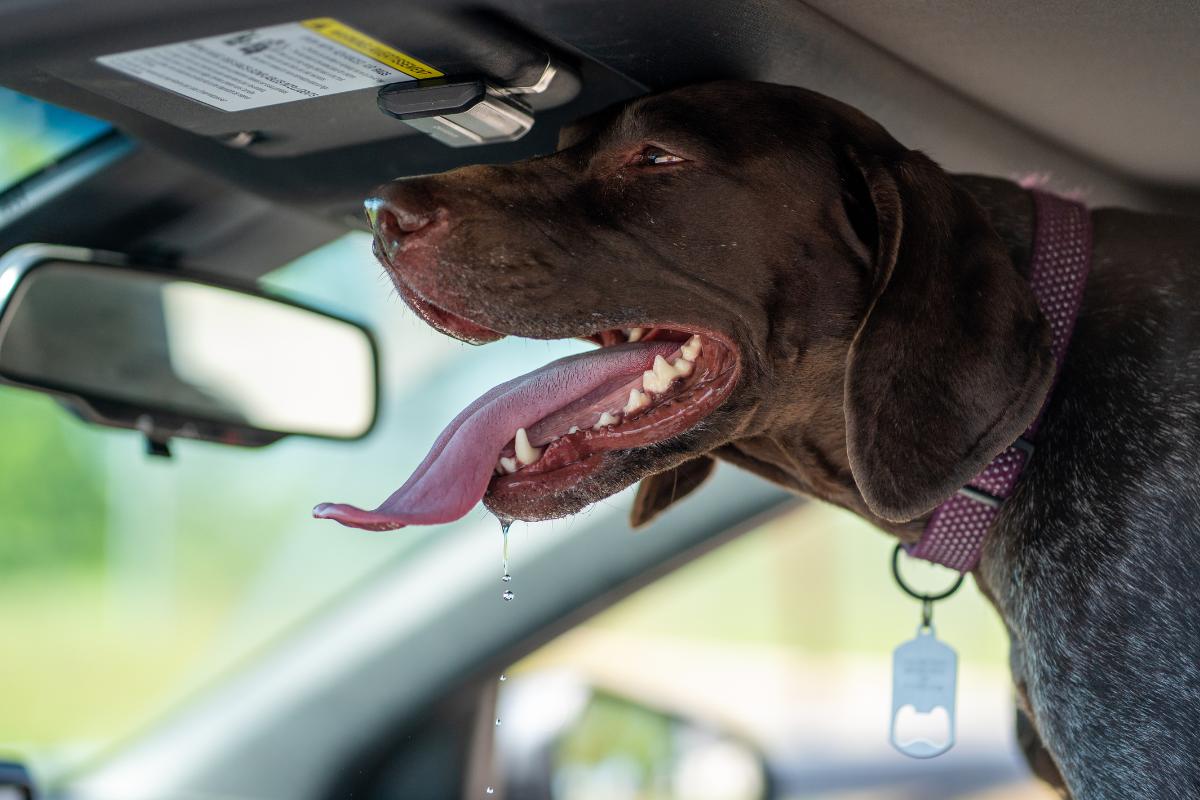
Dog overheating in car situations remain one of the most preventable tragedies. The temperature inside a parked vehicle can rise by 20°F in just a few minutes, even with windows cracked. That means on a 75°F day, the interior can quickly exceed 118°F, creating heat stress and life-threatening conditions. Leaving dog in hot car for even a short time can be fatal.
Dog left in car warning: In many regions, leaving a pup in a hot vehicle is a criminal offense. The UK’s Animal Welfare Act allows fines up to £20,000 and prison sentences up to six months. In Australia, it’s illegal to leave a dog for more than 10 minutes if it’s above 28°C (82°F). In the U.S., more than 30 states have “hot car” laws; some even let citizens break windows to save pets.
Car temperature with dog risks are so severe that veterinarians advise avoiding non-essential car trips during extreme heat entirely. Cases in Connecticut and Missouri have led to animal cruelty charges after dogs died in overheated vehicles.

How Hot Is Too Hot for Dogs?
The general rule: if the pavement is too hot for your hand, it’s too hot for your pup’s paws. As Terry Cuyler, Certified Dog Trainer and Owner of Pawsitive Results Dog Training, says:
“Asphalt, concrete, and sand can all get SO HOT that they cause burns in just seconds! I always suggest testing the surface with your hand. If you cannot keep your hand on the surface for 5–7 seconds, then it’s too hot for your dog to walk on too.”
In terms of air temperature, anything above 80°F can pose a risk, especially for sensitive breeds. Humidity makes dog temperature too high worse because it slows the evaporation process that helps cool dogs.
How to Keep Your Dog Cool in Summer
Walking during hot months requires planning. Joseph Lopez, the Owner of Number 2 Club, advises:
“I tell my clients, especially those with bulldogs, pugs, or older dogs, to walk them before 8 a.m. or after dark. They should also carry a foldable water bowl and check the ground temperature with their hand before the dog walks on it.”
Practical dog hot weather tips can make the difference between a safe, fun day and a dangerous emergency requiring immediate action. These practices for keeping dog safe in hot weather are recommended by PawChamp experts:
- Go dog walking early morning or late in the evening.
- Avoid active pastimes that lead to a significantly increased heart rate.
- Always carry portable water for dogs.
- Use shade for dogs during outdoor time.
- Offer dog cooling products like cooling mats or vests.
- Ensure dog hydration in summer with frequent water breaks.
- Monitor signs of dehydration in dogs (dry gums, lethargy, loss of consciousness).
Terry Cuyler says:
“If you have breeds like goldens or huskies, brush their coat regularly. This helps in shedding the heat trapped in their undercoat.”
These are not just dog summer safety tips—they’re part of a broader effort to avoid heatstroke in dogs by adjusting routines to the season.
Immediate Dog Overheating Treatment
If you notice puppy heatstroke or adult dog overheating symptoms, act quickly. The steps for how to help an overheated dog are:
- Move them into shade or air conditioning.
- Offer small sips of cool (not ice-cold) water.
- Wet their paws, ears, and belly with cool water.
- Use a fan to increase airflow (if you are considering fan vs AC for dogs, use the former to avoid the common cold).
- Call your vet immediately.
Ashley Bankowski, veterinary technician, gives her professional advice:
“Waste no time and get them into shade or air conditioning. Wet them down with cool water. Make sure not to use ice water or cold water as it constrict blood vessels and slows the body's natural cooling process. Place a table fan nearby and make your dog sip small amount of water. Since situations like these can escalate fast, it's best to call your vet immediately.”
Safe Dog Travel in Summer
When traveling, follow a summer dog travel checklist:
- Never leave your dog in a parked car, even with windows open (dog safe car ventilation is not enough).
- Use window shades to block the sun.
- Stop every 1–2 hours for fresh water and shade breaks.
- Keep a collapsible water bowl within easy reach.
- Consider keeping dog crate cool with frozen water bottles wrapped in towels.
How Dog Training App May Help: PawChamp Case
Beyond physical precautions, education is key. The PawChamp online training platform offers seasonal care information that helps owners learn how to keep dog cool in summer, manage dog overheating on walks, and adjust routines for older dog summer care and puppy summer care.
The PawChamp app includes advice backed by trainers and canine professionals. According to a recent PawChamp review, many users credit it with helping them recognize how to tell if dog is too hot before it becomes dangerous.
Final Word: Keep Your Dog Safe in Hot Weather
Heat-related emergencies can escalate in minutes. Stay aware of dog sunstroke risks, monitor for symptoms of overheating in dogs, and know how to cool down a hot dog, so you can protect your pet.
And don't hesitate to contact professionals, as Ashley Bankowski reminds us:
“Since situations like these can escalate fast, it’s best to call your vet immediately.”
This season, let’s make summer safety for dogs a priority. Adjust walk times, carry water, and learn through the PawChamp app, so your proactive choices keep your four-legged family member safe, happy, and healthy.
This article is purely informative. AnimalWised does not have the authority to prescribe any veterinary treatment or create a diagnosis. We invite you to take your pet to the veterinarian if they are suffering from any condition or pain.
If you want to read similar articles to How to Protect Your Dog from Overheating: safety tips every owner should know, we recommend you visit our Prevention category.