List of Big Eyed Animals - 15 of the Cutest!


 Add us on Google
Animals in the natural world have an incredible range of characteristics. Observing them is why we are all so hooked on nature documentaries. But there is something about animals with big eyes which sets them apart. The expression large eyes give to certain animals is invariably cute, although this is not limited to just mammals. Insects and lizards are thought by some to be the opposite of cute, but these examples on our list of big eyed animals show this is not true.
In fact, there is a reason we feel all mushy when we see animals with big eyes. According to Lorenz's ‘baby schema hypothesis’[1], adults see younger children as having greater levels of likeability and attractiveness. A human infant's larger eyes makes us protective and caring over them. It's why we see puppies, kittens and almost any animal with proportionately large eyes as being attractive. AnimalWised brings you these big eyed animals with pictures so you can see for yourself.
- Horsfield's tarsier
- Purple spot mantis shrimp
- Chameleon
- Zebra back spider
- Giant squid
- Slow loris
- Ostrich
- Owl
- Domestic cat
- Satanic leaf-tailed gecko
- Common clubtail dragonfly
- Brownsnout spookfish
- Common octopus
- Red-eyed tree frog
- Telescope eye
1. Horsfield's tarsier
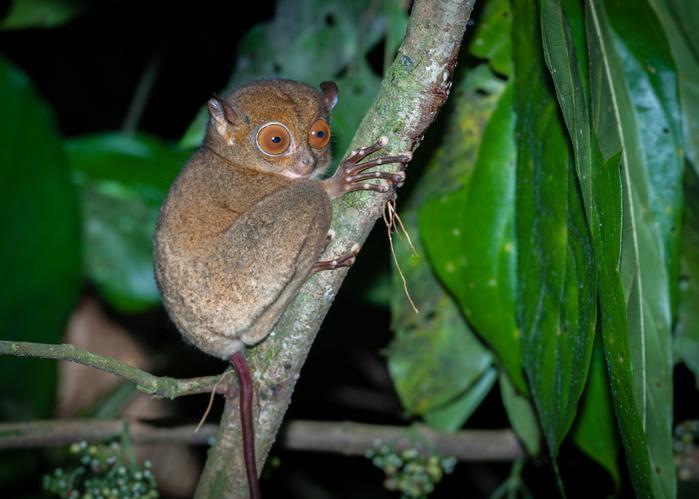
The Horsfield's Tarsier (Tarsius bancanus), also known as the western tarsier, is a relatively small primate species. They are furry with thin limbs, but what they lack in size they make up for in ability. They are an animal which has developed very acute senses. As a nocturnal animal, it needs these senses to forage and feed at night. They use sound to catch their prey and have incredible leaping, jumping, and climbing abilities. Despite their size, these creatures are very athletic little animals.
The tarsier has a long tail of about 17 cm and thin membranous ears to receive sound. None of these characteristics are quite as striking as their big eyes. The species inhabits the Asian continent and can be found in its lowland jungles. Interestingly, their eyes are so large that they cannot move them in their sockets, requiring them to turn their entire head to see around.

2. Purple spot mantis shrimp
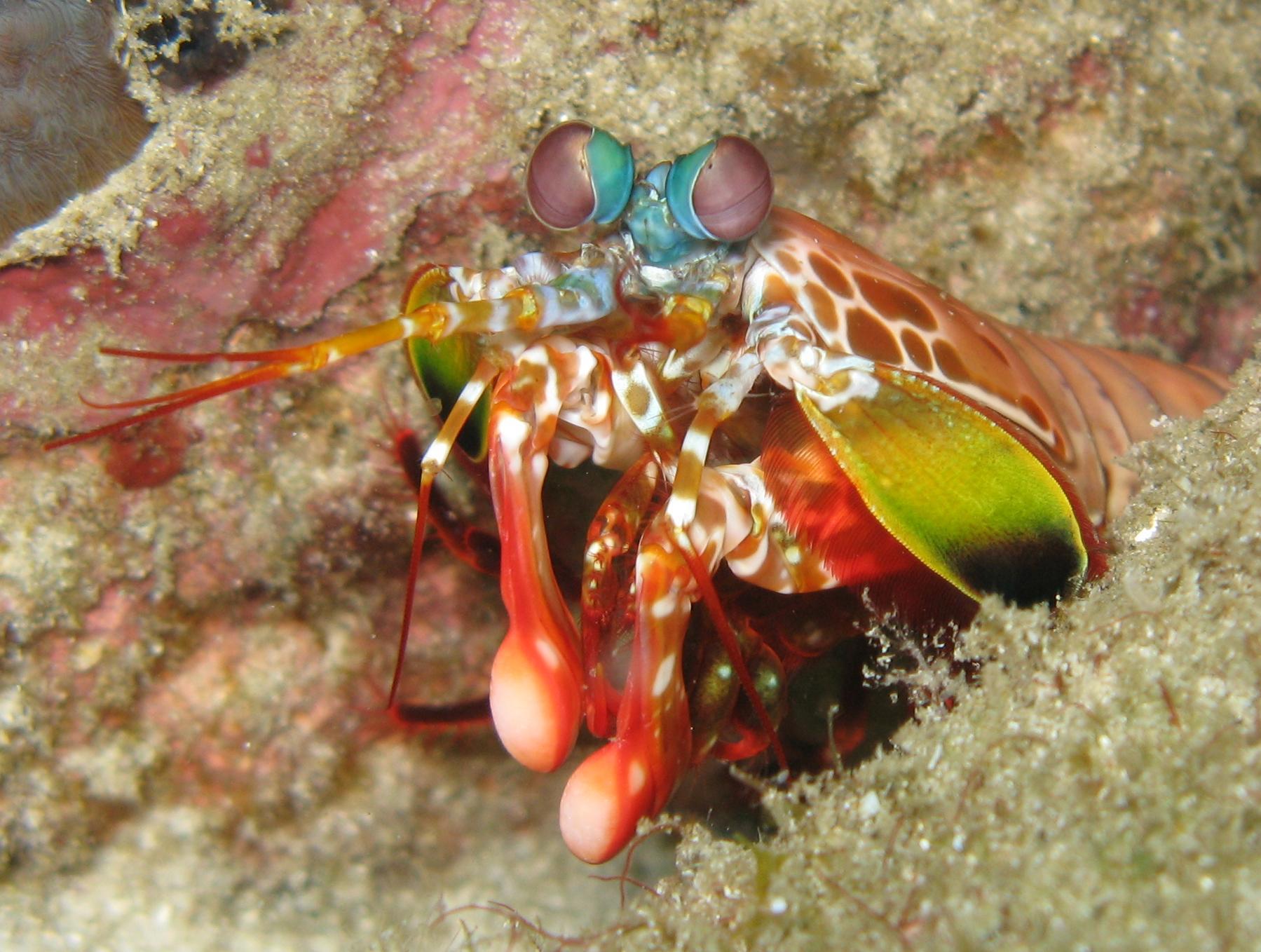
The purple spot mantis shrimp (Gonodactylus smithii) is a crustacean, which you may not think of as being very cute. Maybe not to everyone, but it is difficult to argue they aren't incredibly beautiful. They have a thin body which can measure up to 18 cm long. They have an almost unique iridescence, meaning they present a full rainbow of different colors.
They have big eyes in comparison to the rest of their body, but size is not their only attribute. They also work separately and move independently, being able to scan their deep sea environment in a way few other animals can. They use this to both evade predators and catch their own prey. These shrimp have a unique type of vision that allows them to see polarized light, a capability that is rare in the animal kingdom.

3. Chameleon
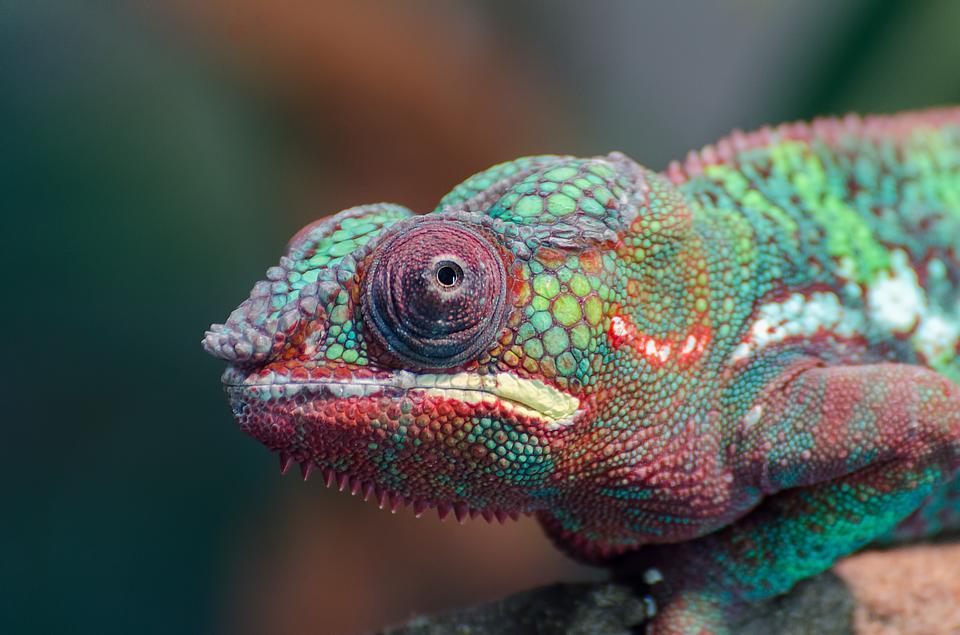
There are more than 150 species of chameleon, mostly living in regions of Africa and Asia. They are well known for their ability to change color, something used as camouflage to evade predators. This is due to something called guanine crystals which are located in their skin, reflecting light in different ways to create the changes in color patterns.
The chameleon's eyeballs are unique to the lizard population in general. While we can claim them as being proportionately very large, the aperture they see out of is pinhole sized. These eyes can pivot 360º and, like the mantis shrimp, move independently of each other. Because their eyes move independently, their depth perception is different from other animals with two eyes. It is still, however, very acute and they can see small insects from far away, using their long extendable tongue to capture them. Additionally, chameleons have a panoramic field of vision, allowing them to spot prey and predators from different angles.

4. Zebra back spider
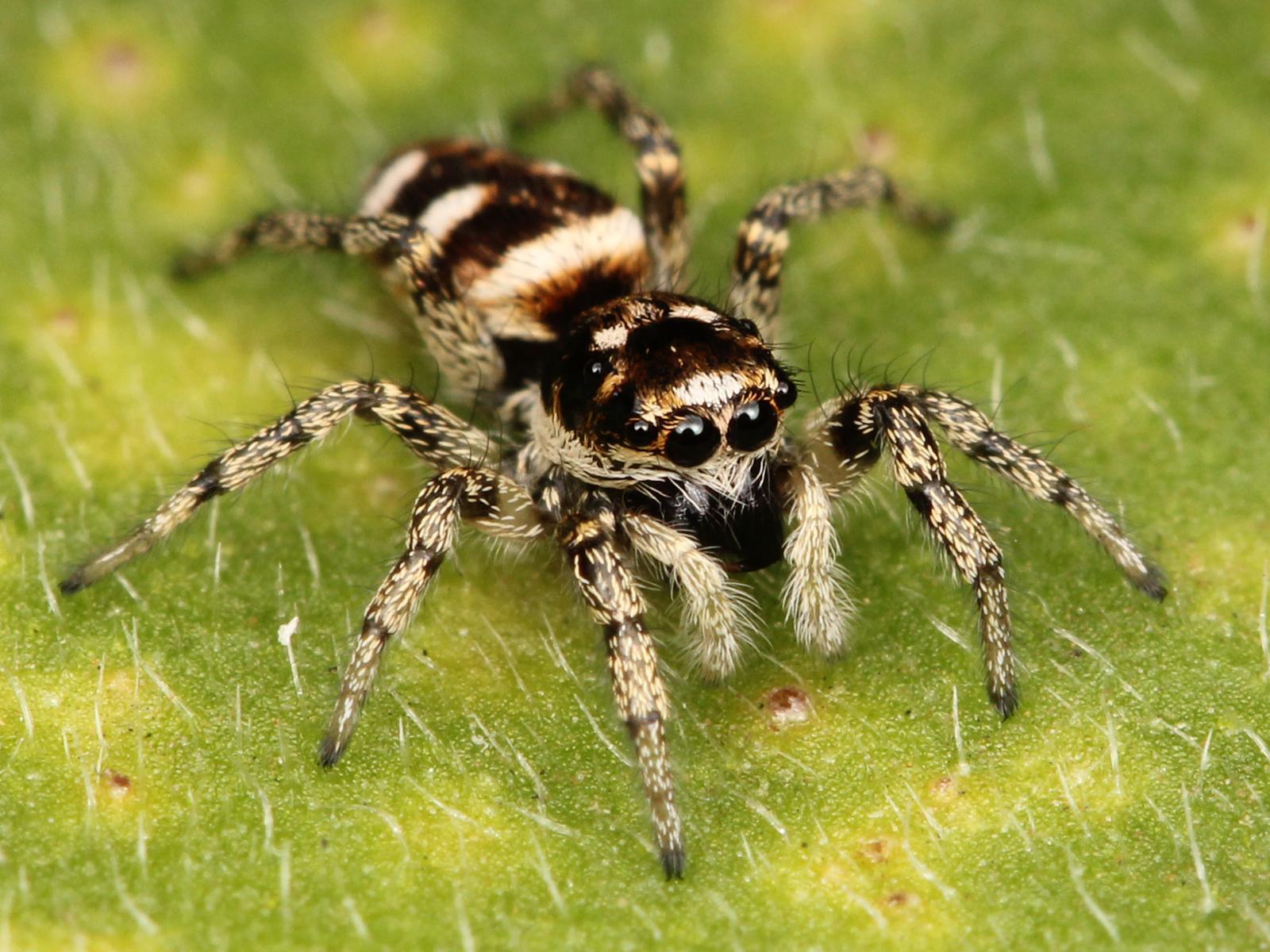
The zebra back spider (Salticus scenicus) measures only about 7 millimeters in length, which makes it one of the smallest animals in the world. Males are smaller and stockier than females. It has short legs and a black body with white stripes, providing the inspiration for their name. Many people suffer from arachnophobia, an acute fear of spiders. For this reason, you may not think of them as cute animals. If so, we disagree. With their furry little legs and big eyes, we think they are adorable.
Not only does the zebra spider have large eyes compared to the rest of their body, they have 8 of them. The location of these eyes is also interesting as they have two main ones on the front to provide binocular vision, but the remaining six are on the side of their head to also allow for 360º panoramic sight. Their vision is incredibly sharp, enabling them to detect and capture prey with impressive accuracy.

5. Giant squid
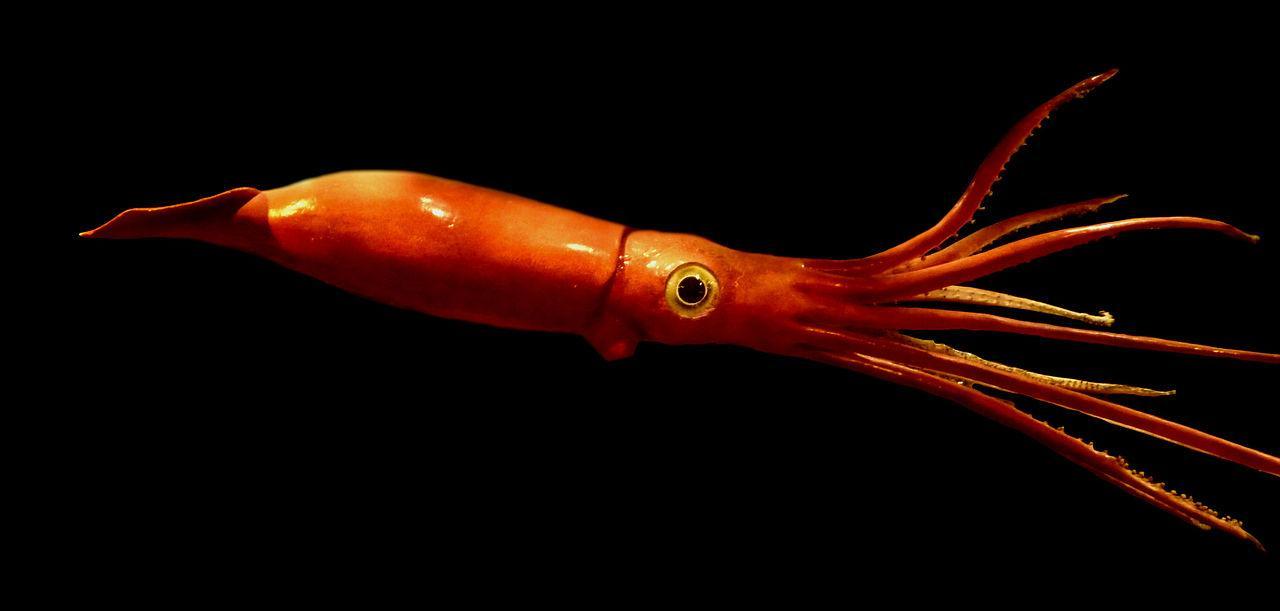
OK, so this one may be more fearful than cute, but it is also fascinating. The giant squid (Architeuthis dux) is an animal that lives in the furthest depths of the sea. Very little is known about this species, as it barely approaches the surface. It can reach up to 15 meters in length and feeds mainly on fish and crustaceans. But in addition, the giant squid stands out for having the largest eyes in the world, since its eyeballs measure between 28 and 30 cm. For this reason, we can't leave them off our list of big eyed animals. These massive eyes help them detect faint light in the deep ocean, aiding in the detection of predators like sperm whales.

6. Slow loris
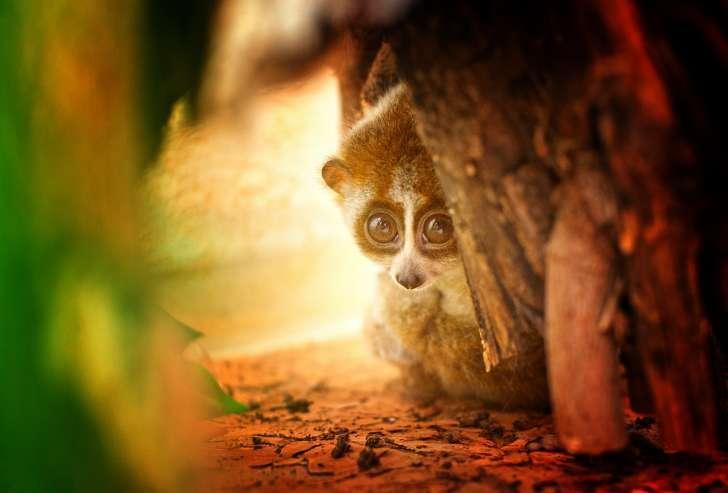
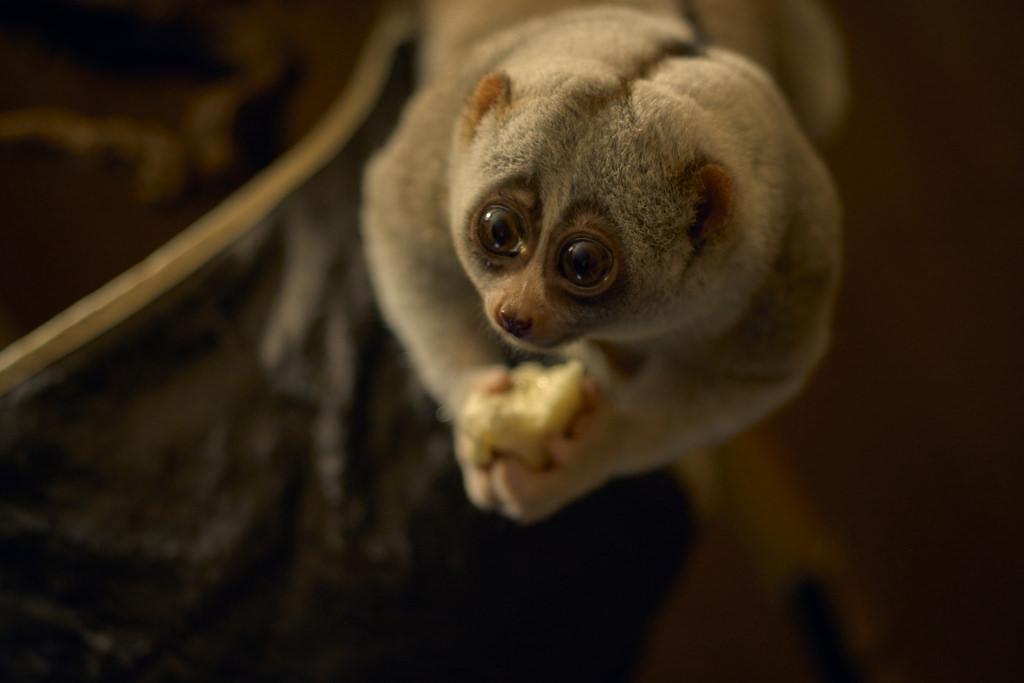
The slow loris, belonging to the Nycticebus family, is one of the most exotic nocturnal mammals in the world. Unfortunately, its main predator is the human being. Humans have destroyed their habitat almost to the point of extinction, but many have also been poached from the wild to be taken into the exotic animal trade. These animals are undoubtedly cute, but they are not domestic animals. They are incredibly shy and will try to hide from humans. They should not be kept as pets, despite how adorable they are.
Thanks to illegal trapping, they are protected by the CITES Convention and as they are listed as one of the world's critically endangered animals. Unfortunately, their slow movement makes them easy pickings if they can be found. Originally from Southeast Asia, the slow loris is the only known venomous primate. This venom has only been known to kill one human, but it causes anaphylactic shock rather than toxicity in the blood. Moreover, their large eyes are adapted for night vision, which is crucial for their nocturnal lifestyle.

7. Ostrich
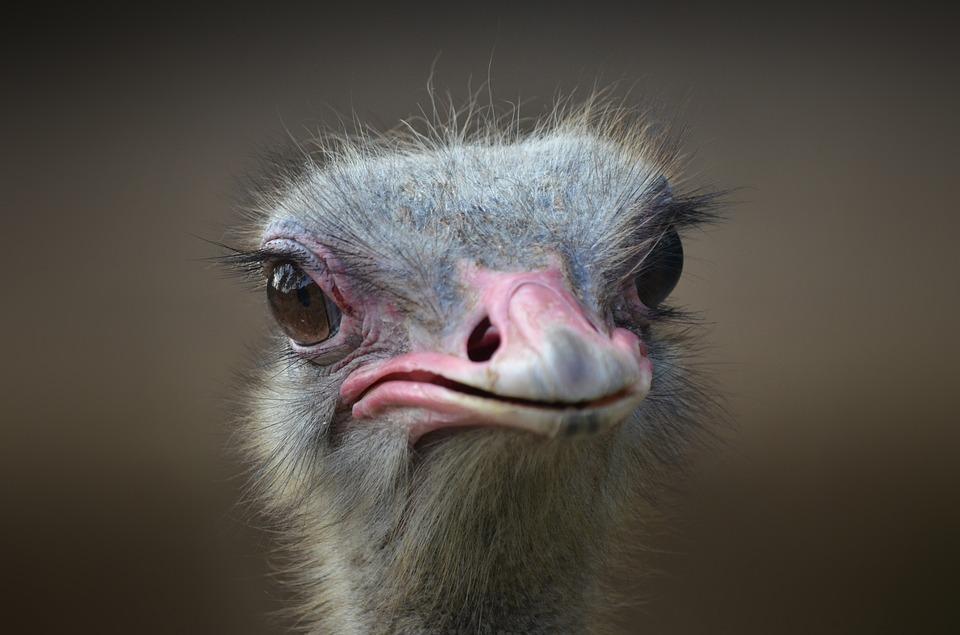
The ostrich (Struthio camelus) is the largest non-flying bird in the world and is characterized by its abundant plumage, which combines white and black feathers. Some specimens also have brown feathers. It is an animal with large and bulging eyes. In fact, their eyes are larger than their brain. This is also partly due to a particularly small brain size rather than just big eyes. Ostrich eyes are large in comparison to their head, although their head is quite small compared to their body. They can reach up to 3 m in height and weigh up to 180 kg. Their main food is plant and fruit material, but it is technically omnivorous and will happily munch small mammals and arthropods given the opportunity. Their large eyes grant them excellent vision, which is crucial for spotting predators from a distance in the wild.

8. Owl
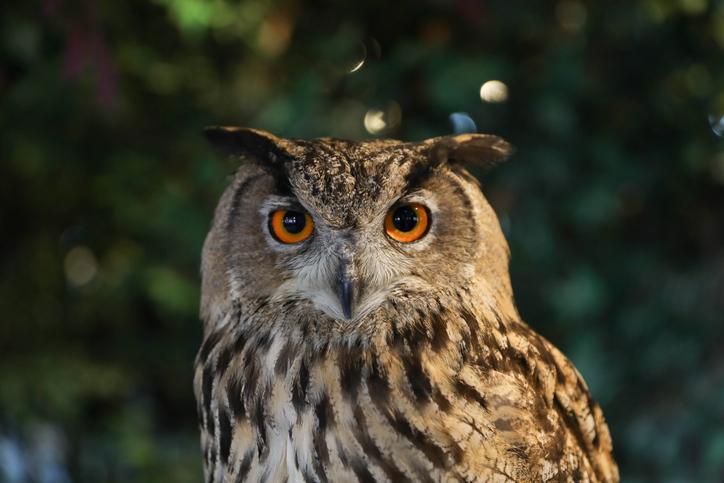
We call the ‘owl’ birds belonging to the order Strigiformes, but there are around 200 species within this order. They are nocturnal animals that feed on fish, insects and mice, among other small animals. Owls are animals with large bulging eyes, known for their stark copper coloring. The eyes are very acute, allowing them to see even small prey from great height as they fly over their territory.
The big eyes of an owl can only see straight forward, unlike the chameleon. However, they can rotate their head about 270º (not quite full circle). One thing which is strange for a nocturnal animal is that they do not use echolocation, but rely on their incredible eyesight to survive. Additionally, their facial disks help to channel sound to their ears, providing them with exceptional hearing abilities as well.

9. Domestic cat
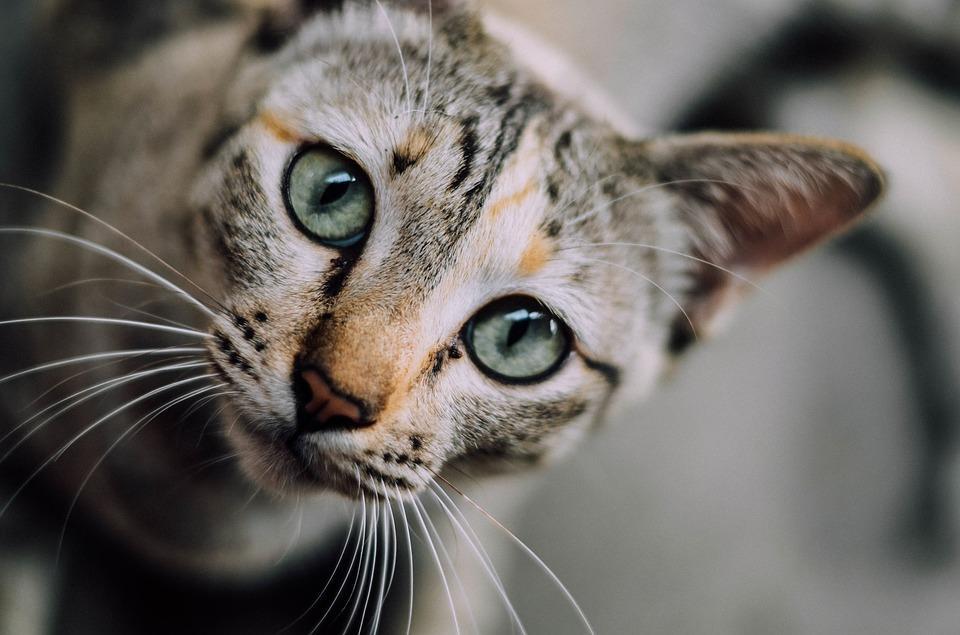
The domestic cat (Felis silvestris catus) is one of the most popular mammals with we humans. Physically, they have an agile and lithe body which allows them to climb and play. They have the capability to bond with humans and develop intense and reciprocal social relationships. While this is the reason they have stuck around so long as companion animals, it is likely part of the initial appeal is their large and expressive eyes.
Domestic cats have eyes which are not only cute, but they are fascinating from a physiological perspective. They have a membrane across the front known as the nictitating membrane (or ‘third eyelid’) which helps protect them from injury and notifies us if they are unwell. At the back of the eye is a reflective membrane known as the tapetum lucidum which reflects light back to the retina, making their eyesight acute even in the dark. This unique adaptation allows cats to be effective nocturnal hunters, able to navigate and hunt in low-light conditions.

10. Satanic leaf-tailed gecko
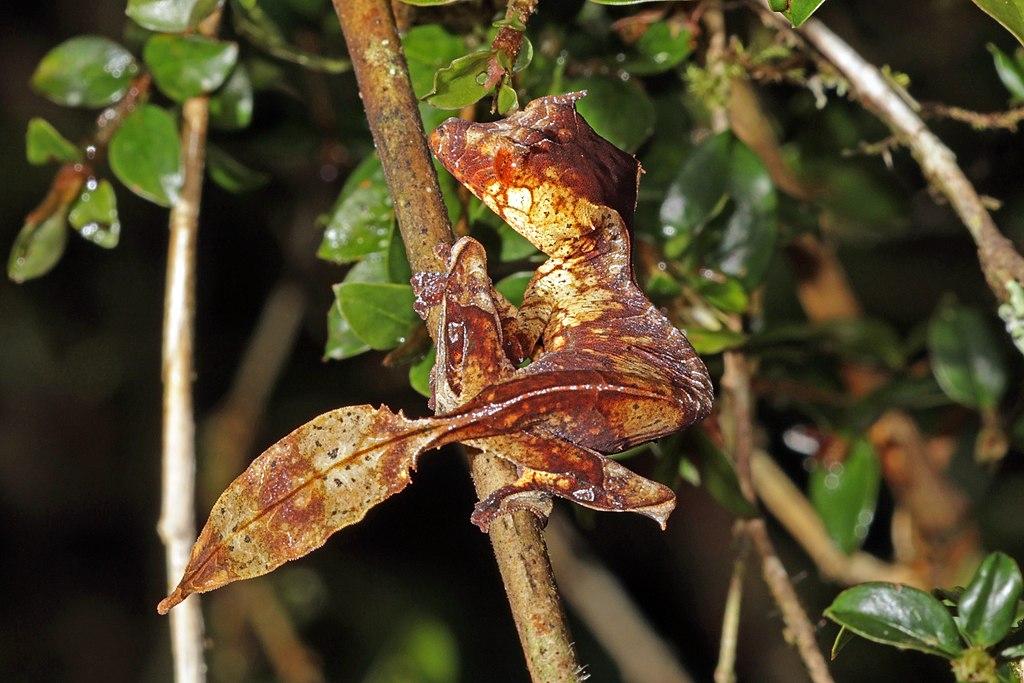
The satanic leaf-tailed gecko (Uroplatus phantasticus) is an endemic species of Madagascar. It has nocturnal habits and feeds on small insects. It is one of the animals with the most curious big eyes, since it lacks eyelids. This only works to highlight the largeness of their eyeballs. Additionally, they are 350 times more sensitive to color than the human eye, so they perceive images in a sharper and more defined way. If you are wondering about the name, they are what they describe - a gecko with a leaf-shaped tail and a body which looks like a cartoon devil, i.e. a cute devil. Their remarkable eyes aid in night vision, allowing them to blend seamlessly into their surroundings and evade predators.

11. Common clubtail dragonfly
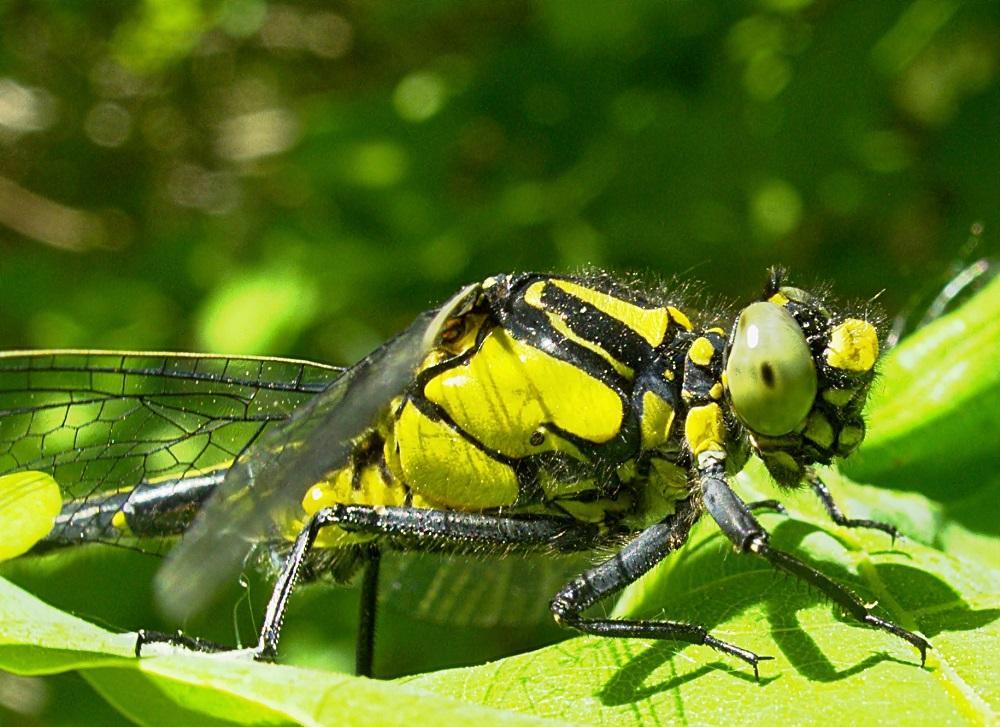
The common clubtail dragonfly (Gomphus vulgatissimus) is an insect with transparent wings which lives in Spain and Italy. It feeds on other flying insects which it intercepts over the water's surface. One of its main features other than its large clear wings are its big eyes. People might get annoyed by flies buzzing around their drink or wasps circling their heads, but people generally marvel when a common dragonfly whizzes past. Perhaps their eyes have something to do with it. These eyes cover almost their entire head and have more than 30,000 photoreceptors called omatidia which allow them excellent vision, being very sensitive to movement. Their ability to detect fast movements is crucial for capturing prey and avoiding predators.

12. Brownsnout spookfish
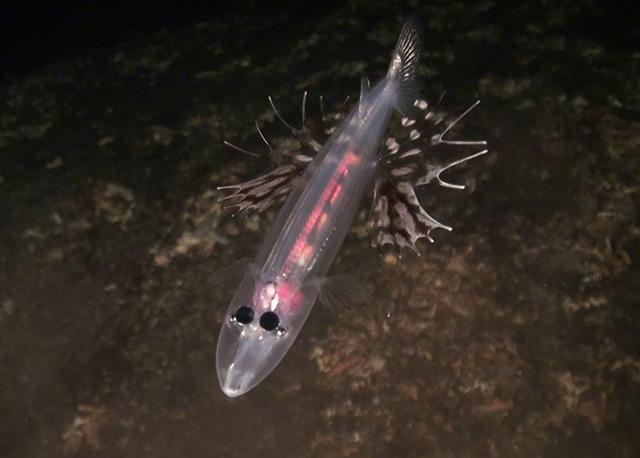
The brownsnout spookfish (Dolichopteryx longipes) is another large-eyed animal with a somewhat creepy name. It measures about 20 centimeters and is distributed in the depths of the Atlantic and Pacific oceans as well as the Sea of China. The big eyes of this fish stand out on its transparent and thin body. Not only are the eyes large, they have an incredible ability to use both reflective and refractive optical techniques. This allows them to see both upward and downward at the same time, effective in avoiding predators. Their unique vision system is an adaptation to the dimly lit environment of the deep sea.

13. Common octopus
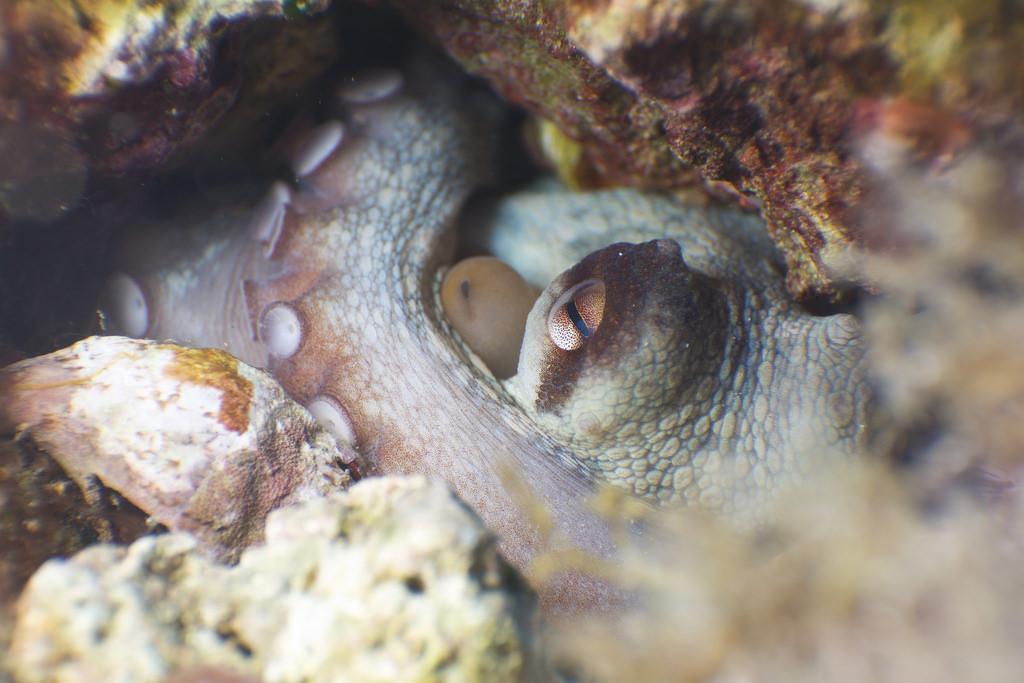
The common octopus (Octopus vulgaris) is a mollusk that lives in both the Mediterranean Sea and the eastern Atlantic Ocean. It stands out for being one of the most intelligent big eyed animals in the world. Its skin is brown and they have an oval head with 8 arms covered in suckers. It is a nocturnal animal that lives 100 meters deep and feeds on crustaceans and fish. Almost unique among animal eyes, those of the octopus have a rectangular pupil that provides a wide range of vision. In addition, they are able to regulate the amount of light that enters them, but even so they are quite myopic. The octopus's advanced nervous system and problem-solving abilities make it a fascinating creature of the deep.

14. Red-eyed tree frog
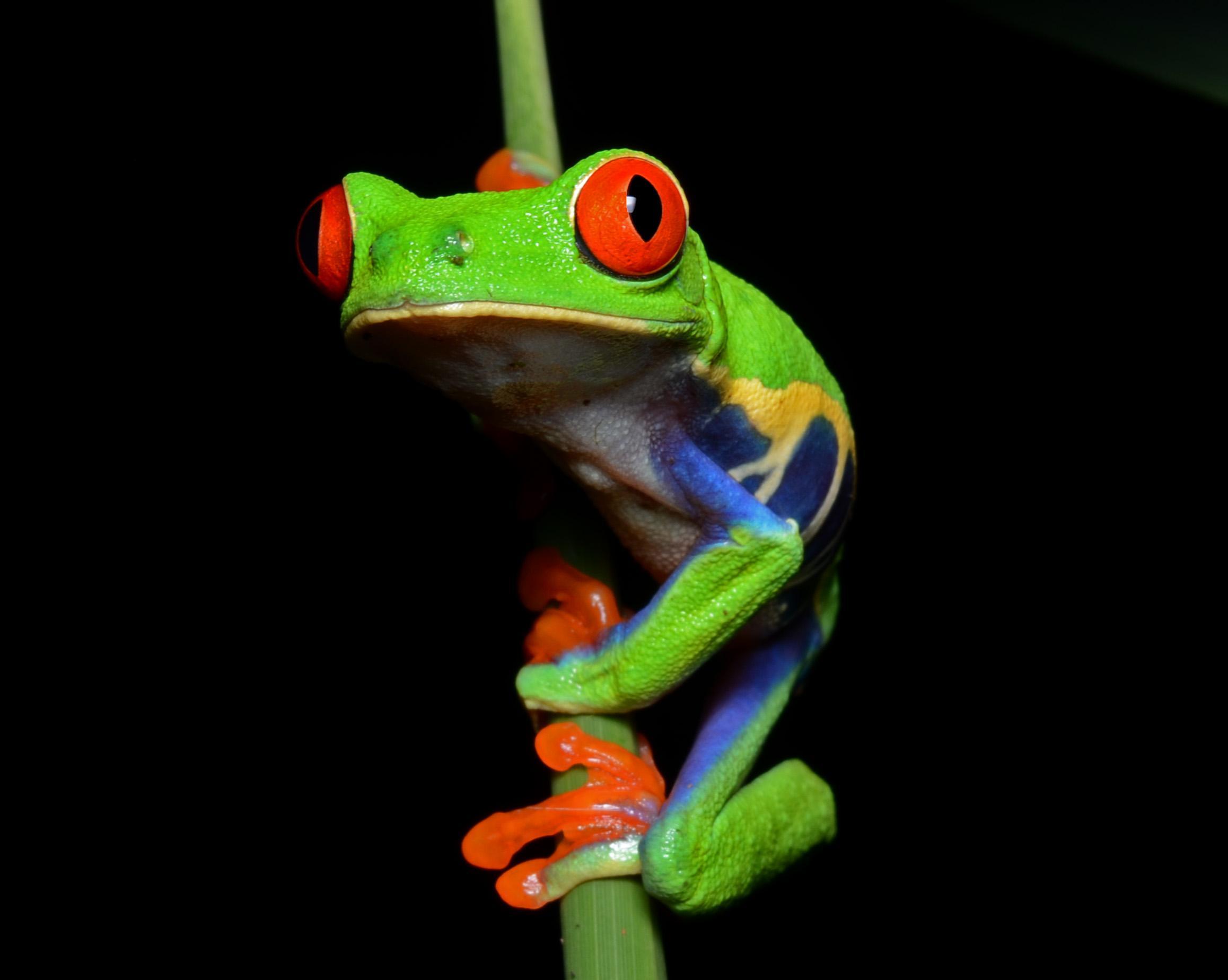
The red-eyed tree frog (Agalychnis callidryas) is an amphibian that inhabits low and humid lands of rainforests or areas near aquatic ecosystems. It presents with sexual dimorphism (males and females vary in morphology), since males measure around 71 millimeters, while the females only measure around 56 millimeters. The green frog is an animal with large and tender eyes, these have large size and are of an intense red color. It is this adorable and cute expression which has led to them being used on magazine covers and other publications used to highlight ecology. Their vivid eyes are not just for show; they serve as a defense mechanism, startling predators when the frog suddenly opens its eyes.

15. Telescope eye
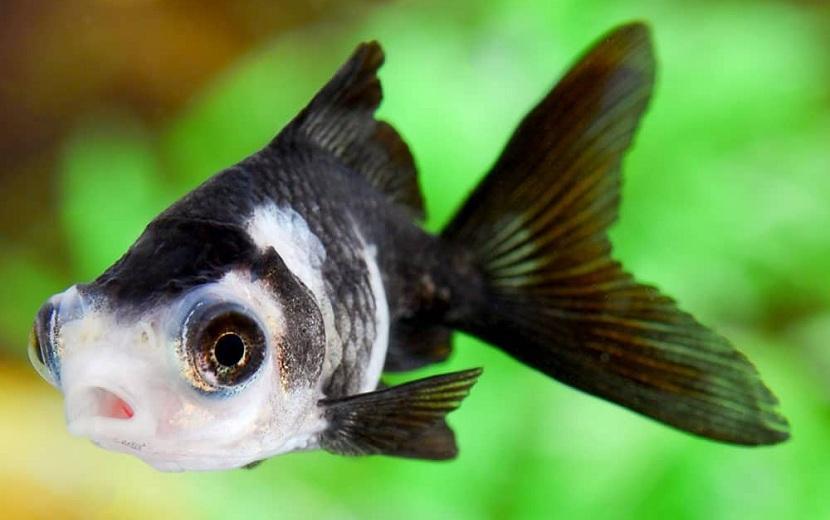
We finish our list of animals with big eyes with the telescope eye or "demekin". It is one of the most popular cold water fish in the world, which stands out precisely for its big eyes. This fish belongs to the family Characidae, the same family as goldfish, and are relatively sensitive creatures. In aquariums, they need a careful balance of water quality. Their eyes are so big and sensitive, they can accidentally gore them on sharp objects while swimming, so it is important to keep their tank free of such plants and accessories. These distinctive eyes allow them to see in dimly lit conditions, an adaptation that enhances their ability to locate food in murky waters.

If you want to read similar articles to List of Big Eyed Animals - 15 of the Cutest!, we recommend you visit our Facts about the animal kingdom category.