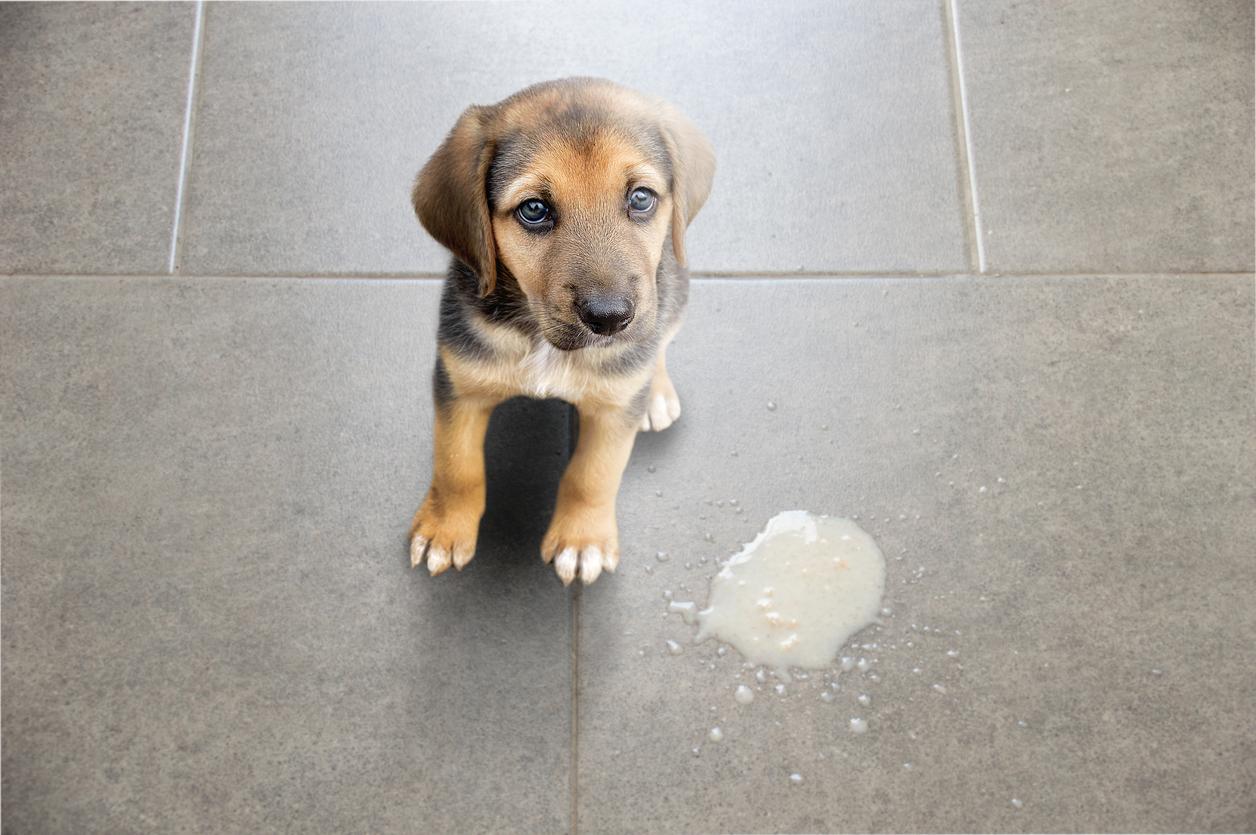
My Puppy Keeps Vomiting

 Add us on Google

See files for Dogs
Vomiting is a clinical symptom of various pathologies. Although vomiting is most commonly associated with gastrointestinal disorders, many problems which originate from other bodily systems occur. Whether gastrointestinal in origin, these range from mild to severe. Some illnesses with throwing up as a symptom can be fatal, especially if the dog is vulnerable. Due to a still developing immune system, puppies are generally more vulnerable than adult dogs. This is especially the case with newborn puppies.
At AnimalWised, we look at why my puppy keeps vomiting. Although it may be common for a puppy to throw up small amounts occasionally, persistent vomiting is a dangerous sign and needs to be addressed immediately.
Is my puppy vomiting?
Before we understand why a puppy is throwing up, we need to ensure we are interpreting the clinical sign correctly. To do so, it is imperative we differentiate between a puppy vomiting and regurgitating:
- Vomiting: this is an active process that is preceded by nausea and retching. Nausea is difficult to detect, since it only manifests itself with a slight depression of the animal, hypersalivation and repeated swallowing movements. You may recognize the latter through a repetitive gulping sound. Retching is usually more evident, since deep inspiratory movements are usually produced with strong contractions of the abdomen. On the other hand, we can differentiate vomiting since it is the expulsion of gastric content or the first portions of the small intestine. It usually contains food, bile and foam. As it comes from the stomach, it also has an acidic pH.
- Regurgitation: consists of the retrograde and passive exit of food, which is not preceded by nausea or vomiting. It is content that has not reached the stomach, so it usually contains only food mixed with saliva. It has a basic pH. This clinical sign is usually indicative of an esophageal pathology. Puppies might regurgitate due to eating too quickly or due to anatomical issues like megaesophagus, which is a dilation of the esophagus.
Differentiating between vomiting and regurgitation can be somewhat complex, so it is important you pay attention to all observable symptoms and provide as much information as possible to your veterinarian. In this way, you will be able to discern the specific clinical sign your puppy presents.
To learn more about specific types of regurgitation and vomiting, take a look at our article on dogs throwing up white foam.
Causes of vomiting in puppies
Although most commonly associated with gastrointestinal upset, there are various factors which can lead to vomiting. Here are the main causes of vomiting in dogs, with a specific focus on puppies and newborns.
Digestive diseases
These pathologies can affect different sections of the digestive tract, including the stomach, small intestine and/or large intestine. Digestive disorders that can cause vomiting in puppies include:
- Obstructive disorders: ingestion of foreign bodies or congenital alterations such as pyloric stenosis. Pyloric stenosis is a congenital disorder typical of brachycephalic breeds, such as the Boxer or the Bulldog. This usually manifests in puppies after weaning. Due to lack of awareness and natural curiosity, it is also common for puppies to ingest inconsumable foreign objects. Obstructions can lead to severe complications if not addressed promptly.
- Enteric infections: viral, bacterial or parasitic. In puppies, the most common infections are caused by viruses such as parvoviruses, coronaviruses, canine distemper virus or canine viral hepatitis. These processes usually appear after 6-14 weeks of life, when maternal immunity begins to decline. Puppies are also more predisposed to parasites such as coccidiosis, giardiasis or trichuriasis due to their immune immaturity. Learn more about the cycles of parasites with our article on coccidia in dogs. It's crucial to implement a vaccination and deworming schedule early in a puppy's life.
- Inflammatory diseases: can affect the stomach (gastritis), small intestine (enteritis) or large intestine (colitis). Such conditions often require dietary modifications and medical treatment to manage effectively.
Stimulation of the vomiting center
The vomiting center in the brain stem is responsible for regulating the vomiting mechanism. This center can be stimulated by substances present in the blood or by certain pathologies such as:
- Neurological pathologies: including encephalitis, meningitis, cerebral edema, cerebral hemorrhages, increased intracranial pressure, vestibular inflammatory lesions, etc. Read more about encephalitis in dogs in our article where we detail other symptoms and treatment. Neurological assessments might be necessary to identify these causes accurately.
- Drugs: including general anesthetics, cardiac glycosides (such as digoxin), anticholinergic drugs and emetic drugs (such as apomorphine). These medications can have side effects that upset the puppy's digestive system.
- Toxic substances: such as lead, zinc or ethylene glycol present in antifreeze fluids. Household cleaning products and common chemicals can be easily ingested if not stored correctly. Toxicity cases require immediate veterinary intervention to prevent severe health issues.
Psychogenic causes
Psychogenic causes are those which are of a psychological rather than physical origin and can include fear, stress and anxiety. Puppies are especially sensitive to stressful situations as they are not yet properly socialized and lack the experience to best ensure feelings of security. Pain, especially that which is related to abdominal organs (pancreatitis, peritonitis, etc.) can also stimulate pain receptors and induce vomiting. Behavioral therapy and gradual exposure to new environments can help reduce stress-induced vomiting.
Types of vomiting in puppies
Once we have confirmed that our puppy vomits rather than regurgitates, we can look at some characteristics of the type of vomiting to aid diagnosis:
- Types of vomit according to the content: there are different types of vomit depending on the content expelled. We must observe if it is bilious vomit (greenish due to the presence of bile), fecaloid (with the appearance of feces), if it contains undigested or partially digested food, if it has traces of fresh (red) or digested (dark) blood and if it contains foam or mucus. Take a look at why my dog vomits blood to know more. Understanding these distinctions can help predict the underlying cause.
- Properties of vomiting according to the duration of the process: we can speak of an acute episode of vomiting when it lasts less than 4-5 days and chronic vomiting when it lasts for more than 5 days. Acute processes are usually associated with intoxication, drugs or visceral pain, while chronic processes are usually associated with digestive diseases, neurological issues or psychogenic causes. Chronic vomiting often requires in-depth diagnostic work to uncover the root problem.
- Types of vomiting according to the relationship with food intake: we must pay attention to whether the vomiting occurs immediately after eating the food, after some time (usually 1-2 hours, although it may be longer) or if it does not seem to have any apparent relationship with food. This information can assist in diagnosing conditions like food allergies or intolerances.
- Vomiting distinctions according to the time of day it occurs: in diseases such as antral gastritis it is typical for vomiting to occur on an empty stomach first thing in the morning. Recognizing these patterns can lead to specific diagnoses and treatments.
- Characteristics of the emesis phase: emesis is the phase in which gastric contents are expelled. We must pay attention to this phase since there are certain pathologies that cause very explosive vomiting (such as pyloric stenosis). Monitoring the force and frequency of vomiting episodes is crucial for proper diagnosis.
What to do if my puppy keeps vomiting
Regardless of the type of vomiting, take your puppy to the veterinarian immediately when this symptom first presents. As the young dog is vulnerable, in many cases starting the diagnostic protocol immediately and administering prompt treatment can prevent serious harm. Among the main clinical consequences of vomiting in puppies are:
- Dehydration with electrolyte and acid-base imbalance: fluids are lost during vomiting. This can lead to dehydration and the loss of electrolytes such as chlorine, sodium and potassium. Dehydration also leads to metabolic acidosis. Learn more with our guide to signs your dog is dehydrated. Rehydration solutions might be necessary to restore balance.
- Malnutrition and weight loss: mainly in the case of chronic vomiting. These consequences can be especially serious in puppies, as they lose body condition very quickly. Nutritional support might be needed to ensure adequate recovery.
- Respiratory disorders: during vomiting, part of the content can be diverted into the respiratory tract and cause aspiration pneumonia. Preventive measures include observing feeding techniques to minimize risks.
Although the vomiting may not be serious in itself, if it affects the respiratory tract, it can cause asphyxiation and death. Learn more with our article on respiratory infections in dogs. Continuous monitoring and quick response can significantly improve outcomes.
What to give a puppy if they keep vomiting
The veterinarian will be the one to diagnose the reason for the puppy throwing up and begin administration of any necessary treatment. However, there are some important general factors we will need to consider as caregivers.
Feeding
It should be noted that fasting is not recommended in most processes that occur with vomiting. Withholding food can delay the recovery of the digestive system. The ideal is to establish a highly digestible diet, with little fat or fiber. To do this, you can choose a homemade diet (for example, based on rice and cooked chicken) or you can use gastrointestinal feed specifically designed for dogs with digestive diseases. These dietary adjustments can help soothe the stomach and aid recovery.
Regardless of the feed you choose, it is important that you distribute the food in smaller, but more regular portions throughout. This will help to avoid overloading the digestive system. It does not mean that the amount of food should be increased, only that the correct amount should be broken down into smaller portions.
Although fasting is not indicated in most processes that occur with vomiting, there are some very specific cases where it may be required. This is the case with the following pathologies:
- Pyloric stenosis or pyloric spasm.
- The pyloric sphincter of the stomach is closed. In this case food is prevented from progressing to the intestine. Therefore, fasting should be maintained until the pylorus is open and allows the passage of food. Surgical intervention might be necessary in severe cases.
Should I give antiemetics to a vomiting puppy?
You may intuitively think that vomiting can be solved by taking an antiemetic drug (i.e. medication which suppresses vomiting). In some cases, such as pancreatitis or some types of gastroenteritis, it may be an appropriate symptomatic treatment. On other occasions, administering antiemetics to a vomiting animal can have fatal consequences.
We must bear in mind that vomiting can be a defense mechanism that the body uses to eliminate toxic substances, foreign bodies or infectious agents from the body. In these cases, the use of antiemetics will be counterproductive. There are also pathologies such as pyloric stenosis in which the administration of central antiemetics can cause the stomach to rupture. Only ever provide antiemetic drugs to your puppy if specifically prescribed by your veterinarian. Careful evaluation of the puppy's condition is crucial before administering any medication.
There are some specific types of dog vomit which can help alert you to the underlying cause. Take a look at why my dog is vomiting black liquid and why my dog is vomiting yellow to learn more. Recognizing these signs early can lead to more effective treatments.
This article is purely informative. AnimalWised does not have the authority to prescribe any veterinary treatment or create a diagnosis. We invite you to take your pet to the veterinarian if they are suffering from any condition or pain.
If you want to read similar articles to My Puppy Keeps Vomiting, we recommend you visit our Intestinal problems category.
- Davidson, M. G., Else, R. W., & Lumsden, J. H. (2000). Manual of clinical pathology in small animals. Ediones S, DL..
- Nelson, R. W., Couto, C. G., & Taibo, R. A. (2010). Small Animal Internal Medicine. Elsevier Mosby.