Why Do Dolphins Jump Out of the Water?


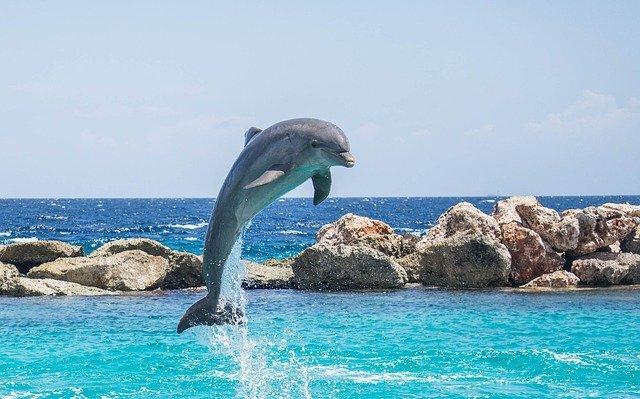
If we were to ask you about jumping mammals, the first animals which come to mind may be kangaroos, gazelles, or even rabbits. For this reason, it can be easy to forget that dolphins are mammals and that they are some of the best jumpers in the animal kingdom. The difference is that they are aquatic mammals, spending most of their time submerged in water. When we see photos of them or if we have seen them in the wild, we often see them at the surface of the water. If we are lucky, we may even see them jumping out of the sea.
At AnimalWised, we ask why do dolphins jump out of the water? We take a look at the reasons for a dolphin's jumping behavior and understand why it is important to their well-being.
Dolphin behavior
Dolphins are cetaceans, an infraorder of animals which include the subfamilies Delphinidae, Platanistidae, Iniidae, and Pontoporiidae. While we most associate dolphins with the ocean, there are freshwater dolphins and dolphins which live in brackish water. Although behaviors may vary according to species, they are all intelligent animals characterized by their sociability. They can even socialize positively with other animals and humans.
Strong bonds are developed in the dolphin community, with examples seen of dolphins swimming beside injured family members to help them. They have even been known to help stranded animals of other species. In some circumstances, they have been known to rescue humans.
Their fierce intelligence and apparent emotional maturity have seen other parallels to human behavior. When witnessed in the wild, one of the most joyous is their capacity for play behavior. Although it is important not to humanize them and to respect their animal boundaries, dolphins are known to extend this play behavior to humans.
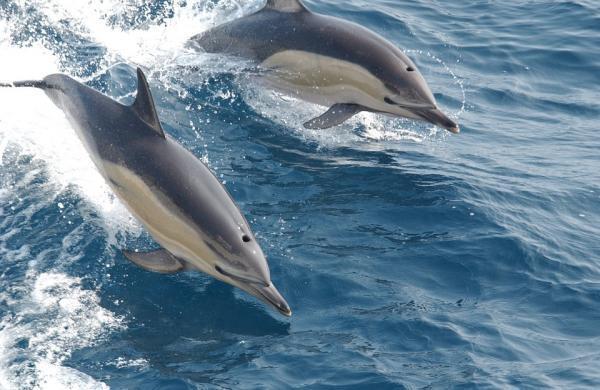
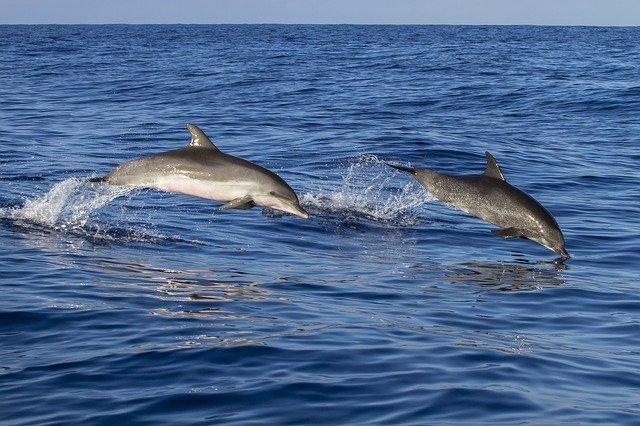
When sightseeing groups take boats out to spot dolphins in the wild, we are most rewarded if we see them jumping out of the water. Often they may jump behind the boat or at its bow, following its progress. Why do dolphins jump out of the water in this way? What benefit does it provide or purpose does it fulfill?
Moreover, dolphins use jumping as a method to navigate their environment. By leaping out of the water, they can get a clearer view of their surroundings and spot potential threats or opportunities more effectively. This behavior demonstrates their adaptability and intelligence, key traits that have helped dolphins thrive in diverse habitats.
Dolphins jump to hunt
Since they live in groups, dolphins are known as gregarious animals. Being in a group provides many benefits, not least their ability to hunt for prey together. For most dolphin species, fish make up the majority of their diet. Dolphins catch fish in various ways. One of the most effective is for one of a group to find a school of fish and chase them into the area where other members of their pod are waiting.
Here is where dolphin jumping ability can help in the hunt. As members of the pod surround the school of fish, some may jump up into the air and allow their body to smack against the surface of the water. This causes the fish to become scared and group closer together, making it easier for other dolphins to catch them. The dolphins will then switch roles so that those which have been jumping can now enjoy their dinner.
Another benefit of jumping during a hunt is to do the opposite. Since catching fish in a school can be tricky, jumping can disperse a school and make it easier for dolphins to catch individuals. The water can also stun some fish, allowing the dolphin to take advantage of their dazed state.
It should be noted that dolphins' hunting methods are not only a testament to their agility but also to their ability to work collaboratively. This social cooperation is a cornerstone of their survival strategy, as it increases their efficiency in catching prey and strengthens the bonds within the pod.

Jumping to breathe
Unlike fish, dolphins are mammals with lungs. For this reason, they need to extract oxygen from the air directly to respire. They cannot breathe underwater, so they have to raise their blowhole out of the water to take in air. However, by swimming at speed and jumping out of the water, they can intake more air and then submerge again to continue swimming. This makes respiration more efficient and means they can breathe without having to stop.
Jumping to breathe is not only about efficiency but also about safety. By surfacing rapidly, dolphins reduce the time spent vulnerable to predators near the water's surface. This quick maneuver ensures that they can replenish their oxygen supply while minimizing exposure to potential threats.
Jumping in communication and socialization
Dolphins have a complex communication system, which is particularly important for social animals. They use a variety of sounds as well as non-vocal communication.
Jumping is believed to be part of their communication because it makes them visible to other members of their group. Since they swim in pods, jumping up out of the water gives them greater visibility, especially if the water is cloudy. However, this doesn't necessarily mean one of the pod has become lost. It is also possible that the dolphins are playing. Chasing behavior is common, so jumping out of the water lets them catch each other and frolic playfully.
Find out more about dolphin behavior in our article on 10 fun facts about dolphins.
Furthermore, dolphins' acrobatic displays can serve as a tool to establish social hierarchies within their pods. Such dynamic interactions can help reinforce social bonds and establish dominant and subordinate roles, contributing to the overall stability and cooperation within the group.

Conserving energy
Dolphins tend to keep swimming constantly, even traveling long distances at high speeds. Although their body is hydrodynamic, contact with water always generates friction. When dolphins jump into the air, this friction is lost as it is less dense than water. In this way, although it seems that jumping involves an extra expenditure of energy, it really allows them to avoid the resistance generated by water when swimming.
In addition to conserving energy, this technique enables dolphins to cover larger distances more swiftly. This can be particularly advantageous during migratory movements or when they need to reach feeding areas quickly. It illustrates their remarkable ability to adapt their movement strategies to varying environmental conditions.
Elimination of parasites
Dolphins may have certain external parasites that cause injury. One theory suggests that jumping into the air helps remove these parasites since they do not tolerate the sudden change that comes from jumping into the air and re-entering the water.
Additionally, it has been documented[1] that remoras, fish equipped with suction cups and capable of adhering to large marine animals, also attach to dolphins. This generates greater resistance when they swim. Jumping out of the water is also believed to be a way to rid themselves of these parasitic fish.
Moreover, regular jumping can help maintain the dolphins' skin health. By shedding parasites and other irritants through these rapid movements, dolphins effectively prevent infections and skin diseases, contributing to their overall well-being and longevity.

Human intervention
Unfortunately, certain species of dolphins have been captured by humans and kept in captivity. They are often used in aquatic shows or water parks for entertainment purposes. Although many claim this is beneficial to the animals, they are often subdued and given rigorous training schedules in order to meet performance schedules. Although dolphins naturally jump out of the water, they are often trained to perform acrobatics on command.
AnimalWised discourages these types of water parks for entertainment value. Even with good intentions, the results often needlessly tax dolphins and, in many cases, constitute serious abuse. Although marine rehabilitation is an important aspect of animal conservation, it is always better for an animal to live in the wild when possible.
It should also be considered that captivity can significantly alter dolphins' natural behaviors, including their jumping patterns. In the wild, these behaviors serve essential survival functions, whereas in captivity, they are often reduced to mere entertainment acts, stripping dolphins of their natural instincts and autonomy.
If you want to read similar articles to Why Do Dolphins Jump Out of the Water?, we recommend you visit our Facts about the animal kingdom category.
Corey, B. (2006). How Dolphins Spin, and Why. LiveScience. Retrieved from: https://www.livescience.com/678-dolphins-spin.html.
- Cerón, M. (2004). Study of the behavior of the bottlenose dolphin ( Tursiops truncatus ) in conditions of captivity in the Aquarium of Aragon. Bachelor's thesis, Autonomous University of Mexico. Retrieved from: http://132.248.9.195/pd2006/0602573/0602573.pdf.
- González, F., & Diazgranado, M. (2012). River dolphins. Retrieved from: http://omacha.org/wp-content/uploads/2019/06/delfines-de-rio-embajadores-de-la-coservacion-en-la-amazonia-y-la-orinoquia.pdf.
- Smithsonian Tropical Research Institute (2015). "Family: ECHENEIDAE, Rémoras". Available at: https://biogeodb.stri.si.edu/sftep/es/thefishes/taxon/1224
- Weihs, D. (2002). "Dynamics of Dolphin Porpoising Revisited". Integrative and Comparative Biology . Available at: https://academic.oup.com/icb/article/42/5/1071/659889.