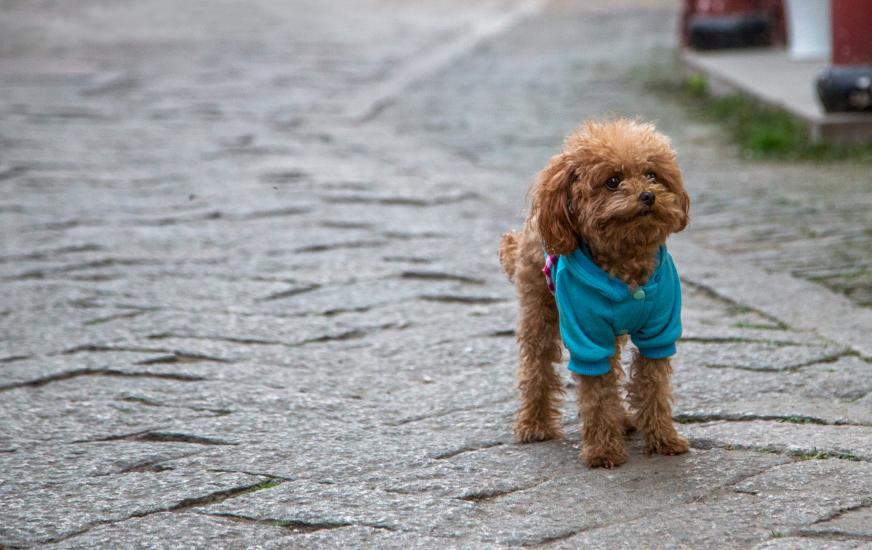
Types of Poodle - Sizes and Mixes


See files for Dogs
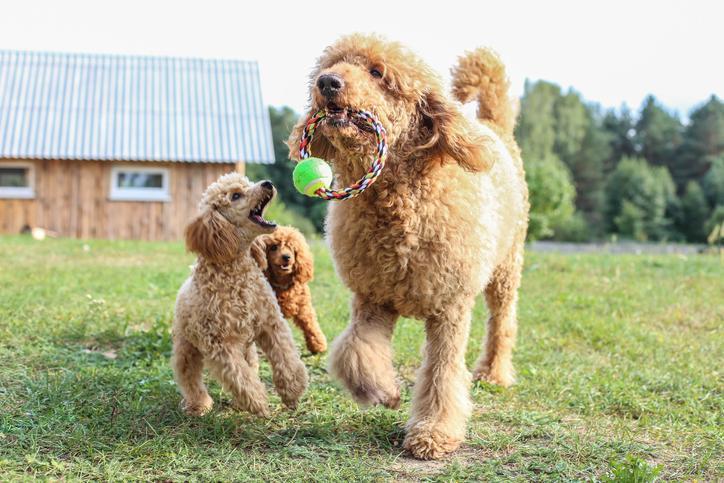
Without doubt, one of the most renowned dog breeds is the Poodle. This dog has a long and regal history. They were companions to the courtiers of Louis XVI in France. Given this storied past, it is understandable that the breed has changed through selective breeding over the years. This is why the term Poodle does not refer to one single type of dog. Rather, there are a few different types of Poodle, which are mainly characterized by size. With the emergence of breed crossings, there are also some common Poodle mixes which are not yet officially recognized by most canine associations. AnimalWised brings you the different types of Poodle as well as their characteristics to help you distinguish between them.
How many types of Poodle are there?
After many debates and discussions between the various cynological institutions around the world, breed standards have been established for each Poodle class. In doing so, they recognize a total of 4 official types of Poodle. This classification is based on their weight and size, specifically their height at the withers. Distinguishing Poodle types in this way has led to these categories:
- Large poodles (also known as Standard Poodles)
- Medium poodles
- Dwarf poodles
- Toy poodles
These classifications have been created by institutions such as the International Cynological Federation (FCI). However, not all canine registry bodies accept these categories. Organizations such as the American Kennel Club (AKC) only recognize three: standard Poodle (which includes both large and medium sizes), mini Poodle (also known as dwarf) and toy Poodle.
Characteristics of Poodles
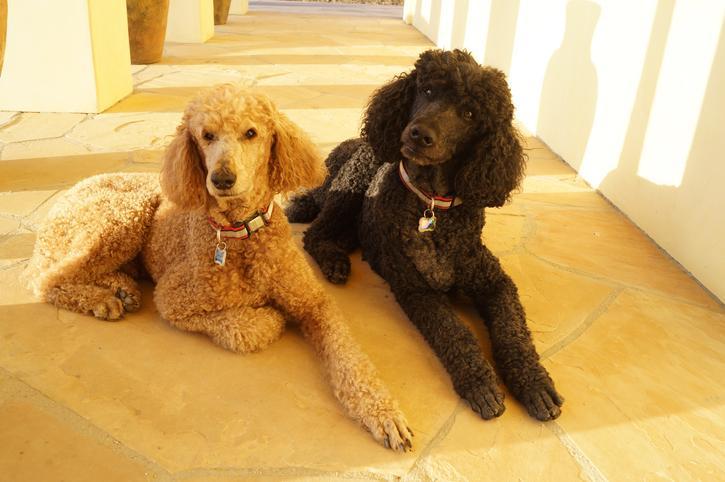
All Poodles share a certain series of characteristics, as well as meet the criteria for their given standard. One of them refers to the accepted colors of Poodle. These acceptable colors are the same for all class sizes. They are:
- Black
- White
- Brown
- Gray
- Orange fawn (apricot)
- Red fawn
Another criterion for Poodle standardization is the type of coat, which must be abundant, woolly, curly or wavy. It is one of the curly dog breeds we have come to love. Likewise, all Poodles need to be physically well-proportioned. Poodles have become known for their various haircuts. The reasons for this are not purely aesthetic, although this is a big part of it. When Poodles shed, the dropped hair gets tangled with the still-attached fur. For this reason, grooming is important and clipping Poodles is a great way to keep them clean. If you want to know more, you can check out this article on different haircuts for Poodles.
Regardless of size, Poodles need regular coat care to prevent tangles and mats. How often they need brushing and trimming can depend on their coat and haircut, so owners should make grooming part of their routine.
1. Large or standard Poodle
The standard Poodle type is the original. They were the first to appear, and their story is long. Personalities involved in the history of Standard Poodles include nobles and royalty who valued them as companion animals. The famous French royals Louis XVI and Marie Antoinette stand out as perhaps the most famous Poodle owners in history.
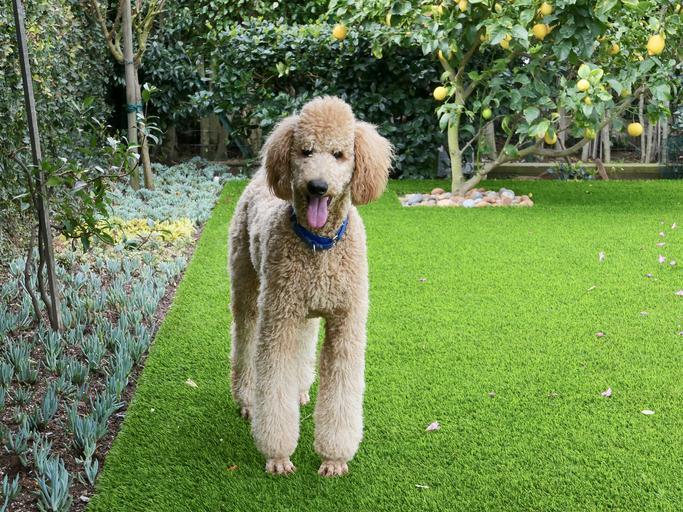
A standard Poodle has specific measurements. They need to be in the range of 45 to 60 cm at the withers (the cross on their shoulders). They need to weigh between 16 and 22 kg. There is marked sexual dimorphism in standard Poodles, as males are notoriously more bulky than females. Due to their large size, it is possible some may refer to this Poodle type as giant. Some may refer to them as ‘royal standard’ Poodles, but these are not official terms.
The large Poodle has a fairly long life, so its average life expectancy can exceed 16 years of age. However, this will depend on the level and quality of care. As we state, the standard Poodle breed is the original. From this breed being crossed with small specimens, the other three varieties have been derived.
Their larger size means they need enough room to move comfortably, along with regular walks and opportunities to play. As with any dog, consistent training and socialization help them feel at ease in different settings.

2. Medium Poodle
Medium-sized Poodles are slightly smaller than standard-sized ones. However, some organizations such as the AKC do not categorize them differently and merge the two types. For this reason, there is usually a lot of confusion when discussing standard Poodles. In the canine standards organizations which do recognize the medium Poodle, they are those in a height range of 35 to 45 cm at the withers and with a weight of between 7 and 12 kg.
Medium-sized Poodles are considered the second variety of Poodle, but they have the same characteristics in terms of appearance and temperament as the others. This includes coat color. As a side note, the majority of dog shows will only allow solid-color Poodles, as bi- or parti-color Poodles are disqualified.
Their manageable size may suit a range of homes, but they still need daily activity and interaction. A comfortable living space does not replace walks, play, or time spent with their family.

3. Dwarf or mini Poodle
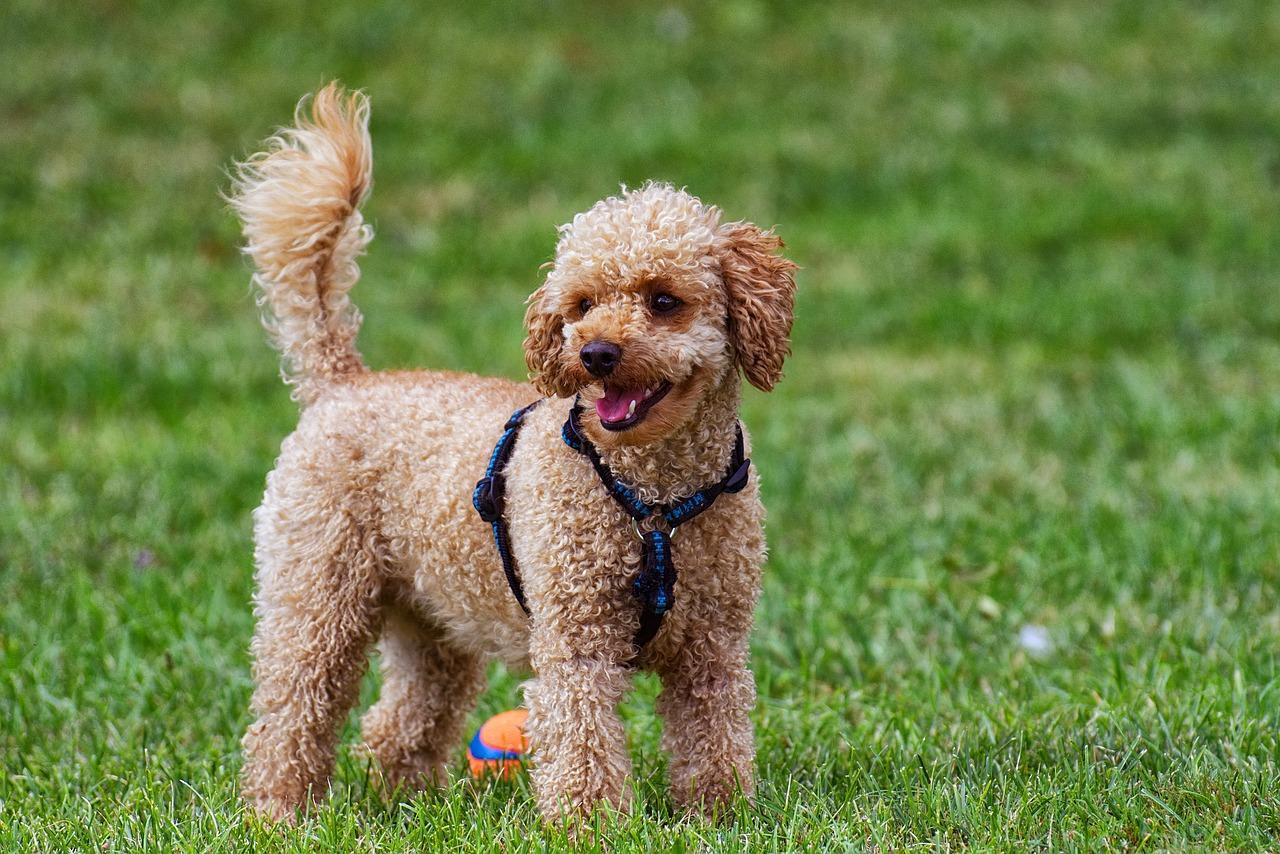
A dwarf Poodle or miniature Poodle (commonly known as a mini Poodle) is, as its name suggests, one of the smaller Poodle types. The differences in size are gradual, and these limits are 28-35 cm at the withers and 4-7 kg in weight. It may be difficult to tell the difference between a medium and a standard Poodle, but the difference between mini and large Poodles is obvious.
All Poodles are intelligent and are considered to be one of the smartest dog breeds in the world. However, their character can change a little according to type. Mini Poodles are usually a little more energetic and active than standard Poodles, which are considered to be a little more reserved. Of course, it will depend on the individual dog and how they are raised.
Mini Poodles are also the type of Poodle breed with the longest life expectancy. Some mini Poodles have been known to exceed 20 years of age.
Short training sessions and interactive games can help keep a mini Poodle engaged. Their small size does not mean they need less mental stimulation than larger dogs.

4. Toy Poodle
The smallest of the Poodle breeds is the toy Poodle. They are one of the most famous and popular varieties, especially according to YouTube, where there are many videos showing how cute they can be. It is this cuteness which led to the toy Poodle in the first place. Breeders selectively bred smaller specimens of other Poodles until they created this type. As there can be many health reasons to consider when crossbreeding, geneticists were involved to try to reduce the possibility of congenital defects.
Unfortunately, even with the involvement of science and the reduced likelihood of certain congenital diseases, toy Poodles are still the unhealthiest of the different Poodle types. Many of these health issues are shared by the other types of Poodle, but toy Poodles appear to be somewhat more likely to develop them.
The toy Poodle is a small dog breed with a height of around 24-28 cm at the withers and a weight of 2.5 kg maximum. You can tell the difference easily between a large and a toy Poodle, although it may be a little more difficult with mini Poodles. The life expectancy of the toy Poodle is a little lower than that of a mini Poodle, as it usually does not exceed 14-15 years of age.
Teacup dogs are the result of breeding very small dogs. They can often be smaller than even a toy Poodle. Unfortunately, this type of breeding is often performed irresponsibly. The result, whether a teacup Poodle or another teacup dog breed, is a dog which can suffer from very serious health problems. They are not recognized by standardization bodies, and this is essentially a cruel practice.
Because toy Poodles are so small, they should be handled gently and protected from accidental falls or rough play. Young children should be supervised around them, as their small size can make them more vulnerable to injury.

Poodle mixes
Since the Poodle is such an intelligent and adorable animal, many people have tried to combine these elements with those of other breeds. The result has been a spate of Poodle mixes which are gaining popularity. It is important to point out that these breeds are not officially recognized by major breed organizations, although there are plans for some of them to be developed. Some prominent Poodle mixes include:
- Labradoodle (Labrador & Poodle cross)
- Goldendoodle (Golden Retriever & Poodle cross)
- Cockapoo (Cocker Spaniel & Poodle cross)
- Maltipoo (Maltese & Poodle cross)
- Peekapoo (Pekingese & Poodle cross)
- Pompapoo (Pomeranian & Poodle cross)
- Schnoodle (Schnauzer & Poodle cross)
- Shipoo (Shih Tzu & Poodle cross)
- Yorkipoo (Yorkshire Terrier & Poodle cross)
- Poochon (Bichon Frise & Poodle cross)
- Chipoo (Chihuahua & Poodle cross)
- Boxerdoodle (Boxer & Poodle cross)
- Bassetoodle (Basset Hound & Poodle cross)
The traits of a Poodle mix can vary, even among dogs with the same cross. Size, coat type, and temperament depend on the individual dog and the characteristics inherited from each parent. A mix should therefore be chosen for its needs and personality, rather than on the assumption that it will have a particular coat or behavior.
What kind of poodle should I adopt?
Given the different types of Poodle, many people ask themselves this question. It is important to note that, while there can be great variances in different types of other dog breeds in terms of character, this is not the case with Poodles. They generally share the same temperament among the different types. This means they are an intelligent breed which bonds greatly with its family. They need socialization and proper treatment like any dog breed, but they are particularly good with kids and respond very well to training. In fact, if you don't spend time developing their cognition, they can become bored, and this is when behavioral problems may arise.
Poodles are sociable, affectionate, calm and intelligent. If you want to adopt one into your family, you need to ensure you can meet all of their basic care needs. This means vaccinations, deworming and vet visits, but it also means sufficient exercise and plenty of mental stimulation. If you can meet these needs, your only decision will be over size. The size of Poodle will depend mainly on preference and the amount of space you have.
When choosing, think about the time you can give to grooming, exercise, and companionship, not just the space available at home. Meeting individual dogs can also help you find one whose energy level and personality suit your household.
If you want to read similar articles to Types of Poodle - Sizes and Mixes, we recommend you visit our Comparisons category.
- CANICHE (Fédération Cynologique Internationale)
- Official Standard of the Poodle (American Kennel Club)
- American Kennel Club Poodle (Standard) . Available at: https://www.akc.org/dog-breeds/poodle-standard/
- Le Club du Poodle de France. Le Poodle Available at: https://www.clubducanichedefrance.fr/
- Fédération Cynologique Internationale. Poodle. Available at: http://www.fci.be/Nomenclature/Standards/172g09-es.pdf
- The Kennel Club Poodle (Miniature) . Available at: https://www.thekennelclub.org.uk/services/public/breed/standard.aspx?id=4098