
Facts about the animal kingdom of All animals
247 articles

The sacred bull Nandi or Nandin is the vehicle and gatekeeper of Hindu deity Lord Shiva, the creator, which is why it is enshrined in the form of statue at Hindu Shiv temples. The revered Nandi is the reason why bulls are considered sacred vahanas or vehicles of Lord Shiva.
In the ancient Hindu treatise...

Emperor Ashoka, who reigned the Indian subcontinent between 268-223 BC, is known as Ashoka the Great. What makes him one of the greatest Indian kings in history is the beautiful edicts he propounded after witnessing the bloodshed caused by his military conquests.
The wise king embraced Buddhism after seeing...
The Himalayas, also called the Abode of the Gods, are the longest and highest mountain range in the world. The Himalayan mountain range stretches over 1,500 miles and covers the nations of Nepal and Bhutan, as well as the south of Tibet and the north of India; this range is at least 70 million years old.
Home...
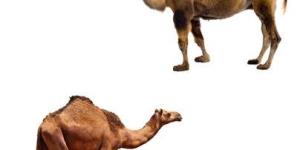
Dromedaries and camels are very well-known animals. Even if they don't live all around the world, there are more than a few films set in the desert that do feature these animals, either carrying people or packages. Although both animals are popular, one of the most common questions when learning about...

Have you ever wondered what are the 10 most venomous animals in the world? There are hundreds of animals that can be deadly for humans, although the potency or the effects of their venom is often unknown to most of us.
Remember, it takes effort for animals to inject venom, and it is a waste of their energy....

Some creatures seem to be almost as old as planet Earth itself. Although they aren't, it's true that some animal species have survived the most extreme circumstances, from natural disasters to mass extinctions. They are often referred to as "living fossils".
They have been able to survive by evolving particular...

Are you looking for examples of herbivorous animals? Do you want to learn all about their classification?
This AnimalWised article will tell you about herbivores with the help of well-known examples, some more surprising ones, and a few fun facts. This way, you'll know all about their main characteristics,...

In the wild, animals are in constant search of a companion to mate and reproduce with. The process of mate selection, which we humans call "courtship", starts by noticing an individual and then courting them; if the ritual is successful, the pair may reproduce.
Love is everywhere, even in the animal kingdom. Animals...
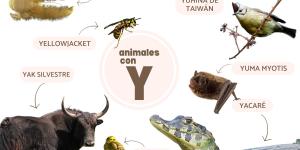
Classifying animals is a very difficult task. Taxonomy is the science behind organizing living organisms into different groups. This is for various reasons, but the main one is to better understand them. Unfortunately, it is a complicated, nebulous and constantly fluctuating science which can make your...
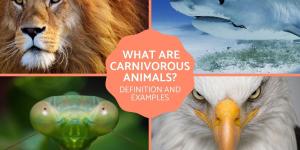
What makes lions, sharks, and eagles such effective hunters? The answer lies in their carnivorous nature. Carnivorous animals get their energy and nutrients primarily by eating meat. From tigers to spiders, meat-eating animals exist across all major animal groups and play crucial roles in maintaining ecological...
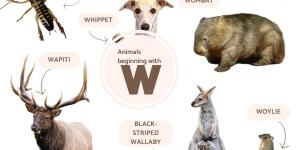
Animals can be classified in many different ways, but doing so alphabetically can provide certain challenges. Firstly. each animal has many different names in different languages. Even in the same language, some animals can have numerous names. These are often determined by geographical location with...

Seals are marine mammals found in all oceans around the world, and even in some freshwater areas. As members of the Phocidae family, seals are known for their thick blubber, flipper-like limbs, and powerful swimming skills. There are many different types of seals, each with its own traits, habitats, and...

Cockroaches have survived for over 300 million years, evolving into one of Earth's most resilient pests. With their ability to withstand radiation, survive without food for months, and squeeze through the tiniest cracks, they've earned their reputation as nearly indestructible. But nature has developed its...
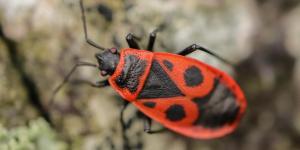
Firebugs are not poisonous and they are not known to carry any disease which is harmful to humans. Despite their alarming name, they do not pose any particular threat to our well-being. Belonging to the Pyrrhocoridae family, the firebug (Pyrrhocoris apterus) is native to Central Europe and Asia, particularly...
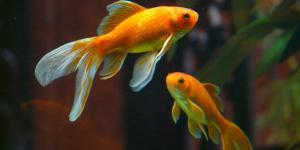
"Despite their global popularity, goldfish are often wrongly perceived as short-lived, disposable pets. In reality, these resilient fish can thrive for 10-15 years, or more, with attentive care. This raises a common question among owners: what is their typical lifespan, and how is it influenced by environment,...

Omnivorous fish are water creatures that eat both plants and animals. Unlike fish that only eat one type of food, these adaptable eaters have bodies that can handle different food sources. They can eat things like algae and water plants, as well as insects, tiny shellfish, and smaller fish. This ability...
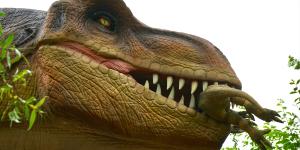
For 165 million years, dinosaurs reigned over Earth, and their diverse diets were pivotal in shaping their evolution, behavior, and ecological roles. From colossal herbivores that ate vast quantities of plants to formidable carnivores that preyed on other dinosaurs, their feeding habits dictated their...

One of the most fascinating tales in Asian culture is the story of the koi fish, which represents symbolizing strength, perseverance, and transformation. This ancient story tells of koi fish swimming upstream against powerful currents, with some eventually transforming into majestic dragons, a metaphor for personal...

The jaw is a defining feature of vertebrates with teeth, and it plays a crucial role in biting, chewing, and survival. From the powerful jaws of a lion to the flexible hinged jaws of a snake, vertebrate species have developed unique jaw structures and teeth adaptations to match their diets and lifestyles....

The snailfish belongs to the group of ray-finned fishes (Actinopterygians) and to the family of Lipariidae, generally known as snailfish or slimy fish. Within this family, 29 genera and more than 300 species have been recognized, although there is little information about many of them. Snailfish are...

In the depths of forests around the world, a silent shadow glides. We have long been fascinated with black panthers, which may be found in both contemporary and ancient mythologies. However, the truth of these enigmatic felines is much more amazing than any work of fiction. They're not even a single species,...

From tropical coral reefs to frigid polar waters, sea anemones have adapted to thrive in almost every ocean environment. While they might look like colorful underwater flowers gently swaying in the current, they are actually skilled predators belonging to the phylum Cnidaria. Their unique combination of...

Gorgonians are types of coral which are found in the order Alcyonacea. This order is commonly known as soft corals, containing corals known as sea fans or sea whips. Rather than a distinct taxonomic category, gorgonian corals are an informally grouped subset of corals which are defined by their structure....

While they may look like underwater plants or rocks, corals are actually animals that build the ocean's largest living structures. These remarkable marine creatures, relatives of jellyfish and sea anemones, create complex ecosystems that support a quarter of all ocean life. From tropical reefs to deep ocean...

Gastropods represent the largest and most diverse class of mollusks, with over 65,000 living species documented across marine, freshwater, and terrestrial environments. From common garden snails to deep-sea slugs, these remarkable invertebrates have successfully adapted to nearly every habitat on Earth...

Deep beneath the ocean's surface, where sunlight can't reach, nature has evolved an extraordinary solution, fish that create their own light. These bioluminescent creatures illuminate the darkness through specialized light-producing organs called photophores, using them to hunt, communicate, and survive...

Picture yourself in a garden, spotting what looks like a venomous coral snake. But on closer inspection, it turns out to be a harmless milk snake. This phenomenon, called mimicry, is one of evolution's most ingenious survival tactics. In nature, organisms have evolved to imitate not just the appearance...
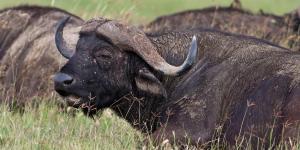
Bovines are animals of the subfamily Bovinae, under the larger taxonomic family Bovidae. Their categorization is important, especially to human civilizations. Throughout history, bovines have been integral in providing for sustenance, infrastructure, industry and many other aspects of human development....
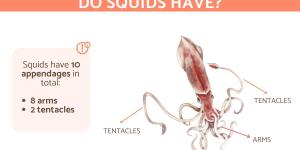
A common misconception about squids is that all their appendages are tentacles. Squids actually have only two tentacles and eight arms. This distinction, while seemingly minor, highlights a key aspect of their specialized hunting adaptations. Tentacles and arms have unique purposes, with distinct structures...

In the world's coldest regions, from the Arctic tundra to Antarctic ice sheets and high mountain peaks, animals have developed remarkable ways to survive extreme conditions. Some change their coat colors with the seasons, others huddle in groups for warmth, and many have evolved specialized features like...
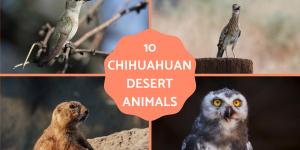
As its name suggests, the Chihuahua Desert is located in Northern Mexico, but it is such a vast area that its geographical range extends into the United States. Although it is a desert, this vast range contributes to its rich biodiversity. In fact, it is one of the most biodiverse deserts in the world....
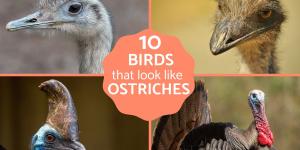
The ostrich is undoubtedly one of the most recognizable flightless birds. However, it's not alone in its unique characteristics. Many other bird species share striking similarities with the iconic ostrich. From their towering stature and powerful legs to their remarkable adaptations, these ostrich-like...
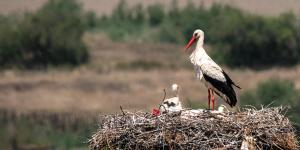
Storks are a variety of bird species which make up the family Ciconiidae, but not all are known to carry out infanticide. The killing of their young is most commonly associated with the white stork (Ciconia ciconia). As with all storks, the white stork has a long body with a similarly elongated neck and...
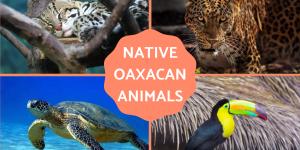
The diversity of wildlife in Mexico is as vast as the country itself. Different regions have varying climates and types of habitat, meaning certain fauna can only thrive in certain areas. The state of Oaxaca is one of the most biodiverse regions in Mexico. In fact, it is one of the most biodiverse regions...
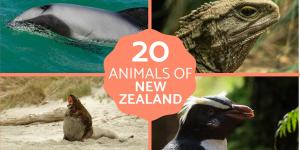
New Zealand, renowned for its stunning landscapes and unique biodiversity, is home to a remarkable array of wildlife. Isolated from the rest of the world for millions of years, this island nation has developed a distinctive ecosystem with many species found nowhere else on Earth. The country's animal...
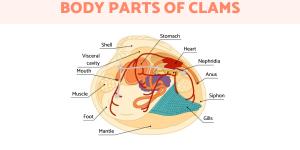
Clams are bivalve mollusks that play an essential role in aquatic ecosystems. They contribute to their habitats not only by providing a food source for other animals, but also in water filtration, nutrient recycling and other important benefits. They can do so thanks to a specialized anatomy which is...
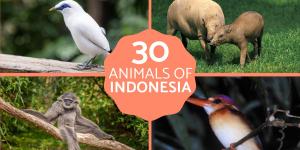
Indonesia, a vast group of islands between Southeast Asia and Oceania, has an amazing variety of wildlife. Its location near the equator and diverse landscapes, like rainforests and coastal mangroves, make it a perfect home for many species. However, this natural wealth is in danger. Many of Indonesia's...

The concept of pain in the animal kingdom has been the subject of zoological debate and study for the ages. The question of whether there are animals that do not feel pain raises fundamental questions not only about biological study, but about ethics. Specifically, it asks questions about human treatment...
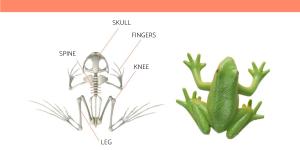
Frogs are vertebrates, which means they have bones. However, the bones of frogs can tell us a lot about their anatomy, physiology, and evolutionary history. Frogs have adapted to a variety of aquatic and terrestrial habitats, and their bones reflect these adaptations. Moreover, development from tadpole to adult...

When we think of the mongoose, many of us might picture a ferret-like creature which is known for attacking snakes. However, the animal we call a mongoose is actually a term used for all the mammals in the Herpestidae family. This is a more diverse group of animals than you might think. It even includes...

Asexual reproduction occurs most often in unicellular organisms which do not need a partner to proliferate. In fact, it is very uncommon in multicellular eukaryotic organisms such as animals. Animals most often carry out sexual reproduction, making asexual animals in the animal kingdom to be very rare....

The different modes of reproduction in animals is classified based on how they give birth to their young, this includes viviparous, oviparous and ovoviviparous animals. Embryos can be fertilized internally or externally, but the development after fertilization differ greatly.
In this AnimalWised article...

Sea urchins are small marine invertebrates which are characterized by having hard and spiny shells. They are sometimes simply called urchins, since there are no freshwater sea urchins to be found in nature. Despite only inhabiting saltwater aquatic ecosystems, they are an incredibly diverse type of echinoderm....
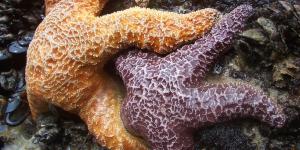
Starfish are marine echinoderms with habits that are uncommon in most other animal species. One fascinating example is the ability of sea stars to grow new limbs if they are severed from the body. Some species can even grow entirely new organisms from the severed arm, but only in the right circumstances....
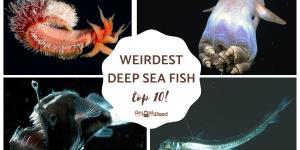
The deep sea is full of interesting and weird animals. Many of them seem to come from a horror movie as they share certain characteristics such as large teeth, blindness or even transparent skin. Little is known about this ocean layer however marinebiologists are now making more expeditions in order to...
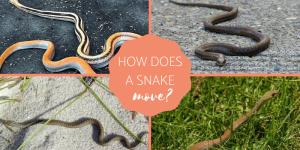
Snakes are vertebrate and ectothermic animals. They are also one of the few organisms that propel themselves by sliding their bodies on the ground. This movement is called slithering. It's extraordinary how snakes are able to move their limbless bodies through various terrains including rocks, sand,...

Water birds are a group of birds which make up one of the most charismatic fauna which inhabit wetlands. There are many types of birds which live on and around bodies of water. Some water bird species are not fully adapted to the aquatic environment and only use these locations part of the year, depending...
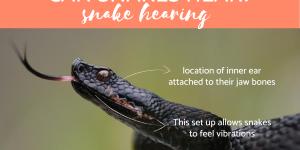
Snakes are carnivorous reptiles of the suborder Serpentes. These long and legless animals have a very unique anatomy that make us question how exactly their body works. This is especially true given that this group of animals have gone through a great variety of adaptations and physiological and anatomical...
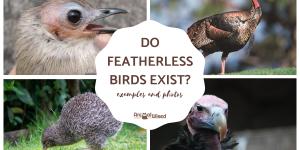
Birds are endothermic vertebrates that come in all different shapes and sizes. Their main characteristic is the fact that their bodies are covered in feathers. However, many people ask themselves if featherless birds exist.
While some species of birds are already born without feathers, others are born with...

There are different types of birds that live in different environments. For this, they will need useful feet that will help them survive in their natural habitat. Their type of feet needs to be able to help them hunt, climb, swim, etc., depending on their environment and needs.
In this AnimalWised...